
The Hidden Truths About Artificial Intelligence That Nobody Talks About
Uncover the secrets of AI — what it really can (and can’t) do, the risks it poses, and why it’s reshaping our future


Artificial Intelligence (AI) technology is no longer merely a futuristic concept or science fiction. Today, AI plays an essential role in our daily lives, impacting everything from the smartphones we use to the cars we drive and the creative projects we enjoy. Despite the widespread adoption of AI, many people remain unaware of important and surprising AI facts that reveal its true nature and influence.
A common misconception about artificial intelligence is that it truly "understands" the data it processes. In reality, AI systems do not possess consciousness or comprehension. Instead, AI analyzes patterns in vast datasets to predict the most likely outcomes. This means that while AI can simulate intelligent behavior, it does not have genuine understanding or awareness.
The power of AI comes from training on enormous datasets collected from the internet. Advanced AI models like GPT have been developed using a combination of books, websites, code repositories, and news articles, leveraging a vast amount of publicly available knowledge. However, this extensive data training also raises concerns about biases and misinformation embedded in the data, which AI systems can inadvertently reproduce.
Not all countries embrace AI technology equally. Some nations, including China and Iran, impose restrictions on AI tools for political, ethical, or economic reasons. These limitations especially affect AI systems capable of generating free content or making autonomous decisions.
In practical applications, AI is making significant advances. It is already assisting professionals by generating written content such as news articles and medical reports. Although AI’s output can be impressively accurate, human oversight remains essential to ensure correctness and ethical standards.
AI’s creative capabilities are expanding rapidly. Tools like DALL·E produce stunning AI-generated artwork, and AI music creation is challenging traditional ideas about creativity and originality.
From an economic perspective, AI-driven automation threatens millions of jobs across industries such as software development, data entry, customer service, and translation. This shift demands adapting workforce skills and reevaluating employment strategies.
Despite its remarkable capabilities, AI is not infallible. It can produce errors, fabricate information, and reflect bias, all of which require constant human supervision. Moreover, AI raises serious ethical questions: Who owns AI-generated content? Should machines be trusted with life-or-death decisions? How can society prevent the misuse of AI technologies?
Interestingly, AI is also transforming education. Smart learning apps powered by AI help children acquire new skills in languages, mathematics, and coding, revolutionizing traditional teaching methods.
Moreover, AI is playing a growing role in healthcare, assisting doctors with diagnostics, treatment plans, and even drug discovery. This helps improve accuracy and speed, potentially saving lives and reducing costs.
The rapid development of AI also encourages innovation in robotics, enabling machines to perform complex tasks in manufacturing, logistics, and even exploration in environments unsafe for humans.
However, the fast pace of AI advancement requires careful regulation and public discussion to balance innovation with safety and ethics. Governments, companies, and individuals must work together to create policies that encourage responsible AI development.
Finally, AI is evolving at an unprecedented pace. Over the next few years, breakthroughs in AI creativity, robotics, healthcare, and personalized services will accelerate, reshaping many aspects of everyday life.
In conclusion, artificial intelligence represents more than technological progress; it is a global transformation. Understanding AI’s capabilities, limitations, and ethical implications is essential for navigating the future. How do you perceive AI’s role in society — as a risk or an opportunity? Share your thoughts and join the conversation.
About the Creator
Racha
"Discover inspiring content on health, fitness, travel, and thrilling stories. Whether you're here to learn or escape, there's always something exciting waiting for you!"
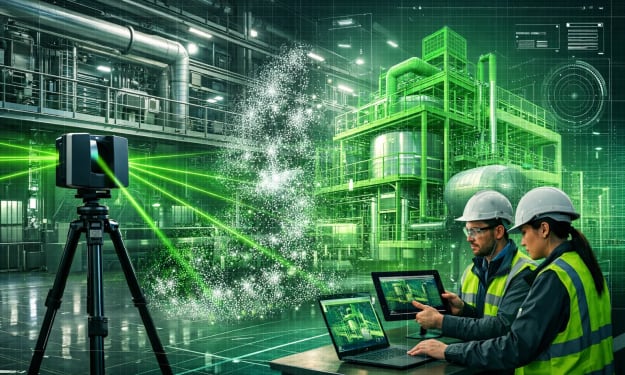
Using 3D Laser Scanning for Accurate Facility Upgrade and Renovation Planning
Facility upgrades and renovation projects require precise knowledge of existing building conditions. Many older facilities lack reliable documentation, and outdated drawings can lead to design conflicts, costly change orders, and construction delays.
By Matt Sharonabout 13 hours ago in Education
Building Stronger Teams Through Diversity
Diversity in the workplace is more than a trend. It is a key part of building strong and creative teams. Companies today serve people from many cultures, backgrounds, and life experiences. Because of this, businesses need teams that reflect the world around them.
By Aaron Khieu4 days ago in Education



Comments
There are no comments for this story
Be the first to respond and start the conversation.