
Why use Hospital Software in India
Enhancing Healthcare Management
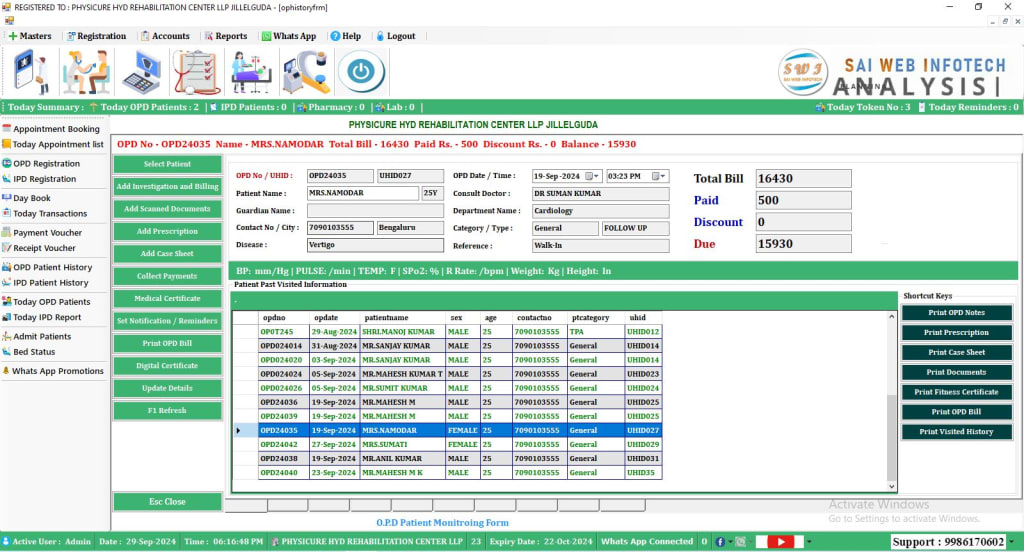
Hospital Software in India: Enhancing Healthcare Management
India’s healthcare sector has witnessed a digital transformation, with hospital software playing a pivotal role in streamlining operations and improving patient care. Hospital software solutions in India cater to various needs, from patient management to regulatory compliance, making healthcare delivery more efficient, transparent, and scalable.
Here’s a comprehensive look at hospital software in India, its key features, popular options, and how it benefits healthcare organizations.
Key Features of Hospital Software in India
Patient Management:
- Digital registration and record-keeping.
- Appointment scheduling and tracking.
- Integration with Electronic Health Records (EHR) for seamless data access.
Billing and Insurance:
- Automated billing systems for consultations, procedures, and tests.
- Insurance claim processing and integration with Indian insurance providers.
- GST-compliant invoicing for transparency and accuracy.
Pharmacy and Inventory Management:
- Stock tracking for medicines and consumables.
- Notifications for low stock or expired items.
- Automated reordering to avoid shortages.
Telemedicine Integration:
- Online consultations with doctors.
- Remote monitoring and follow-ups.
- Digital prescriptions for patients.
Laboratory Management:
- Integration of diagnostic equipment for automated result updates.
- Report generation and sharing with patients and doctors.
Regulatory Compliance:
- Adherence to Indian healthcare regulations, including NABH (National Accreditation Board for Hospitals) standards.
- Secure data storage to comply with data privacy laws like IT Act 2000 and other health data guidelines.
Reporting and Analytics:
- Insights into patient care, revenue, and hospital performance.
- Customizable dashboards for real-time monitoring.
Benefits of Using Hospital Software in India
- Enhanced Efficiency: Automation of routine tasks reduces manual errors and accelerates operations, allowing staff to focus on patient care.
- Improved Patient Experience: Features like online appointment booking, digital health records, and shorter wait times enhance patient satisfaction.
- Cost Savings: Efficient resource allocation and inventory management lower operational costs, benefiting both hospitals and patients.
- Scalability: Indian hospital software solutions are designed to cater to single-doctor clinics, mid-sized hospitals, and multi-specialty chains, offering flexibility as healthcare organizations grow.
- Data Security: With robust encryption and access controls, hospital software ensures the confidentiality and integrity of patient data.
Top Hospital Software Solutions in India
Practo Ray:
- A cloud-based solution catering to clinics and hospitals.
- Features include appointment scheduling, billing, and telemedicine services.
MediXcel:
- Comprehensive software for hospitals, focusing on EHR and patient management.
- Offers customization for specialty hospitals.
Caresoft HIS:
- A widely used Hospital Information System (HIS) in India.
- Includes modules for patient management, laboratory integration, and pharmacy management.
eHospital by BharatSoft:
- Developed by NIC, this software is popular in government hospitals.
- Offers patient registration, billing, and inventory management.
KareXpert:
- Cloud-based healthcare software focusing on AI and IoT integration.
- Features include telemedicine, lab management, and EHR.
SWI Hospital Software:
- Windows Based and Cloud-based healthcare software focusing on Patient Care.
- Features include patient billing, TPA billing, pharmacy, telemedicine, lab management, and EHR.
Lybrate:
- Primarily known for its telemedicine capabilities.
- Offers patient-doctor communication and digital prescriptions.
QMS (Queue Management Systems):
- Streamlines patient flow and reduces waiting times.
- Commonly used in outpatient departments of Indian hospitals.
Challenges in Adopting Hospital Software in India
- Cost Constraints: Smaller healthcare providers may struggle to invest in comprehensive solutions, though cloud-based systems can reduce initial costs.
- Training and Adoption: Many hospitals face challenges in training staff to use new software effectively.
- Internet Dependence: In rural areas, limited internet connectivity can hinder the use of cloud-based systems.
- Data Privacy Concerns: While regulations exist, ensuring compliance and protecting sensitive health data remains a priority.
Future of Hospital Software in India
The adoption of hospital software in India is expected to grow rapidly due to increasing digitization and government initiatives like Ayushman Bharat Digital Mission (ABDM). The focus is shifting towards:
- AI-Driven Insights: Advanced analytics for predictive healthcare and decision-making.
- Telemedicine Expansion: Reaching remote areas through digital platforms.
- Blockchain for Data Security: Enhanced security and transparency in patient records.
Conclusion
Hospital software is revolutionizing healthcare in India by improving operational efficiency, patient satisfaction, and data management. From single-doctor clinics to large multi-specialty hospitals, these solutions are tailored to the diverse needs of India’s healthcare ecosystem. By investing in the right software and overcoming adoption challenges, hospitals can provide world-class care and stay ahead in an increasingly competitive environment.
About the Creator
Why Books Still Matter in a World That Never Stops Scrolling
In a world where everything moves fast—notifications, reels, breaking news, endless scrolling—books feel almost rebellious. Sitting still. Turning pages. Giving your full attention to one story at a time. Yet despite all the noise of the digital age, books continue to survive, and more importantly, they continue to matter.
By Waqar Khan3 days ago in Education
How Digital Signage Improves Communication in Schools
Picture this: It's 7:45 AM, and students are flooding through the school entrance. Instead of clustered bulletin boards with overlapping flyers and outdated announcements, sleek digital displays showcase today's lunch menu, remind students about the basketball game, and celebrate yesterday's science fair winners. No one's squinting at faded paper or missing crucial information buried under last month's notices.
By Jerry Kane 3 days ago in Education
📢 Raise Your Voice Thread: 02/05/2026
Our “Raise Your Voice Threads” are hosted most alternating Thursdays at 12PM ET to offer creators more avenues to uncover exceptional stories on Vocal. As we are continuously searching for fresh creators and inspiring stories, this thread provides an opportunity to exchange and discuss the stories that have moved and motivated us on Vocal.
By Raise Your Voice by Vocal2 days ago in Resources



Comments (1)
Hospital software is interesting! Good work!