
Why Republicans Want to Dismantle the Education Department
The GOP's Push for Smaller Government and Local Control in American Education

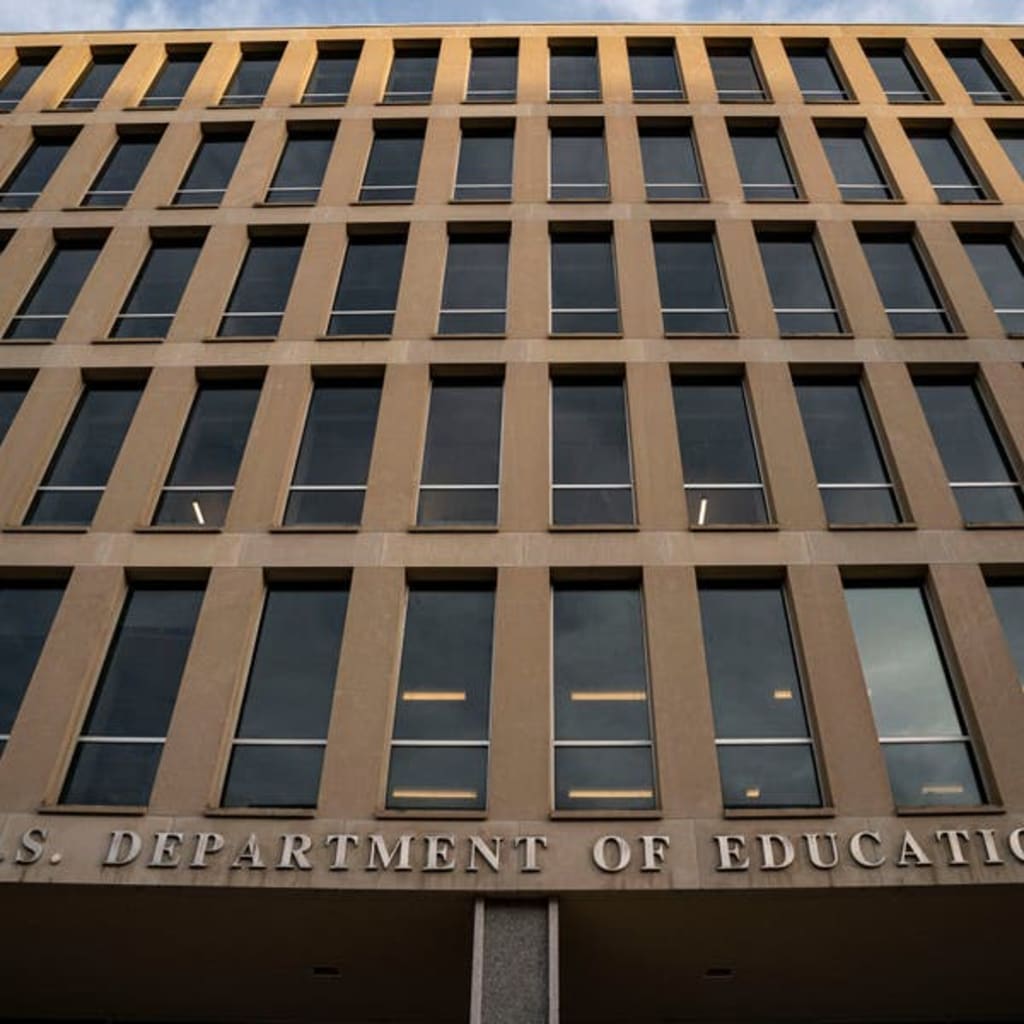
In the ongoing debate over the role of government in education, one issue that has consistently captured the attention of Republican lawmakers is the push to dismantle the U.S. Department of Education. This sentiment has been part of the party's platform for decades, with calls to scale back the agency's influence or eliminate it entirely. The reasons for this push are rooted in a blend of ideological convictions, political strategies, and concerns over the perceived failures of federal oversight in the education system. In this article, we will explore why Republicans advocate for dismantling the Education Department, examining their arguments surrounding local control, fiscal responsibility, and educational freedom.
The Roots of Republican Opposition to the Department of Education
The Department of Education was created in 1980 during the administration of President Jimmy Carter. It was part of a broader push to streamline federal operations and better coordinate educational policies. However, from its inception, the department was controversial, especially among conservatives who believed that education should be primarily a state and local responsibility rather than a matter of federal oversight. Republican opposition to the Education Department has evolved over time, reflecting the broader conservative philosophy of limited government and the belief in decentralization.
The Republican Party’s aversion to a strong federal presence in education can be traced to its broader ideological commitment to reducing the size of government. Conservatives argue that federal bureaucrats, sitting far away in Washington, D.C., are not in touch with the specific needs and challenges of local communities. By shifting the power to state and local governments, they believe that educational policies would be more responsive, efficient, and tailored to the diverse needs of students across the country.
The Push for Local Control of Education
One of the central arguments Republicans make for dismantling the Education Department is the principle of local control. In the view of many conservatives, the federal government’s role in education has expanded far beyond its original intent, imposing a one-size-fits-all approach that stifles innovation and creates inefficiencies.
Local control, Republicans argue, ensures that parents, teachers, and local communities have the authority to make decisions about what is best for their children’s education. This philosophy is rooted in the belief that educational policies should reflect the values and priorities of the community. By reducing federal oversight, Republicans argue that school boards and state governments would have greater flexibility to create curriculums that reflect local needs, including adjusting for regional economic factors, cultural considerations, and differing standards.
Additionally, many Republicans contend that the Department of Education’s regulations and mandates have added unnecessary layers of bureaucracy, making it harder for local school districts to operate effectively. Programs such as No Child Left Behind (2001) and its successor, the Every Student Succeeds Act (2015), are often cited as examples of federal policies that have overstepped the bounds of reasonable oversight, imposing standardized testing requirements and other regulations that are not always suitable for every school district.
Fiscal Responsibility and Cost Reduction
Another major argument that Republicans use to justify dismantling the Education Department is fiscal responsibility. The U.S. government spends billions of dollars each year on federal education programs, much of which is funneled through the Department of Education. Critics, including many Republicans, argue that much of this money is wasted on ineffective programs, administrative overhead, and inefficiencies within the federal bureaucracy. In their view, these funds would be better allocated directly to states or local districts, where they could be used more efficiently and effectively.
Republicans often argue that the federal government’s involvement in education has led to a bloated system that drains taxpayer dollars without delivering the results promised. By eliminating or significantly reducing the role of the Education Department, Republicans assert that they could trim wasteful spending and redirect resources toward the most critical areas of education. In particular, they argue that a more localized system would allow for more targeted funding that could meet the specific needs of individual schools and districts, rather than adhering to the broad mandates imposed by Washington.
Educational Freedom and School Choice
Educational freedom is another key component of the Republican vision for education. For many conservatives, the ultimate goal is to create a more competitive and diverse education system that offers parents more choices. By dismantling the Department of Education, Republicans believe they can help foster a system where charter schools, private schools, and homeschooling options can thrive. They argue that parents, not the government, should have the authority to decide what type of education best suits their children.
The GOP has long supported policies such as school vouchers, which allow parents to use public funding to send their children to private schools. The federal government’s involvement in education, Republicans argue, limits the scope of school choice programs, and a smaller Department of Education would give states more freedom to experiment with different models of school choice. Proponents of these reforms argue that school choice drives competition, improves quality, and gives parents more control over their children’s education.
By reducing federal involvement, Republicans believe that they could create an environment where schools have the flexibility to innovate and meet the needs of individual students. These reforms, according to supporters, would help close the achievement gap and provide better opportunities for disadvantaged students by allowing them to attend schools better suited to their needs.
Criticisms of the Federal Education System
Republicans are not the only ones to criticize the federal education system. A significant number of educators, parents, and even some Democrats have voiced concerns over the increasing federal influence on education. Critics argue that federal mandates often impose unrealistic expectations on schools, making it difficult for them to effectively teach students. The focus on standardized testing, for example, is widely viewed as undermining the ability of teachers to engage students in creative and critical thinking. Additionally, many educators argue that federal education policies fail to take into account the unique challenges faced by schools in economically disadvantaged areas.
Furthermore, the federal government’s role in funding and regulating education often creates disparities between schools in wealthy and low-income communities. In states where local taxes are low, schools may struggle to provide adequate resources, and federal funding does little to address the fundamental issue of inequitable local financing. This has led some Republicans to argue that dismantling the Department of Education and returning control to the states would lead to a more equitable distribution of resources, as states could implement policies that better reflect local needs.
Conclusion: The Future of Education in America
The debate over the future of the U.S. Department of Education is far from over. While Republicans remain committed to reducing federal control and promoting local authority, the challenge lies in balancing the need for effective oversight with the desire for educational freedom and fiscal responsibility. Ultimately, the push to dismantle the Education Department reflects a broader conservative philosophy of limited government, one that seeks to shift power away from Washington, D.C., and into the hands of local communities.
Whether or not these efforts succeed, the debate underscores a growing frustration with the current state of the American education system. For Republicans, dismantling the Department of Education is not just about cutting costs or reducing bureaucracy—it's about restoring a sense of control and empowering parents and local leaders to shape the future of education in their communities. As the discussion continues, it is clear that education will remain a central issue in the political landscape for years to come.
About the Creator
Keep reading
More stories from Arafat Rahman and writers in Education and other communities.
Aurora Over a Snowy Mountain
The mountain stood tall against the backdrop of a winter sky, its icy summit veiled in a blanket of pure white snow. The cold, crisp air bit at the skin, yet the beauty of the scene was enough to make anyone forget the chill. Tall pines, their branches heavy with snow, reached up like silent sentinels, guarding the secrets of the mountain. The world around the peak was still, save for the whisper of the wind, which sent tiny flurries of snow dancing through the air. In the shadow of the mountain, nestled in a quiet valley, was a small cabin. It was made of rough-hewn logs, with a stone chimney that sent a thin wisp of smoke curling upward. Inside, the warmth of a crackling fire contrasted with the harsh cold outside. This was where Anna had found herself, far from the bustling life of the city, in search of something she couldn't quite name. She had always been drawn to the mountains, ever since she was a child. But this time, it was different. She wasn’t just here to hike or to photograph the towering peaks. She had come for something more—something magical, something mysterious. She had come for the aurora. For weeks, she had studied the phenomenon, learning how it danced across the night sky, casting waves of color over the barren landscapes. Her fascination had grown into an obsession. The aurora borealis, the Northern Lights, had become a symbol of everything she longed to experience—something beyond the ordinary, beyond the predictable hum of everyday life. She had read that in the far northern reaches of the world, where the earth’s magnetic field met the solar wind, the aurora blazed in vibrant greens, purples, and reds. And here, in the remote corners of the world, she would see it for herself. That evening, as the last remnants of the sun dipped below the horizon, the world was plunged into the deep blue of night. Anna stood outside the cabin, wrapped in layers of thick clothing, her breath misting in the cold air. The fire in the cabin was a comfort, but it was the sky that called to her. She gazed up, her eyes scanning the heavens for any sign of the elusive lights. It was early yet, she thought. She’d have to wait. The mountain loomed overhead, its jagged edges now silhouetted against the twilight sky. The stars were already beginning to twinkle, piercing the vast expanse of dark. But it was the silence that wrapped around her like a blanket, holding her still. The air smelled fresh—like pine and snow—and there was a serenity in the stillness. The world, it seemed, was holding its breath. As the hours passed, Anna’s anticipation grew. Her fingers tingled in the cold, but she didn’t care. She had waited for this moment for years, and she would wait as long as it took. The cabin behind her was warm and inviting, but she stayed outside, eyes fixed on the sky. Then, it happened. A faint greenish glow began to form at the edge of the horizon. It was barely noticeable at first, just a smudge of light in the vastness of the sky. But Anna’s heart quickened, and she took a step closer, unable to look away. Slowly, the light grew, swirling and rippling like a delicate veil being drawn across the heavens. She could feel it now, the energy in the air—tangible and alive. The colors deepened, shifting from pale green to vibrant hues of violet and pink, filling the sky with a glow that seemed almost otherworldly. The aurora borealis, a living, breathing entity, danced above her in waves. It was as though the sky itself had come alive, painting with colors she had never seen before. It moved in intricate patterns, as if the universe itself had decided to put on a show just for her. Anna stood frozen, her eyes wide in awe. The light twisted and turned, a kaleidoscope of color that painted the snow beneath her feet in a soft, ethereal glow. The mountain, the trees, the world—everything was bathed in the green, purple, and pink light, as though the landscape itself had come alive to witness the spectacle. She had seen pictures of the aurora before, but nothing could have prepared her for the reality of it. It was beautiful in a way that words could not capture, overwhelming in its brilliance. It was as though she was standing at the edge of the world, witnessing something ancient and sacred. For hours, the light swirled above her, a living tapestry that seemed to change shape with each passing moment. Anna stood there, mesmerized, her body cold but her soul alight with wonder. She didn’t think about the passage of time or the frozen air. She didn’t think about anything but the lights, their hypnotic movement drawing her in. As the night deepened, the aurora began to fade, its colors gradually dimming as the first hints of dawn crept over the horizon. Slowly, the lights melted away, leaving behind only the quiet stillness of the night. The mountain, the trees, and the valley were once again shrouded in shadow. Anna stood in silence, her breath coming in soft puffs as she gazed at the retreating lights. They were gone now, but they had left their mark on her soul. In that moment, she understood something she hadn’t before. The aurora wasn’t just a natural phenomenon—it was a reminder. A reminder that there is magic in the world, in the most unexpected places, and that some things were meant to be experienced, not explained. As she turned to make her way back to the warmth of the cabin, Anna felt a deep sense of peace. She had come here searching for something she couldn’t name, and now she understood. The aurora had given her exactly what she needed—an experience that would stay with her forever, a memory that would warm her even in the coldest of times. The lights may have faded, but the magic remained. And with it, Anna felt something shift inside her. She was no longer the person who had arrived at the foot of the mountain seeking something she couldn’t articulate. She was now someone who had touched the very heart of the earth, someone who had witnessed the beauty of the world’s most elusive treasure. And in that still, snowy moment, with the mountain looming in the distance, Anna knew that she would never be the same.
By Arafat Rahman11 months ago in Education
Half Dollars That Defied Time: Kennedy, Franklin & Walking Liberty
If you’ve found yourself holding an old half dollar, you’ve probably wondered: is this just pocket change, or could it be something more? I’ve had that same conversation with countless collectors in my eight years as a numismatist. The answer often hinges on three legendary names: Walking Liberty, Franklin, and Kennedy. More than just silver, these coins are tangible pieces of 20th-century America. This guide will help you understand their stories, values, and which one might be the perfect fit for your goals, whether you're building a collection or an investment.
By Laura Bennett3 days ago in Education
Center Stage with Paul Stewart
*** I'm keen to republish the interviews I did for my series with Vocal creators. It's been a few years and I thought it might be nice to revisit these wonderful conversations. I'll be releasing them one at a time for a few weeks/months.
By Heather Hubler2 days ago in Interview




Comments (1)
Nice work! I really enjoyed this. Keep up the good work.