
Why is STEM Education necessary for kids?
STEM education refers to an educational approach that focuses on teaching students in the areas of science, technology, engineering, and mathematics. It emphasizes hands-on learning, problem-solving, critical thinking, and collaboration skills.
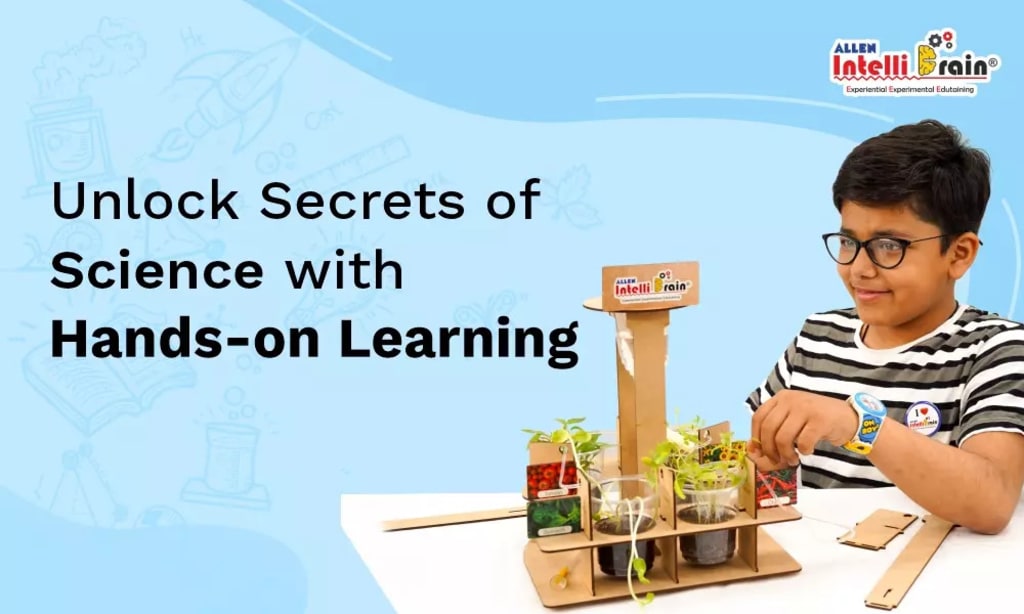
STEM is an acronym that stands for Science, Technology, Engineering, and Math. STEM education is a concept that allows kids to learn by integrating information from multiple fields and teaching them to think in an integrated and comprehensive manner.
STEM education differs from traditional education in more ways than it resembles it. Traditional education focuses on instilling information in kids and places a high value on theoretical elements of concepts. It places little to no emphasis on the actual application of these concepts. Here are some of the factors how the STEM method differs from traditional approaches.
- Encourages experimentation – STEM education focuses more on performing experiments than memorizing the concepts. This ensures that the kids are aware of the purpose and reason of various theories they learn and develop a sense of greater understanding.
- Incorporate problem-solving skills – While STEM Education Learning Toys encourages experiments, it also allows kids to explore and learn on their own. This, in turn, provides an excellent chance for kids to think outside the box and acquire problem-solving abilities that will serve them well throughout their lives.
- Uses Real-Life Examples – STEM education focuses on providing real-life examples to help kids comprehend topics and their applications in a way that they can connect to. This allows kids to retain and develop information without the stress of remembering theories, facts, and numbers.
- Implementation of Academic Concepts – STEM allows kids to apply all they’ve learned in class, which improves their comprehension of context. Kids are no longer pressured to memorize academic material, and as a result, they score well in academic exams.
- Improves logical Reasoning – The activities or exercises that are part of STEM are designed to enhance the skills such as analysis, interpretation, assessment, and drawing conclusions. Thus, resulting in strengthening their tenacity and enhancing their logical reasoning.
STEM, a 21st-century skill that opens up a world of opportunities, may be learned from a variety of sources. There are various summer/winter camps conducted at schools or educational institutions. Alternatively, parents may also buy STEM Activity Kits for their kids that are readily available in the market.
ALLEN IntelliBrain SMART Box is one such STEM Activity kit that features a range of play-based activities for kids to perform at home and contains two boxes (Maths and Science) for kids in grades 1 to 8. The following are some of the unique features of the SMART Box:
- It features more than 100 STEM-based educational activities that promote the real-life application of academic concepts that kids may accomplish on their own or with minimum help.
- It is intended to enable kids to readily apply knowledge beyond their curriculum through a unique Learning by Doing process in which they learn topics practically through a variety of educational games and activities.
- The SMART Box activities are well connected with the school curriculum, making it an outstanding supplement resource for school studies.
- It is developed by experts to help in the development of children’s fine motor skills, critical thinking, memory, reasoning, and other crucial abilities.
Therefore, the most common strategy for retaining a kid’s interest in education is to update the educational system to make it engaging and interesting. As technology and the environment continue to advance, STEM education must be prioritized over conventional education in order to best prepare the next generation for success in the market.
Conclusion - STEM activities are a valuable way to engage students in hands-on learning and encourage interest in science, technology, engineering, and math. These activities can improve critical thinking, problem-solving, and creativity skills. Incorporating STEM education can help prepare students for future careers and contribute to overall scientific literacy.
Read More Article - http://braindevelopment.theintellibrain.com/
About the Creator
Keep reading
More stories from writers in Education and other communities.
Half Dollars That Defied Time: Kennedy, Franklin & Walking Liberty
If you’ve found yourself holding an old half dollar, you’ve probably wondered: is this just pocket change, or could it be something more? I’ve had that same conversation with countless collectors in my eight years as a numismatist. The answer often hinges on three legendary names: Walking Liberty, Franklin, and Kennedy. More than just silver, these coins are tangible pieces of 20th-century America. This guide will help you understand their stories, values, and which one might be the perfect fit for your goals, whether you're building a collection or an investment.
By Laura Bennett5 days ago in Education
Rewiring Wellness: How Neuroscience Is Redefining the Mind-Body Connection in Therapy
In recent years, neuroscience has reshaped the understanding of how emotional and physical processes interact, offering therapists new insight into healing. The mind-body connection, once viewed as more philosophical than scientific, now has clear biological explanations. Studies show that thoughts, emotions, and physical sensations are deeply intertwined, influencing everything from stress responses to overall wellbeing. This knowledge is transforming modern therapeutic practices by providing clinicians with evidence-based tools that support integrated healing.
By Debra Bailey PHDabout 23 hours ago in Education
Rachel Reviews: The Spiral Archive by Pieter Hendrik
It's difficult for me to know where to start with a review of this book as it was, for me, an entirely unique experience and one that I'll probably never have again. I don't want that to be interpreted as unenjoyable but it has left me scratching my head a little and ruminating on its content, its themes and its characters.
By Rachel Deeming2 days ago in BookClub



Comments
There are no comments for this story
Be the first to respond and start the conversation.