
Why French is a Surprisingly Easy Language to Master?
Learning this beautiful language is a wonderful opportunity.

French is often called the "language of love," and with good reason. Its enchanting cities, exquisite cuisine, world famous wines, and breathtaking landscapes make it an attractive language to learn. But beyond its romantic appeal, French is surprisingly easy to pick up especially when compared to English.
However, many people hesitate to learn French because they fear the spelling rules, verb conjugations, and pronunciation. Some might even have unpleasant memories of struggling through French classes in school. But the truth is, learning French can be much more straightforward than it seems.
Let’s explore why French is one of the easiest European languages to learn even easier than English in many ways.
French Is Spoken Worldwide
French is not just confined to France, it’s a global language. With over 260 million speakers across continents, from Africa to Canada and even Vanuatu, French is a language that connects people worldwide. While 3.3% of the global population might not seem like a huge number, it’s comparable to the entire population of Indonesia the fourth most populous country in the world.
Since French has influenced English significantly over time, native English speakers already have a head start in learning it. Many words, grammar structures, and even pronunciation patterns are closely related. In fact, there was a time when speaking French fluently was considered essential for young aristocrats!
1. Simplified Past Tense
Discussing past events in English can feel like navigating a maze of complex rules. With phrases like “I did,” “I have done,” and “I did do,” the variations can be overwhelming. French, on the other hand, keeps things simple.
In everyday spoken French, all these English phrases can be translated to a single phrase: "j’ai fait" (I did).
Similarly, different English expressions like “I was doing,” “I used to do,” and “I would do” all boil down to "je faisais" in French. No need to juggle multiple tense structures—French makes talking about the past straightforward.
2. Gender Rules Are More Predictable Than You Think
One of the biggest hurdles English speakers face when learning French is gendered nouns. Unlike English, where objects are gender-neutral, French assigns every noun a masculine or feminine identity.
But don’t let this intimidate you! Unlike German, where gender seems completely random, French follows recognizable patterns:
Masculine words usually end in -age, -ment, -eau, -isme, -er, and -in.
Feminine words typically end in -tion, -sion, -ure, -ade, -ée, and -té.
Once you recognize these patterns, guessing the gender of a new word becomes much easier!
3. Verbs Are Simpler Than They Seem
At first glance, French verb conjugations may seem daunting. But when you break them down, they’re much easier than other European languages like Spanish, Italian, or German.
Take the verb "parler" (to speak) as an example:
- je parle ( speak)
- tu parles (you speak)
- il/elle parle (he/she speaks)
- nous parlons (we speak)
- vous parlez (you speak - formal/plural)
- ils/elles parlent (they speak)
Here’s the fun part—four out of these six forms are pronounced exactly the same! In spoken French, "je parle," "tu parles," "il/elle parle," and "ils/elles parlent" all sound identical.
Even better, in casual conversation, the nous form is often replaced by on, which means "we" but follows the same simple conjugation as il/elle parle. This makes spoken French even easier to master.
4. Vocabulary Becomes Easier Over Time
Many languages get harder as you progress, but French does the opposite. Once you reach an intermediate level, you’ll find that thousands of advanced words look almost identical to their English counterparts.
For example:
- Agriculture → Agriculture
- Décision → Decision
- Direction → Direction
English borrowed many words from French, especially after the Norman conquest of England in 1066. Today, about 40-45% of English words have French origins!
This means that if you already speak English, you likely know hundreds of French words without realizing it.
5. French Is Everywhere in Everyday Life
French culture is deeply embedded in global history, cuisine, and daily life. Even if you don’t realize it, you’re already surrounded by French words and expressions.
Think about common phrases like:
- Bon voyage (have a good trip)
- Faux pas (social mistake)
- Bon appétit (enjoy your meal)
Additionally, cities, streets, and businesses worldwide have French names, from Montpelier to Lacrosse. Recognizing these familiar words makes learning French feel like uncovering hidden meanings in everyday life.
Learning French Is Easier Than You Think
While no language is truly “easy” to learn, French is far more accessible than most people believe. With a simplified past tense, predictable gender rules, easy verb patterns, and a large vocabulary overlap with English, it’s a language that quickly becomes familiar.
And if all else fails, one phrase will always come to your rescue:
"Pouvez-vous parler plus lentement, s'il vous plaît?"
(Can you speak more slowly, please?)
Ready to get started? Take the leap into French and start your journey today!
About the Creator
J&C LANGUAGE SCHOOL
Language School in Delhi, India
We offer French, German, Spanish & English language classes for kids to working professionals.
Get in touch with us for more info -
Ph - 8870575078
Keep reading
More stories from J&C LANGUAGE SCHOOL and writers in Education and other communities.
What Makes French a Great Language to Learn
Becoming proficient in French can unlock numerous opportunities, whether in your career, studies, or personal life. As the sixth most spoken language globally, mastering it can make traveling smoother and more enjoyable. Additionally, with many multinational corporations and businesses operating in French-speaking regions, knowing the language can significantly boost your career prospects. As French continues to grow in global importance, its relevance will only increase. However, beyond its practical value, there are countless reasons to embrace learning French.
By J&C LANGUAGE SCHOOL10 months ago in Education
What’s the best position to sleep in?
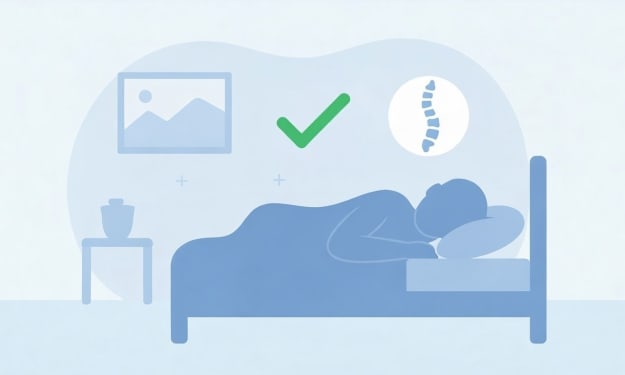
In the 1970s, psychoanalyst Samuel Dunkell proposed a curious, albeit almost completely unsubstantiated, theory that the position you sleep in reflects your personality. For example, preferring to snooze in the so-called royal position indicated self-confidence, while sleeping semi-fetal meant you’re sensible and well adjusted. While Dunkell’s ideas lack any definitive proof, how we sleep can impact our health. So, what’s the best position to sleep in? Sleep positions go by countless creative names—
By Munesh Yadavabout 19 hours ago in Education
Wealthiest Zip Codes in the U.S: A Guide for Real Estate Investors
In the world of real estate, there is a distinct difference between "expensive" markets and "wealth-concentrated" ecosystems. While many investors chase high-growth "hot" markets, a select group of seasoned professionals focuses on a different metric: the five-digit zip code.
By REI Data Solutionsa day ago in Education



Comments
There are no comments for this story
Be the first to respond and start the conversation.