
Wealthiest Zip Codes in the U.S: A Guide for Real Estate Investors
High-Net-Worth Real Estate: Decoding the Strategy Behind America’s Wealthiest Zip Codes

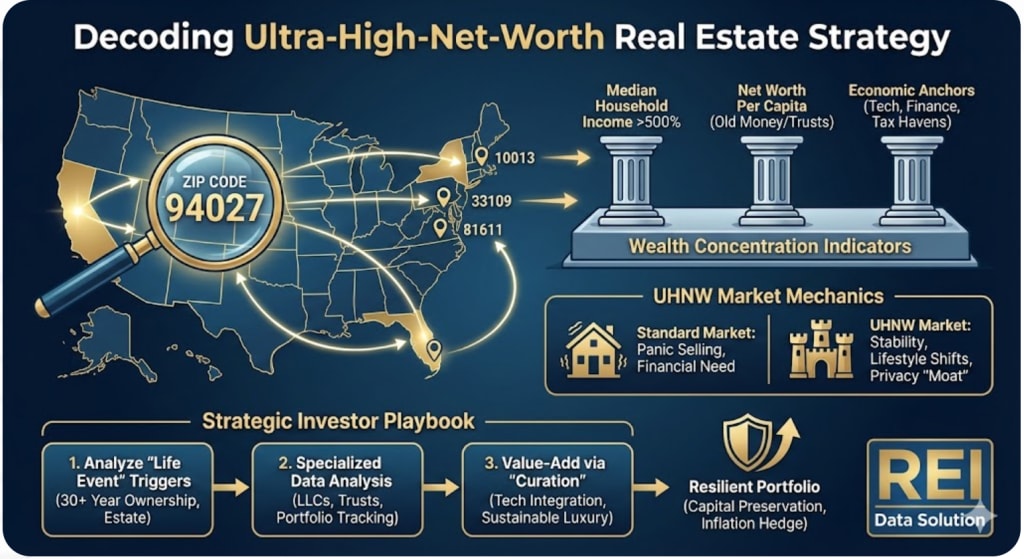
In the world of real estate, there is a distinct difference between "expensive" markets and "wealth-concentrated" ecosystems. While many investors chase high-growth "hot" markets, a select group of seasoned professionals focuses on a different metric: the five-digit zip code.
Understanding these pinnacle markets is not about prestige; it is a lesson in capital preservation. For an educator in the real estate space, these enclaves serve as a masterclass in how scarcity, policy, and generational wealth create assets that are remarkably resilient to broader economic volatility.
What Defines an "Elite" Zip Code?
When analyzing these markets, we look beyond the list price of a home. True wealth concentration is a synthesis of several factors:
- Median Household Income: Often exceeding the national average by 500% or more.
- Net Worth Per Capita: The presence of "old money" and generational family offices.
- Economic Anchors: Proximity to recession-proof industries like legacy finance, specialized tech, or international trade hubs.
Investing in these areas is rarely about "flipping" for a quick profit. Instead, it is a strategic play on stability and scarcity. These properties function more like "gold with a roof," serving as a hedge against inflation.
The Unique Mechanics of Ultra-High-Net-Worth (UHNW) Markets
The rules of engagement change when you enter the top 0.1% of zip codes. Here is why these markets behave differently:
- Non-Financial Motivations: In a standard market, sellers are often motivated by financial need. In elite zip codes, transactions are more often driven by lifestyle shifts, estate planning, or portfolio rebalancing. This requires a discreet, relationship-based approach to sourcing deals.
- Price Resilience: While these markets are not immune to corrections, they lack the "panic selling" seen in middle-market suburbs. The owners typically have the liquidity to hold through a downturn, preventing a collapse in local valuations.
- The "Moat" of Privacy: Wealthy buyers prioritize privacy and security, features that cannot be easily replicated. This creates a permanent floor for property values.
A Look at the "Titans": Case Studies in Value
To understand the educational value of these markets, one must look at the specific drivers behind the top-performing codes:
- 94027 (Atherton, CA): The epicenter of Silicon Valley. Its value is driven by strict zoning laws that prevent over-development, ensuring that land remains the ultimate limited resource.
- 10013 (Tribeca, NYC): A lesson in the "adaptive reuse" of industrial spaces. Wealth here is built on the conversion of historic architecture into ultra-luxury lofts, blending history with modern tech and finance wealth.
- 33109 (Fisher Island, FL): Accessible only by ferry, this zip code highlights the impact of tax migration. As high-earners move to tax-advantaged states, island enclaves become high-security sanctuaries for global capital.
- 81611 (Aspen, CO): This market demonstrates the power of "lifestyle assets." In a post-pandemic world, luxury is increasingly defined by access to nature and exclusive recreational geography.
The Strategic Playbook for Investors
How does an educator or serious investor approach these "gated" markets? It requires shifting from a transactional mindset to a research-heavy one.
- Analyze "Life Event" Triggers: Since financial distress is rare, look for long-term ownership (30+ years). These properties often represent "off-market" opportunities where a seller may be looking to downsize or settle an estate without the public fanfare of a listing.
- Specialized Data Analysis: Public MLS data only tells half the story. The real edge comes from analyzing ownership structures (LLCs and Trusts) and tracking portfolio movements. Utilizing advanced property intelligence platforms to see who owns what, and for how long is the only way to find value before it hits the open market.
- Value-Add via "Curation": In these markets, standard renovations aren't enough. Value is added through technology integration (smart home security), sustainable luxury, and architectural pedigree. A home in these zip codes is often viewed as a piece of art; its value lies in its uniqueness.
Risks and Pitfalls
The most common mistake is assuming that "luxury" is universal. What appeals to a buyer in a premium suburb may be considered "low-end" in a top-tier zip code. Over-improving a property without considering the specific aesthetic of the neighborhood or ignoring the importance of "sightlines" and privacy can lead to a stranded asset.
Furthermore, these markets require extreme patience. The days-on-market for an eight-figure estate is significantly higher than a median-priced home. Your capital must be "patient capital."
Final Thoughts
Investing in America’s wealthiest zip codes is about more than just owning a piece of real estate; it is about anchoring a portfolio in the most resilient soil available. By studying the transaction rhythms and ownership patterns of these enclaves, investors can gain insights that apply across all levels of the real estate market.
About the Creator
Keep reading
More stories from REI Data Solutions and writers in Education and other communities.
Wholesaling FSBO Properties: A Comprehensive Guide
In the complex landscape of real estate, most newcomers focus on the Multiple Listing Service (MLS). However, there is a significant segment of the market that exists "off-market" properties sold directly by owners without agent representation (FSBO).
By REI Data Solutionsabout a month ago in Education
Expert Banking Digital Signage Energizes Customers
I'll never forget walking into my local branch last Tuesday morning, dreading the usual 20-minute wait just to deposit a check. Instead, I was greeted by a vibrant digital display showing my wait time (3 minutes!), current mortgage rates, and a helpful video about mobile banking features I didn't even know existed. That visit took seven minutes total, and I left with a new savings account. That's the power of banking digital signage done right.
By Jerry Kane 3 days ago in Education



Comments
There are no comments for this story
Be the first to respond and start the conversation.