
Why do Blind Persons use a White Cane? 2024
White Cane

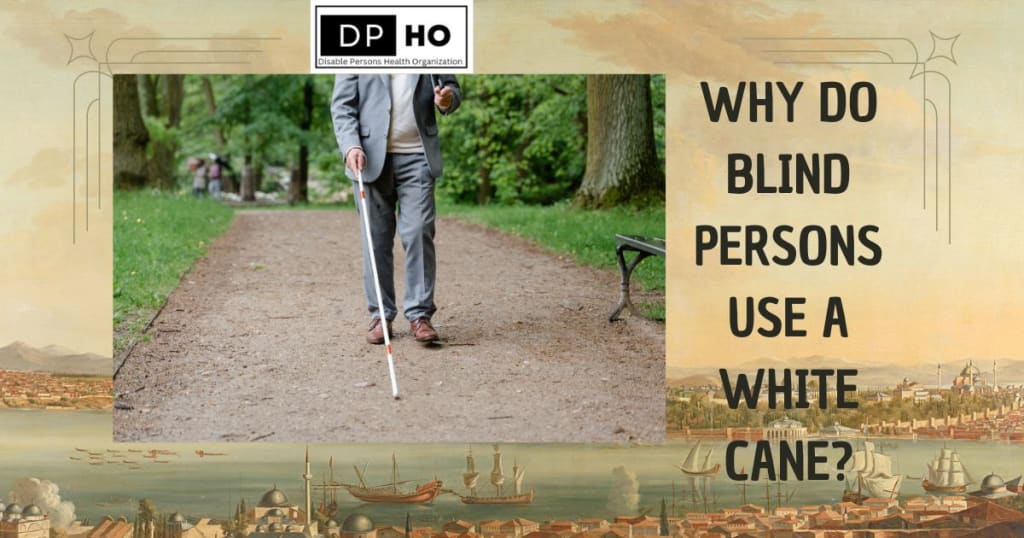
Understanding the White Cane
A white cane is a mobility aid specifically designed for people with visual impairments.
A blind person uses a white cane in a systematic manner to scan their environment.
The Etiquette of Interacting with a Blind Person Using a Cane
When encountering a person using a white cane, it's essential to follow a few simple etiquette guidelines:
• Offer Assistance: If you see someone with a white cane who seems to need help, offer assistance politely and respectfully.
• Don't Grab Their Cane: Avoid grabbing their cane, as it's a crucial part of their mobility.
• Guide, Don't Push: If you need to guide them, gently offer your arm for them to hold.
• Announce Yourself: When approaching a blind person, identify yourself verbally.
• Be Patient and Understanding: Remember that navigating the world with a visual impairment can be challenging. Be patient and understanding.
A Beacon of Mobility: The Blind Cane
A blind cane, often referred to as a white cane, is a fundamental tool for visually impaired individuals.
The Purpose of a Blind Cane
• Obstacle Detection: A blind cane is used to detect obstacles in the path, such as curbs, stairs, and other physical barriers.
• Spatial Awareness: The cane helps users gauge distances and assess the layout of their surroundings.
• Confidence Building: By providing a sense of security and control, a cane can boost the self-esteem of visually impaired individuals.
• Social Signaling: A white cane serves as a visual cue to others, alerting them to the user's visual impairment and prompting considerate behavior.
Types of Blind Canes
There are several types of blind canes, each designed for specific needs and preferences:
• Long Cane: The most common type, used for long-distance navigation and obstacle detection.
• Short Cane: Ideal for indoor use and navigating smaller spaces.
• Guide Cane: A specialized cane with a curved handle for precise guidance.
• Electronic Cane: Equipped with sensors to detect obstacles and provide audio or vibration alerts.
How to Use a Blind Cane
Using a blind cane effectively requires practice and training.
1. Proper Grip: Hold the cane firmly but not too tightly, allowing for flexibility and responsiveness.
2. Scanning Technique: Sweep the cane in a rhythmic motion to detect obstacles and changes in the terrain.
3. Traffic Awareness: Use the cane to gauge the distance and speed of approaching vehicles.
4. Stair Navigation: Employ specific techniques to detect and navigate stairs safely.
• Types of White Canes: Mastering the White Cane: A Learned Skill
Mastering the White Cane: A Learned Skill
The white cane is a symbol of independence for blind and visually impaired individuals. It's a tool that allows them to navigate their surroundings with confidence and safety. Let's delve into the different types of white canes and how they are used.
Types of White Canes
1. Long Cane:
1. The most common type, used for long-range detection of obstacles.
2. Ideal for outdoor environments and crowded areas.
2. Short Cane:
1. Used for close-range detection of obstacles.
2. Often used indoors or in familiar environments.
3. Folding Cane:
1. Portable and easy to carry, ideal for travel.
2. Can be adjusted to different lengths.
4. Guide Cane:
1. Used by individuals who are totally blind or have very low vision.
2. Provides a wider range of detection and is often used with a guide dog.
How to Use a White Cane
Using a white cane effectively requires training and practice. Here are some basic techniques:
1. Scanning: The cane is swept from side to side to detect obstacles at different heights.
2. Pointing: The cane is extended forward to check for obstacles ahead.
3. Trailing: The cane is dragged along the ground to feel for (to be continued)
https://dp-ho.com/perspective-of-disability-2/white-cane
About the Creator
Keep reading
More stories from imtliayaz Ali and writers in Education and other communities.
Foreclosure vs. Short Sale: 7 Key Differences Every Real Estate Pro MUST Know
You are driving through a target neighborhood and spot a classic "diamond in the rough." The lawn is overgrown, mail is spilling out of the box, and the shutters are hanging by a thread. To the untrained eye, it is just a neglected house. To a seasoned real estate professional, it is a potential high-margin opportunity.
By REI Data Solutions4 days ago in Education
Why Solar Gravity Bends Light: Gravitational Lensing, Einstein’s Theory of Relativity, and How the Sun Warps Space-Time
Introduction: When Light Does the Unexpected 🌌 Imagine staring at a distant star during a total solar eclipse. The Moon blocks the Sun’s bright glare, revealing stars that should not be visible in that exact position. Yet they appear slightly shifted—moved from where they “should” be.
By shahkar jalalabout 14 hours ago in Education
The First Rainbow Baby
Pitter-patter, pitter-patter. The rain fell in rhythmic splatters, slowly slowing, but still constant. Mira rolled onto her side pulling the blanket tight against her ears, but still she could hear chitter-chatter and scurrying feet of the creatures that refused to sleep in the lower decks.
By A. J. Schoenfelda day ago in Fiction


Comments
There are no comments for this story
Be the first to respond and start the conversation.