
Why Companies Are Moving Beyond SaaS: The Rise of DIY AI
The Rise of DIY AI
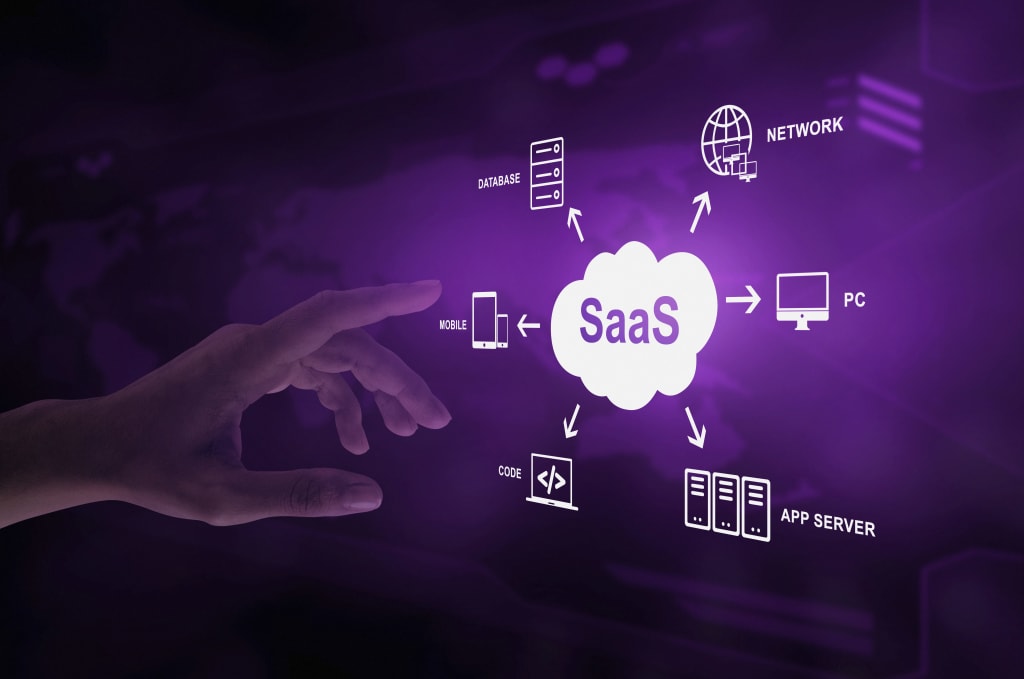
Financial technology company Klarna last month made the unexpected announcement that it would replace SaaS staples like Salesforce and Workday, marking an important pivot and reflecting a broader transformation in the way businesses engage with their technology architecture. Instead, the company is moving toward creating its own AI-enhanced internal systems powered by large language models (LLMs).
This move isn't just one company's decision, but a sign that a broader shift is coming that could change the face of tech at enterprises around the globe. Digital transformation consultancy Elsewhen has seen this trend emerging across multiple industries, as more organisations become more aware of their reliance on generic out-of-the-box software solutions.
The Financial Reality of SaaS
The economics behind Software-as-a-Service are increasingly being questioned. Organisations now spend around $3,500 a year per employee on SaaS tools, according to industry data. Total spend on SaaS will hit $197 billion in 2025 and be the third-largest budget line for many businesses behind personnel and real estate.
“Sticker shock is hitting many enterprises from their SaaS contracts,” says Amy Webb, CEO of Future Today Institute. “The subscription model that had once looked so attractive has, for many organisations, morphed into an expensive sunk cost with a far less attractive return on investment.”
Democratizing AI Foundation Models
Until two years ago, developing proprietary AI tools would have been beyond the reach of most organizations. But, the introduction of these formidable foundation models has completely turned the equation on its head. These models have effectively turned into accessible commodities that any company can use.
Now organizations have the ability to run LLMs in their cloud providers and integrate with existing infrastructure to build custom systems for both customer experiences and internal operations. This is a game-changing shift of capabilities available to enterprise technology teams.
The Innovation Speed Gap
The pace of AI advancement is also a threat to traditional SaaS platforms. The ability of established SaaS providers to match these new leading-edge capabilities is hamstrung by the pace at which companies like Google, Anthropic, OpenAI, and Microsoft are releasing new foundation model capabilities.
Many SaaS platforms have monolithic architecture such as “wasn't designed in a way that works for the kind of rapid iteration of models that AI development requires,” says Dr. Kai-Fu Lee, an AI researcher and venture capitalist. “When a company can build directly on foundation models, they achieve agility that packaged software solutions will never provide.”
This innovation disconnect is especially concerning given the fact that, by definition, SaaS solutions are built to address a wide market with generalized use cases — just as businesses are realizing the competitive superpower of deeply customized AI applications.
Developers’ Role is Changing
Developers are much more productive, thanks to AI-powered coding tools. This productivity increase allows engineering teams to develop numerous internal software products with fewer resources, decreasing the need for off-the-shelf software.
“The productivity multiplier effect of AI coding assistants is very broad,” says GitHub chief executive Thomas Dohmke. “Developers say they are creating tasks in a fraction of the time it took before, making in-house development of advanced systems economically feasible for many more companies.”
Demand and Supply in the Market and Competitive Forces
Over the past year, Salesforce, the company that created the SaaS model, has struggled in the markets after spending several years under the command of Marc Benioff. Shares of the company had lost 18 per cent earlier this year and analysts have pointed to intensifying competition in the AI space as partially contributing to the decline.
When asked to elaborate on Klarna's choice, however, Benioff noted that he was concerned how the company would handle data governance and compliance problems. This answer has an irony to it, given Salesforce was once itself a disruptor, bucking widely accepted conventions on where data is secure when it pushed for moving to the cloud in the early 2000s.
The Domino Effect
Once larger companies implement DIY AI strategies with success, it’s only natural that others will follow suit. The push for greater cost efficiencies and competitive differentiation will compel businesses to reassess long-standing SaaS partnerships once considered sacrosanct based on shareholder pressures.
“We’re seeing the early part of a profound change,” says Sundar Pichai, chief executive of Google. “Companies that embrace wide adoption of AI capabilities across the enterprise and do so thoughtfully will gain a step-change in efficiency and innovation.”
More than just cost savings — the strategic benefits
But saving money technical debt is only one of many benefits of a do-it-yourself approach to AI. In this way, tailored solutions can be designed to meet unique business goals and address specific customer needs that off-the-shelf software is ill-equipped to handle.
When this alignment happens, it leads to opportunities to differentiate themselves in overcrowded markets and deliver experiences that could not be possible within the confines of a standardized platform. It also provides businesses with total control over their technological destiny, enabling them to adapt their systems at a speed that aligns with their strategic priorities.
The Path Forward
SaaS and enterprise AI will probably have more of a nuanced relationship in the future. Many will take hybrid approaches, continuing with some SaaS relationships but developing their proprietary AI capabilities in areas strategically important to their business.
Regardless of the exact one you have in mind, just one thing is evident: The rise of cheap, powerful foundation models has practically upended the build-or-buy calculus. With the amount of data generated by various companies today, they have never been able to leverage their existing data to create unique and advanced AI-based solutions that were too complex to dream about even a couple of years ago.
For business leaders contemplating their technology strategy, this new reality will require careful thinking about where custom AI solutions can be a competitive differentiator — and where the traditional SaaS relationship remains a source of value.
About the Creator
Python vs Rust Performance: Speed, Memory Usage, and Scalability Explained
When developers compare programming languages, performance is often one of the most debated factors. Two languages that frequently come up in these discussions are Python and Rust. While both are powerful in their own ways, they approach performance, memory management, and scalability very differently. This makes the Python vs Rust comparison especially relevant for teams choosing the right technology for their next project.
By Lennox Gray4 days ago in Education
💦The Water Cycle💦
Water is one of the most essential substances on Earth. It covers over 70% of our planet’s surface and is crucial for all forms of life. But have you ever wondered how water moves continuously around the Earth? How rivers, oceans, clouds, and rain are all connected in a constant cycle? This amazing natural process is called the water cycle, and it ensures that life never runs dry.
By Talha khan2 days ago in Education
Miss Persephone's Manual to a Seemingly Ordinary Life
Miss Persephone was found at the dining table, her blue eyes swollen, her tears arriving and retreating like the tides of the ocean. Earlier that day, her family had visited her in the retirement home where she had lived for eight years. It was her eightieth birthday.
By Imola Tóth4 days ago in Fiction



Comments
There are no comments for this story
Be the first to respond and start the conversation.