
Python vs Rust Performance: Speed, Memory Usage, and Scalability Explained
From Interpreted Flexibility to Systems-Level Efficiency
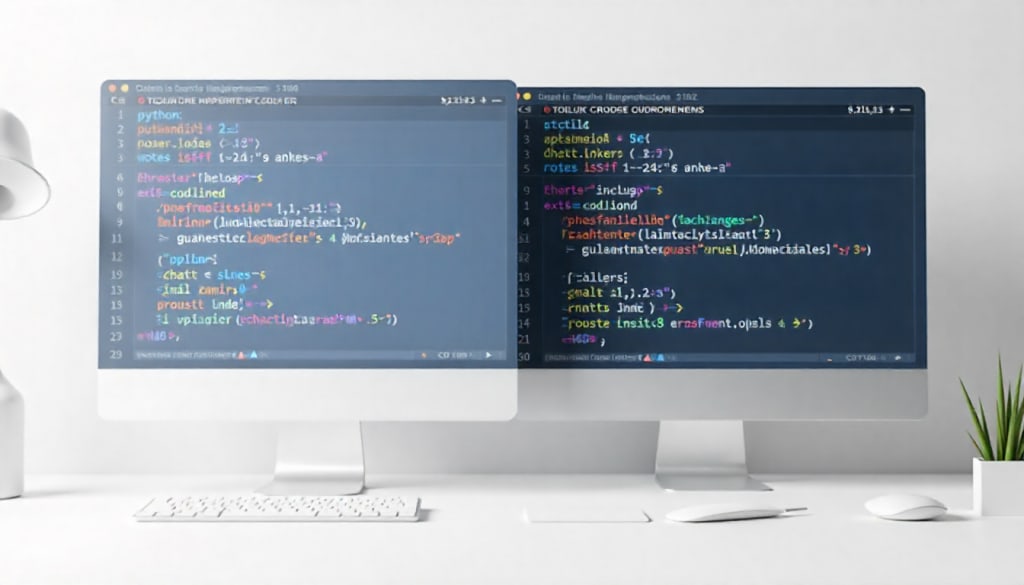
When developers compare programming languages, performance is often one of the most debated factors. Two languages that frequently come up in these discussions are Python and Rust. While both are powerful in their own ways, they approach performance, memory management, and scalability very differently. This makes the Python vs Rust comparison especially relevant for teams choosing the right technology for their next project.
In this article, we’ll break down how Python and Rust differ in terms of execution speed, memory usage, and scalability, and where each language performs best in real-world scenarios.
Understanding Python and Rust at a Glance
Python is a high-level, interpreted language known for its simplicity, readability, and massive ecosystem. It is widely used in web development, data science, machine learning, automation, and scripting. Python prioritizes developer productivity over raw performance.
Rust, on the other hand, is a systems programming language designed for safety and performance. It is compiled, statically typed, and focuses heavily on memory safety without relying on garbage collection. Rust is commonly used for performance-critical systems such as game engines, operating systems, networking tools, and backend services.
These fundamental design choices strongly influence how both languages behave when it comes to performance.
Speed Comparison: Python vs Rust
Speed is often the first metric people think about when discussing performance.
Python Execution Speed
Python code is typically executed by an interpreter, which adds overhead at runtime. Each line of Python code is translated into bytecode and executed by the Python Virtual Machine (PVM). This process makes Python slower compared to compiled languages.
While Python offers tools like PyPy, C extensions, and libraries such as NumPy that improve performance, pure Python code is generally not suitable for CPU-intensive tasks. For applications that require heavy computation or real-time processing, Python can become a bottleneck.
Rust Execution Speed
Rust is a compiled language that produces highly optimized machine code. It offers performance comparable to C and C++ in many benchmarks. Since Rust code is compiled ahead of time, there is no interpreter overhead during execution.
Rust also allows fine-grained control over system resources, enabling developers to write highly efficient code. This makes Rust an excellent choice for applications where speed is critical, such as low-latency services, game development, and embedded systems.
Verdict on Speed:
In a direct Python vs Rust speed comparison, Rust is significantly faster, especially for CPU-bound and low-level tasks.
Memory Usage and Management
Memory efficiency is another major factor when evaluating performance.
Python Memory Usage
Python uses automatic memory management with garbage collection. While this makes development easier, it also introduces overhead. Objects in Python carry additional metadata, which increases memory consumption.
The garbage collector periodically pauses execution to free unused memory, which can cause performance hiccups in long-running or real-time applications. For small to medium workloads, this overhead is often acceptable, but it can become problematic at scale.
Rust Memory Management
Rust uses a unique ownership and borrowing system to manage memory at compile time. There is no garbage collector involved. Memory is allocated and freed deterministically, which leads to more predictable performance.
Because Rust avoids runtime memory checks and garbage collection pauses, it generally uses less memory and performs more consistently under heavy load. This makes Rust particularly suitable for memory-constrained environments.
Verdict on Memory Usage:
When comparing Python vs Rust, Rust is more memory-efficient and offers better control, while Python trades efficiency for ease of use.
Scalability and Concurrency
Scalability is about how well an application handles increased workload, users, or data.
Python Scalability
Python can scale, but it often requires careful architecture. One major limitation is the Global Interpreter Lock (GIL), which prevents multiple threads from executing Python bytecode simultaneously in a single process.
To overcome this, Python applications often rely on multiprocessing, asynchronous programming, or external services. Frameworks like Django, FastAPI, and Celery help manage scalability, but scaling Python systems usually involves more infrastructure and workarounds.
Python performs well for I/O-bound applications, such as APIs and data pipelines, especially when combined with async frameworks.
Rust Scalability
Rust is designed with concurrency in mind. Its compiler enforces strict rules that prevent data races at compile time. This allows developers to safely write multi-threaded code without runtime penalties.
Rust applications can efficiently use multiple CPU cores and handle large numbers of concurrent tasks. This makes Rust highly scalable for backend services, network servers, and systems that demand high throughput.
Verdict on Scalability:
In the Python vs Rust scalability debate, Rust has a clear advantage for CPU-bound and highly concurrent systems, while Python works well for I/O-heavy workloads with the right architecture.
Developer Productivity vs Performance
Performance is not just about raw numbers; developer time also matters.
Python’s simple syntax and vast library ecosystem allow developers to build applications quickly. For startups, prototypes, and data-driven projects, Python often delivers faster results despite lower runtime performance.
Rust has a steeper learning curve. Its strict compiler and ownership model can slow down early development, but they also reduce bugs and performance issues in the long run. Rust projects often take longer to write but are more robust and efficient once completed.
Real-World Use Cases
Understanding when to use each language makes the Python vs Rust comparison more practical.
Python is ideal for:
- Data science and machine learning
- Web applications and APIs
- Automation and scripting
- Rapid prototyping
Rust is ideal for:
- Performance-critical backend services
- Systems programming
- Game engines and real-time applications
- High-concurrency and low-latency systems
In many modern architectures, Python and Rust are even used together. Python handles high-level logic, while Rust powers performance-sensitive components.
Final Thoughts: Python vs Rust
The Python vs Rust performance comparison highlights two fundamentally different philosophies. Python prioritizes simplicity and productivity, making it accessible and versatile. Rust prioritizes speed, memory efficiency, and safety, making it a strong choice for demanding systems.
If your project values fast development, flexibility, and a rich ecosystem, Python is often the better option. If performance, memory control, and scalability are critical, Rust stands out as a superior choice.
Ultimately, the right language depends on your project goals, team expertise, and performance requirements, not just benchmarks.
About the Creator
Keep reading
More stories from Lennox Gray and writers in Education and other communities.
Java vs C++: A Clear Comparison for Beginners and Professionals
Choosing the right programming language often depends on what you want to build and how you prefer to work. Two of the most widely discussed options are Java and C++. Both languages have been around for decades and continue to play an important role in modern software development.
By Lennox Grayabout a month ago in Education
Are wormholes stable or self-destructing?
What Is a Wormhole? A Quick Scientific Overview In Einstein’s theory of general relativity, gravity arises from the curvature of spacetime. Wormholes are solutions to Einstein’s equations that connect two distant regions of spacetime through a tunnel-like geometry.
By shahkar jalal8 days ago in Education
The Human Guide Behind Technical Excellence
Mentorship of skilled technicians plays a decisive role in shaping strong careers and reliable work standards. Technical skill alone does not make a technician capable. Real growth comes from shared experience, steady guidance, and trust built over time. In many industries, mentorship fills the gap between classroom learning and real job demands. It helps technicians move from basic ability to confident performance. This article explores how mentorship supports learning, builds skills, and strengthens the future workforce.
By Michael Gastinelabout 13 hours ago in Education
Miss Persephone's Manual to a Seemingly Ordinary Life
Miss Persephone was found at the dining table, her blue eyes swollen, her tears arriving and retreating like the tides of the ocean. Earlier that day, her family had visited her in the retirement home where she had lived for eight years. It was her eightieth birthday.
By Imola Tótha day ago in Fiction


Comments
There are no comments for this story
Be the first to respond and start the conversation.