
What Will the Sky Look Like Millions of Years from Now?
Space

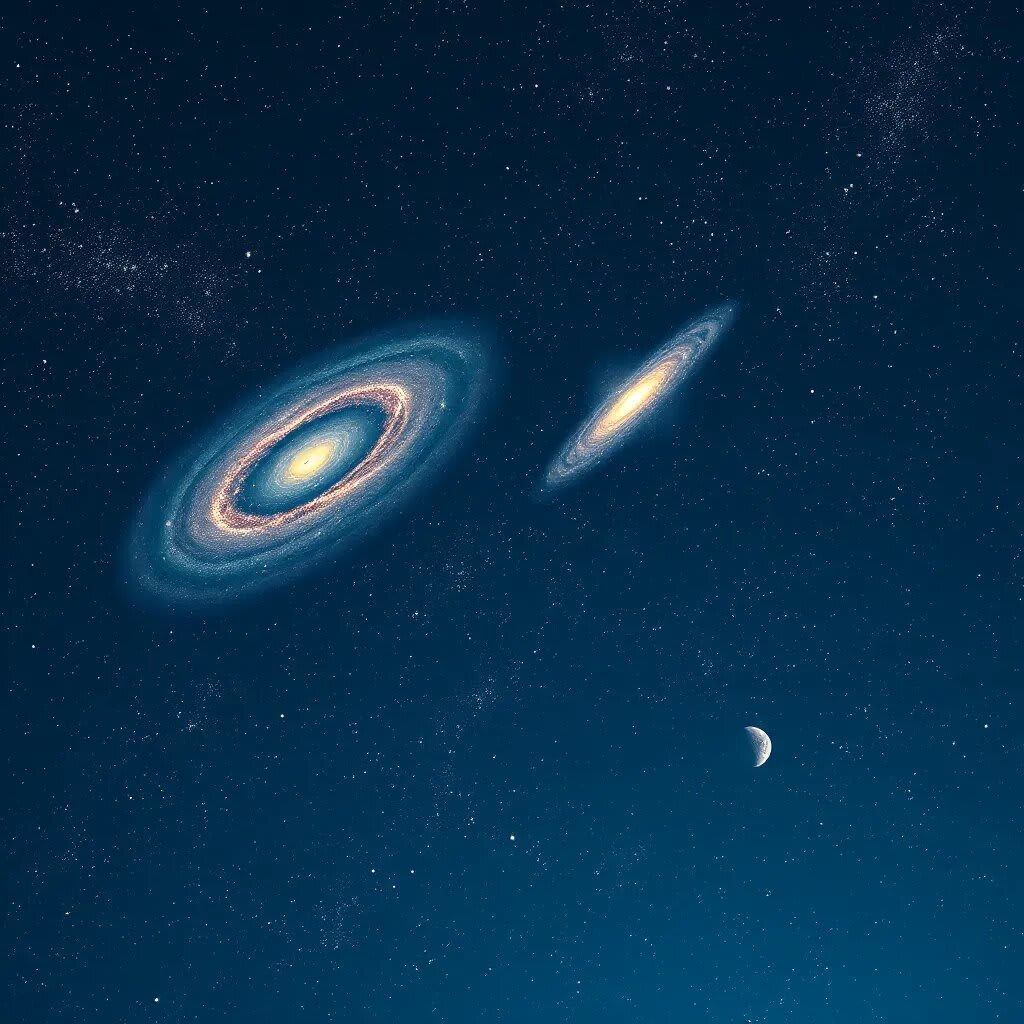
The night sky feels eternal. The constellations seem fixed, the stars twinkle in familiar patterns, and the Moon and planets follow their predictable paths. But the universe is anything but static. It’s a cosmic dance of motion, transformation, and surprises. Fast-forward millions of years, and the sky above Earth will be almost unrecognizable.
Constellations Will Disappear
The constellations we know today — Orion, Ursa Major, Cassiopeia — are just temporary illusions. They're made up of stars scattered at vastly different distances from Earth, all moving in different directions. Over time, their positions shift, and the star patterns we’ve grown used to will dissolve.
Take Orion, for example: one of its brightest stars, Betelgeuse, is nearing the end of its life and may explode as a supernova. When it goes, the “shoulder” of the hunter will vanish — and the whole shape of Orion will distort beyond recognition.
Stars Will Come and Go
Stars aren’t standing still. Some are heading toward us, while others drift away. One particularly interesting case is Gliese 710, a star expected to pass near our solar system in about 1.3 million years. It could come so close that its gravity disturbs the Oort Cloud — a distant shell of icy objects — potentially sending a swarm of comets toward the inner planets.
Meanwhile, old stars will die in supernova explosions, and new ones will be born in glowing nebulae, adding fresh pinpoints of light to the ever-changing sky.
The North Star Will Shift
Right now, Polaris is our North Star, thanks to the tilt of Earth’s axis pointing almost directly at it. But Earth’s axis slowly "wobbles" over time — a phenomenon called precession. In about 12,000 years, Vega will take over as the new North Star. And 26,000 years after that, Polaris will return to its throne, starting the cycle all over again.
Solar Eclipses Will Fade Away
The Moon is slowly drifting away from Earth — about 3.8 centimeters per year. Over time, this small change will add up. In roughly 600 million years, the Moon will be too far away to fully cover the Sun’s disk during an eclipse. That means total solar eclipses — those breathtaking moments when day turns into night — will become a thing of the past. Only annular (ring-shaped) eclipses will remain.
New Nebulae and Galaxies Will Light Up the Sky
In the distant future, skywatchers may witness a jaw-dropping event: the collision between our galaxy, the Milky Way, and our neighbor, the Andromeda Galaxy. This galactic mash-up is expected to begin in about 4 to 5 billion years. Though the stars themselves likely won’t collide, their orbits will shift dramatically, creating a massive, glowing swirl of light in the night sky — a spectacular cosmic sight for future astronomers.
The Twilight of the Stars
Eventually, if the universe keeps expanding, even the stars will begin to die out. In tens of billions of years, the bright, lively night sky will grow dim. Most stars will have burned out, leaving behind cold remnants: white dwarfs, neutron stars, and black holes. The universe will grow darker, colder, and quieter — the age of starlight giving way to a slow cosmic fade.
Final Thoughts
The night sky as we know it is just a fleeting frame in the epic movie of the universe. Constellations will vanish, stars will wander, galaxies will collide — and yet, the human desire to look up, to wonder, and to explore will remain. Perhaps that enduring curiosity is the one truly eternal thing in the cosmos.
About the Creator
Keep reading
More stories from Holianyk Ihor and writers in Education and other communities.
Why Are Heavy Elements Born in Stars?
To the naked eye, stars may look like tiny, steady points of light scattered across the night sky. But behind that calm shimmer lies a cosmic powerhouse — a nuclear forge where the very ingredients of life are born. Without the stars, there would be no Earth, no us, and no matter as we know it. One of the most important processes happening inside stars is the creation of heavy elements — the building blocks of everything solid in the universe. But why does this happen in stars?
By Holianyk Ihor8 months ago in Education
How Studying Information Systems Changed the Way I See the World
Before studying Information Systems, I used to see the world as a collection of separate parts. Businesses were about profit, technology was about gadgets, people were about behavior, and problems were often seen in isolation. I never questioned how deeply interconnected everything truly was. However, studying Information Systems gradually rewired the way I think, observe, and understand the world around me.
By HazelnutLattea4 days ago in Education
Comparing Metal Finishes: Hot-Dip Galvanizing vs. Powder Coating, Painting, and Electroplating
Metal components require strong, reliable protection to maintain structural integrity and performance over time. Whether used in construction, manufacturing, or consumer products, applying a proper surface finish prevents corrosion, enhances appearance, and extends product life. Among the most common techniques are hot-dip galvanizing, powder coating, painting, and electroplating. Each method has distinct properties and use cases, making the choice highly dependent on project-specific requirements.
By Frontier Galvanizing5 days ago in Education
Day 4 of Quitting
If this is how sobriety feels, maybe it’s better to go through life a little buzzed… this, along with other hits like, I want to kill myself, I wish I was dead, and I’m going to throw myself off a bridge have been the only thoughts on rotation these past few days. I promise myself that if, in a month, I still feel like this (‘this’ meaning despondent, full of rage, and simultaneously numb) I can go back to smoking. Until mid-February though? Nicotine is off the table.
By sleepy drafts4 days ago in Longevity


Comments
There are no comments for this story
Be the first to respond and start the conversation.