

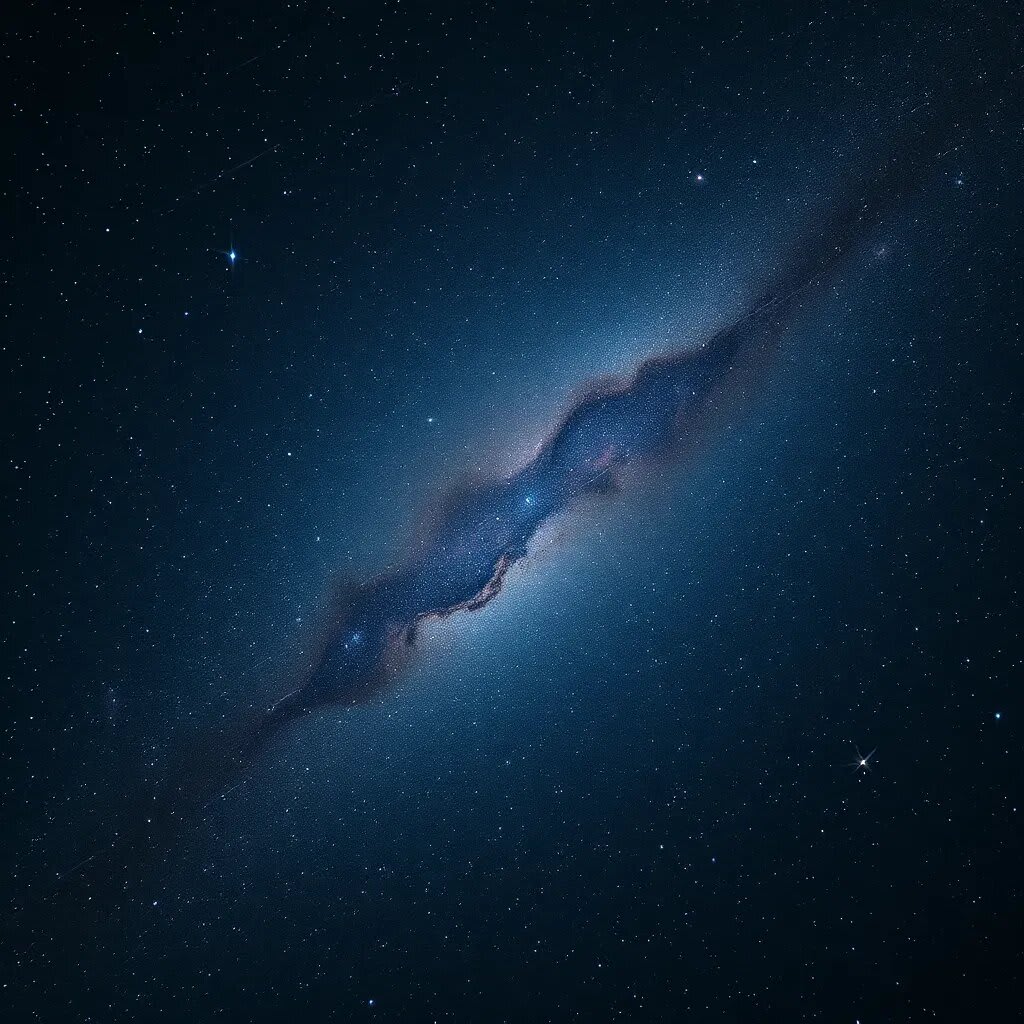
To the naked eye, stars may look like tiny, steady points of light scattered across the night sky. But behind that calm shimmer lies a cosmic powerhouse — a nuclear forge where the very ingredients of life are born. Without the stars, there would be no Earth, no us, and no matter as we know it. One of the most important processes happening inside stars is the creation of heavy elements — the building blocks of everything solid in the universe. But why does this happen in stars?
Stars: The Nuclear Forges of the Universe
From the moment a star is born, it begins fusing hydrogen atoms into helium in its core. This process, called nuclear fusion, powers the star and makes it shine. At insanely high temperatures and pressures — think millions of degrees — hydrogen nuclei collide and stick together, releasing vast amounts of energy in the form of light and heat.
But fusion doesn't stop at helium. As a star ages and uses up its hydrogen fuel, it begins fusing helium into heavier elements — carbon, oxygen, and so on — all the way up to iron, depending on the star's mass. This chain reaction is how stars produce the lighter elements on the periodic table, up to atomic number 26.
Why Does Fusion Stop at Iron?
Iron is where things get tricky. Up to that point, fusion releases energy. But fusing elements heavier than iron actually consumes energy instead of producing it. So once a star’s core is filled with iron, it hits a dead end. It can no longer generate the pressure needed to resist gravity, and that’s when things start to fall apart — literally.
Supernovas and the Birth of the Heaviest Elements
So if stars can’t forge elements heavier than iron, where do gold, uranium, and platinum come from?
The answer lies in the most extreme events in the cosmos — supernovas and neutron star mergers.
When a massive star dies in a supernova explosion, the resulting shockwave and temperatures are so intense that a new process kicks in: rapid neutron capture, or the r-process. In the chaotic aftermath, atomic nuclei are bombarded with neutrons, forming some of the heaviest elements in the universe in just fractions of a second.
Even more dramatic are neutron star collisions. These are cosmic smashups between the incredibly dense remnants of dead stars. According to recent observations, these violent mergers are among the richest sources of heavy elements like gold and platinum — enough, in fact, to seed entire galaxies with precious metals.
We Are Made of Star Stuff
Every atom of calcium in your bones, iron in your blood, and oxygen in your lungs was once forged in the heart of a star. When stars die, they scatter these elements across space, eventually becoming part of gas clouds, new stars, new planets — and life itself.
As Carl Sagan famously put it: "We are made of star stuff." And he meant that literally.
Final Thoughts
Stars aren’t just pretty lights in the sky — they’re the master blacksmiths of the universe. Without their blazing fusion and dramatic deaths, we wouldn’t have carbon, oxygen, gold, or the other elements that make up everything we know. Understanding how and where these elements are born doesn’t just tell us how planets form — it tells us something deeper: the story of our own cosmic origins.
About the Creator
Keep reading
More stories from Holianyk Ihor and writers in Education and other communities.
How Does Space Affect Biological Aging?
When we look up at the stars, we dream of exploration, discovery, and distant worlds. But what if space travel doesn't just change how we see the universe — what if it actually changes us? As it turns out, being in space can have a powerful impact on how our bodies age. And this isn't just a theory — we’ve got real evidence from real astronauts.
By Holianyk Ihor8 months ago in Education
What It Really Takes to Get a Wikipedia Page Approved in 2026
These days, Wikipedia isn't like the one some folks recall. Back then, an okay article often made it through with just small tweaks. Now things feel tighter, more intense. Every day brings thousands of fresh entries. Most vanish fast, blocked before they stick around. Getting turned down used to be rare. Lately, that's just how it goes.
By Hillshire Media4 days ago in Education
Fly Fishing or Spinning: Choosing the Best Fishing Technique for Your Next Adventure
When planning a fishing trip, one of the first questions many anglers face is whether to use fly fishing or spinning. Both methods are effective, enjoyable, and widely used, but they offer very different experiences. The right choice can shape how successful and enjoyable your trip feels. Understanding how each technique works will help you pick the option that fits your goals, location, and comfort level.
By Jett Harris of Arkansas4 days ago in Education
'20/20'
"Do It Again" the track that would ultimately open the Beach Boys final album on Capitol Records which was released on February 10th 1969 had originally been released as a single in August of 1968. The track was the first of many post-Pet Sounds era throwbacks to the early Beach Boys sound which would become continually more cliched and eventually lead the Beach Boys to the level of self-parody they would eventually succumb to in the 1980s while their closest contemporaries The Beatles nearing the end of their run in 1969 would go on to be viewed as the most influential band of all time. However, the song itself is not bad on its surface, and it opens with a futuristic sounding (for 1969) drumbeat captured by then-Beach Boys engineer Stephen Desper using tape delays on the drums performed by Dennis Wilson and John Guerin. The song has been re-recorded numerous times over the years on various Beach Boys-related projects most notably the 2011 re-recording at Capitol studios featuring the five surviving Beach Boys at the time backed instrumentally by various members of both the Brian Wilson Band and Mike Loves touring "Beach Boys" to promote the then upcoming Beach Boys 50th Anniversary reunion tour in 2012. The hammering and power drill sound at the end of the song was an excerpt from a track called "Workshop" that was to be a part of the uncompleted "SMiLE" album.
By Sean Callaghan6 days ago in Beat


Comments
There are no comments for this story
Be the first to respond and start the conversation.