
How Studying Information Systems Changed the Way I See the World
From databases to human behavior, how a technical degree reshaped my understanding of society, business, and life.

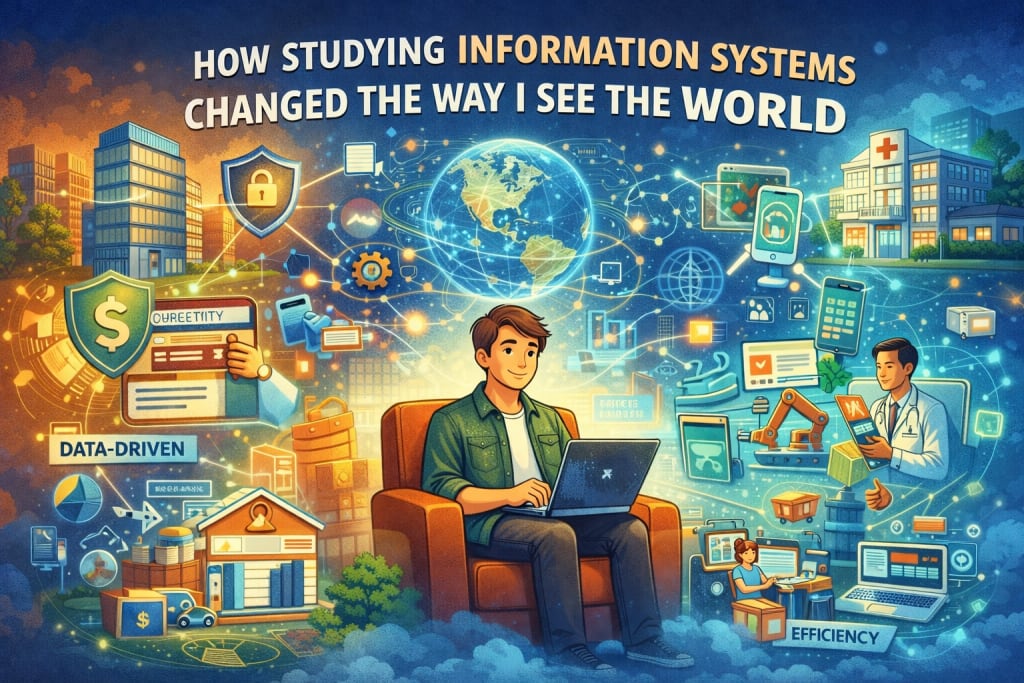
Before studying Information Systems, I used to see the world as a collection of separate parts. Businesses were about profit, technology was about gadgets, people were about behavior, and problems were often seen in isolation. I never questioned how deeply interconnected everything truly was. However, studying Information Systems gradually rewired the way I think, observe, and understand the world around me.
Information Systems is not just about coding, databases, or software. It is about how technology, people, and processes interact to create value. Once I understood this, I could no longer look at everyday situations the same way again.
One of the biggest changes was how I started seeing problems. Before, I focused mostly on symptoms. If a company was losing customers, I assumed the product was bad. If a system was slow, I blamed the technology. But Information Systems taught me to look deeper. Problems are rarely caused by a single factor. They are usually the result of misaligned processes, poor data flow, unclear communication, or decisions made without accurate information.
This mindset slowly became part of my daily life. When I see a long queue at a coffee shop, I don’t just see impatient customers. I see an inefficient workflow, a poorly designed ordering system, or a lack of real-time demand forecasting. When an app crashes, I no longer just feel frustrated—I start wondering about system architecture, scalability, and user load. The world started to look like a massive system, constantly processing information.
Another major shift was how I understand data. Before studying Information Systems, data felt abstract and distant—numbers in spreadsheets that only analysts cared about. Now, I see data as a powerful lens that shapes decisions, behavior, and even ethics. Every click, transaction, and interaction leaves a digital footprint. Behind every recommendation on social media or e-commerce platform lies a complex information system deciding what I should see next.
This realization made me more aware and critical as a digital citizen. I now question how my data is collected, stored, and used. I think about privacy, security, and the responsibility organizations have when handling information. Studying Information Systems made me realize that technology is never neutral. The way systems are designed reflects human values, priorities, and sometimes biases.
Information Systems also changed how I view organizations and leadership. I used to think that success depended mainly on strong leaders or innovative products. While those are important, I now understand that sustainable success often depends on how well an organization manages information. Companies that can transform data into insight, align technology with business goals, and adapt their systems quickly are the ones that survive in a fast-changing world.
This perspective applies beyond businesses. Governments, healthcare systems, educational institutions, and even non-profit organizations rely heavily on information systems. When these systems fail, the consequences are real and human—delayed medical care, misinformation, inequality, or wasted resources. Studying Information Systems helped me see technology not as a luxury, but as a critical infrastructure shaping modern society.
On a personal level, this field changed the way I approach learning and growth. Information Systems taught me that no system is ever truly finished. There is always room for optimization, integration, and improvement. This idea influenced how I see myself. I started treating my own habits, workflows, and goals as systems that could be analyzed and refined. If something isn’t working, instead of blaming myself, I look for bottlenecks, missing inputs, or poor feedback loops.
Another powerful lesson was the importance of collaboration. Information Systems sits at the intersection of technology and human interaction. No system works in isolation, and no successful project is built alone. Through group projects and case studies, I learned how miscommunication between technical and non-technical people can derail even the best ideas. This made me value empathy, translation, and adaptability—skills that are just as important as technical knowledge.
Perhaps the most profound change is how I now see the future. Instead of feeling overwhelmed by rapid technological change, I feel curious and engaged. Studying Information Systems gave me a framework to understand emerging technologies like artificial intelligence, cloud computing, and big data—not just as trends, but as systems that will reshape how we work, learn, and live. It taught me to ask better questions: Who benefits? Who is left out? How can systems be designed more ethically and inclusively?
In the end, studying Information Systems didn’t just give me a degree or a skill set. It gave me a new way of seeing. I now see the world as interconnected systems driven by information, shaped by human decisions, and constantly evolving. This perspective makes me more thoughtful, more critical, and more responsible in how I interact with technology and society.
Information Systems changed the way I see the world—not by giving me all the answers, but by teaching me how to look beneath the surface and understand how everything connects. And once you see the world that way, there is no going back.
About the Creator
HazelnutLattea
Serving stories as warm as your favorite cup. Romance, self reflection and a hint caffeine-fueled daydreaming. Welcome to my little corner of stories.
Stay tuned.🙌
Keep reading
More stories from HazelnutLattea and writers in Education and other communities.
ChatGPT, Midjourney, and Beyond: A Tour of Today’s Smartest AI Tools
Introduction Artificial Intelligence has come a long way from being just a futuristic buzzword. Today, AI tools are part of our daily lives—helping us write, generate art, analyze data, and even hold conversations. Whether you're a writer, artist, entrepreneur, student, or simply curious, AI has something to offer.
By HazelnutLattea10 months ago in Education
Education Finance Software Market to Reach USD 12.04 Billion by 2035
Education Finance Software Market The Global Education Finance Software Market is projected to reach approximately USD 12.04 billion by 2035, rising from USD 5.63 billion in 2025, and registering a CAGR of 7.9% during the forecast period from 2025 to 2035. This growth reflects increasing digital transformation across educational institutions, particularly in financial administration and compliance management. Schools, universities, and training institutions are modernizing budgeting, accounting, payroll, and procurement systems to improve transparency and operational efficiency.
By Roberto Crum3 days ago in Education
Generational Wealth Blueprint: Proven Investment Strategies for Family Legacies
Generational Wealth is the dream of many families across the country. It means building assets that last beyond one lifetime. It means creating safety, freedom, and choice for children and grandchildren. Many people believe only the very rich can achieve this goal. That belief is not true. With focus and steady effort, almost any family can build Generational Wealth over time. The key is using smart investment strategies for family legacies. These strategies help turn earned income into long-term assets. They protect money from loss and grow it incrementally. Generational Wealth is not built overnight. It grows through discipline, patience, and clear planning. Families who understand this process create a strong path for the future. Each wise decision today shapes the financial life of the next generation.
By Winston Feng3 days ago in Education




Comments
There are no comments for this story
Be the first to respond and start the conversation.