
What Untold Histories Lurk Behind the Monuments of Singapore’s Civic District?
Secrets, Stories, and Echoes of the Past
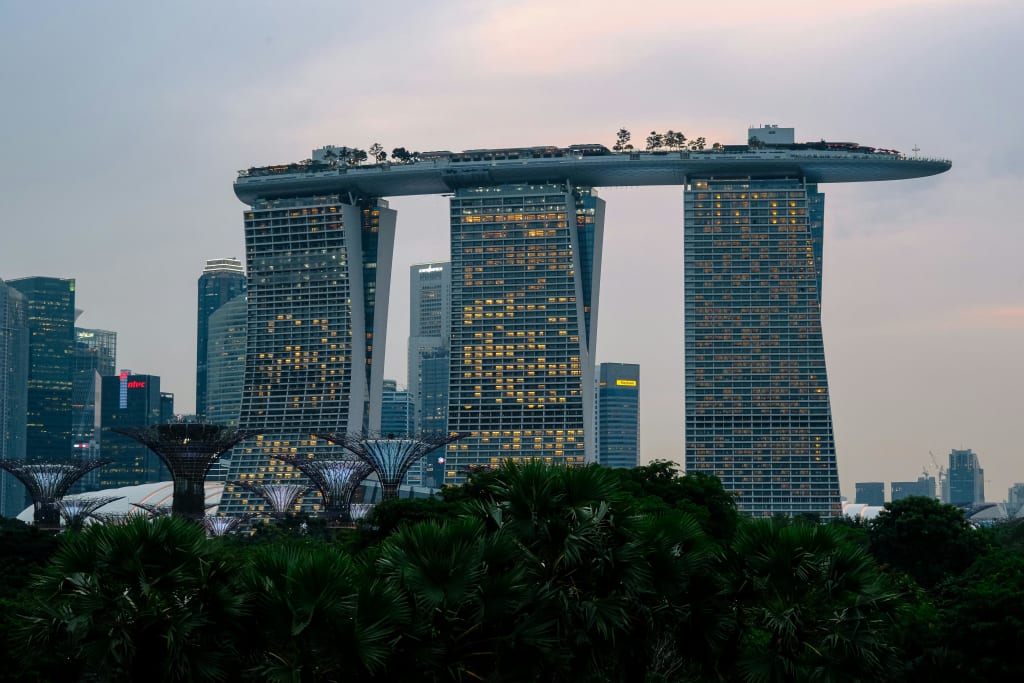
The historic heart of Singapore, the Civic District, is the very place where Sir Stamford Raffles first set foot on the island. This part of the city has so much history contained within, which shines through the grand old buildings and monuments. They have seen it all, from Singapore’s early days as a trading post to its time as a British colony and its journey to becoming an independent nation.
Secrets and Stories
These days, the Civic District functions as a lively venue for the arts. Here, you can enjoy events like the annual Light to Night Festival. But even if there’s nothing much happening, it’s still a good place to visit.
Give yourself the opportunity to walk among the buildings and relive history, feeling all nostalgic for days when things were much calmer.
Staying close to the area means you get access to other popular attractions too. Grand Park City Hall, one of the five-star hotels in Singapore CBD, is about four minutes from the Civic District.
Raffles Statue
On the north bank of the Singapore River stands a white statue of Sir Stamford Raffles, arms folded. This is the place where he’s believed to have first landed in 1819. The statue you see today isn’t the original – it’s a 1970s replica of the bronze version by British sculptor Thomas Woolner, which was first unveiled in 1887 at the Padang.
The bronze statue was later moved in 1919, on the 100th anniversary of Raffles’ landing, to Empress Place in front of the Victoria Memorial Hall. The new location was chosen to give the statue a bit more dignity – back at the Padang, it often got hit by footballs or used as a seat during games!
During World War II, the bronze statue narrowly escaped bomb damage and was taken down during the Japanese Occupation. It returned to its original location in 1946, where it still stands today, in front of the Victoria Theatre and Concert Hall.
Elephant Statue
Another monument you see in the Civic District is the bronze Elephant statue, now standing beside The Arts House. It was originally placed in front of the Victoria Memorial Hall, but was later moved to make room for the bronze Raffles statue.
The elephant was made in Bangkok and presented to Singapore by King Chulalongkorn of Siam during his visit in March 1871 – the first time a Siamese monarch had ever travelled abroad. During his stay, the king was hosted at Government House, known today as the Istana.
At the base of the statue, an inscription reads:
‘His Majesty Somdetch Paramindr Maha Chulalongkorn, the Supreme King of Siam, landed at Singapore, the first foreign land visited by a Siamese Monarch, on the 16th March 1871.’
Asian Civilisations Museum
Today, the Asian Civilisations Museum (ACM) holds artefacts relating to the city’s immigrant roots. But long before it became a museum, this same building saw a very different kind of visitor – people dealing with real immigration matters.
Back then, it was known as the Empress Place Building, home to the Immigration Office, the Registry of Births and Deaths, the Citizenship Registry, and the National Registration Department. Earlier still, it housed the Colonial Secretariat, Attorney General’s Chambers, Treasury, and Land Office. Completed in 1867, it’s one of the oldest buildings in the Civic District and was once commonly referred to as the Government Office.
Few know that the current ACM is actually the building’s second museum. The first, called the Empress Place Museum, opened in 1989 but closed just six years later due to low visitor numbers. After a major revamp, the Asian Civilisations Museum officially opened its doors in 2003.
The building also played an important role in Singapore’s early mapping efforts. It once served as the 'Geographical Origin of Coordinates' – the point from which all local coordinates were measured. This reference point was marked by a flagstaff located near where the ACM’s Tang Shipwreck Gallery now stands, with a median reference of 1°17’15.528″N and 103°51’10.808″E.
Dalhousie Obelisk
Standing in the middle of the Civic District’s Empress Place is a tall, needle-shaped monument called the Dalhousie Obelisk. It holds the title of Singapore’s very first public monument, built in 1851 to mark the visit of James Andrew Broun-Ramsay, the Marquis of Dalhousie and then governor-general of India.
The visit was an important milestone. The last time a governor-general visited, back in 1829, things hadn’t gone so well. The Straits Settlements, which included Singapore, were downgraded from a presidency to a residency to save costs. That meant Singapore lost some of its independence and came under Bengal’s control, with all decisions made from faraway Calcutta.
Fortunately, Dalhousie’s visit in 1850 turned out much better. The local and expatriate merchant community went all out to impress him. It worked – not only did Singapore get a boost in reputation, but the governor of the Straits Settlements even got a pay rise after the visit!
The Dalhousie Obelisk was built soon after, in 1851, to celebrate the occasion.
Here’s a little secret – despite looking like a stone monument, it’s actually made of brick and mortar.
About the Creator
Keep reading
More stories from John Ashley and writers in Education and other communities.
Why Maritime Education in Sri Lanka Is Gaining Global Recognition
If you’ve been paying attention, you’ve probably noticed Sri Lanka popping up more and more in global conversations about maritime training. For a small island, the country is suddenly producing a lot of world-class seafarers, marine engineers, and logistics professionals. So what’s behind all this? Keep reading to find out.
By John Ashley2 months ago in Education
Time Management Hacks Every Entrepreneur Should Know
Running a startup demands more than hustle—it requires precision in how you use your time. As a founder, your daily choices directly impact your company’s growth, culture, and long-term sustainability. Without the right strategies, it's easy to get overwhelmed by tasks and lose sight of what truly matters. Mastering a few smart productivity habits can dramatically improve how you work.
By Per Jacob Solli5 days ago in Education
The "Free" Lead Trap: Why New Real Estate Agents Are Paying a Hidden Price
In the early stages of a real estate career, an agent’s most precious asset isn't their luxury car, their high-end camera gear, or a downtown office lease. It is their time. Yet, for many new professionals, time is the one resource they are most willing to squander in exchange for the "dopamine hit" of a smartphone notification.
By SiftlyLeads4 days ago in Education


Comments
There are no comments for this story
Be the first to respond and start the conversation.