
What Time Is It On The Moon
Our lives are shaped by time, which we cannot escape. We are influenced by clocks and alarms, which also cause us stress.

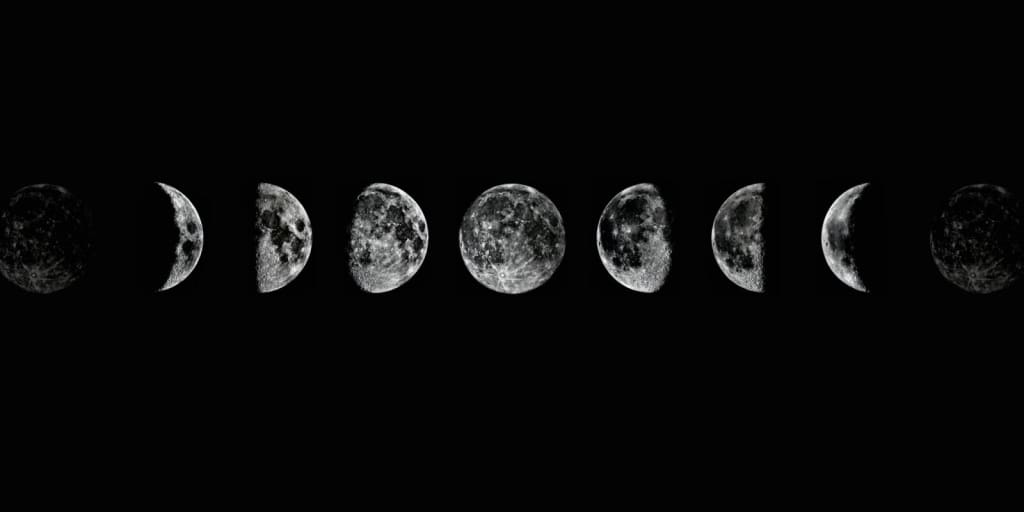
Our lives are shaped by time, which we cannot escape. We are influenced by clocks and alarms, which also cause us stress. Even if we abandoned technology and returned to nature, we would still be subject to the planet's rotation on its axis and around the Sun. Socially; people on Earth have come to terms with the establishment of time zones and a single global time. But what occurs if we leave our planet?
The time zone aboard the international space station is universal time (UT), which is the same as Greenwich Mean Time (GMT), which makes life challenging for Muslim astronauts, especially during Ramadan. The space station also has 16 sunsets every day.
By that reasoning, but it's not a given, global time is likewise the time on the Moon. There is currently no consensus over the time zone that will be used when humans return to the Moon with Artemis III or later on when one or more bases are built there. Robotic missions are now maintained on schedule in accordance with certain time zones in the nation of origin.
Even roughly, it might not be possible to use the Sun in the same way that we do on Earth. There are 14.77 Earth days between the Sun's rising and setting on the Moon, therefore some divisions are required. It was formerly proposed to use a Lunar Standard Time, where seconds, minutes, and hours remained the same but 24 hours were referred to as cycles and 30 cycles were roughly equivalent to a complete lunar day.
What Time Zone Did the Astronauts from Apollo Use on the Moon?
Why not emulate what the Apollo astronauts accomplished given that they had a fruitful time there? There is a minor problem with this, though. The question in the subheading above is a joke. There was no time zone that the astronauts were utilizing. Not UTC, Florida time when they launched, Houston time, or the time zone where Mission Control was situated. They employed Ground Elapsed Time (GET), currently referred to as Mission Elapsed Time. From launch, time was measured in minutes, hours, and days.
It made more sense to utilize it rather than a particular time zone on early flights and later ones like the Space Shuttle because so much depended on activity occurring at a specified time following liftoff.
But a remedy is required because this doesn't really make sense for a mission on the Moon that lasts longer. Such a conversation has been requested by the European Space Agency. For astronauts, the requirement for a lunar surface time zone is not urgent, but the development of a lunar communication system will make a choice crucial.
Our perception of time is deeply ingrained with the duration of an Earth day, to the point that even minute changes in the Earth's rotation can have a significant impact. So how can humans function on planets when a day is entirely different in length? The European Space Agency (ESA) doesn't know the solution, but believes the time has come to do so before upcoming lunar bases are forced to use a clock that is incompatible with their demands.
Robotic or human-manned lunar missions have always followed the local time zone. Since no one has remained for very long and no missions have intersected, that has worked okay. It won't be the same at a future Gateway station with missions answerable to many continents. Things will become even more complicated once there are many bases on the Moon, each of which experiences day and night at various times, and communications satellites in orbit above them.
Dr. Javier Ventura-Traveset of the ESA stated that "LunaNet is a framework of mutually agreed-upon standards, protocols, and interface requirements allowing future lunar missions to cooperate, conceptually similar to what we did on Earth for joint use of GPS and Galileo." We can agree on these systems prior to their implementation, as noted by Ventura-Traveset, or we can find ourselves stranded thereafter, at the mercy of those who are reluctant to adapt.
About the Creator
Najmoos Sakib
Welcome to my writing sanctuary
I'm an article writer who enjoys telling compelling stories, sharing knowledge, and starting significant dialogues. Join me as we dig into the enormous reaches of human experience and the artistry of words.
Keep reading
More stories from Najmoos Sakib and writers in Education and other communities.
How Uranium Fuels Nuclear Power Plants and Bombs
Why is uranium such a potent material? The history of uranium is intriguing and has a huge impact on many industries. Uranium was called after the planet Uranus, which had only recently been discovered, after it was found in 1789 by German chemist Martin Klaproth.
By Najmoos Sakib3 years ago in Education
Image-to-text technology, also known as Optical Character
Image-to-text technology, also known as Optical Character Recognition (OCR), has transformed the way we interact with visual information. It allows machines to extract text from images, enabling various applications across multiple industries. From digitizing printed documents to reading text from scanned images, OCR plays a vital role in making printed content accessible, editable, and searchable. The need for such technology has grown exponentially with the increasing reliance on digital data and the rapid shift from physical to digital content in nearly all sectors of life. As the digital world continues to expand, image-to-text technology has paved the way for more seamless workflows, enabling businesses and individuals alike to save time, effort, and resources.
By Alexander Jackson5 days ago in Education
Most Sales Deals Fail Because Sellers Talk to the Wrong People
There is a quiet reason many sales conversations feel productive but go nowhere. Everyone leaves the call optimistic. Emails move back and forth. Documents get shared. Then momentum fades. Weeks pass. The deal stalls without a clear explanation.
By Armi Ponsica4 days ago in Education


Comments
There are no comments for this story
Be the first to respond and start the conversation.