
What's the Role of Exercise in Mental Health?
Role of Exercise
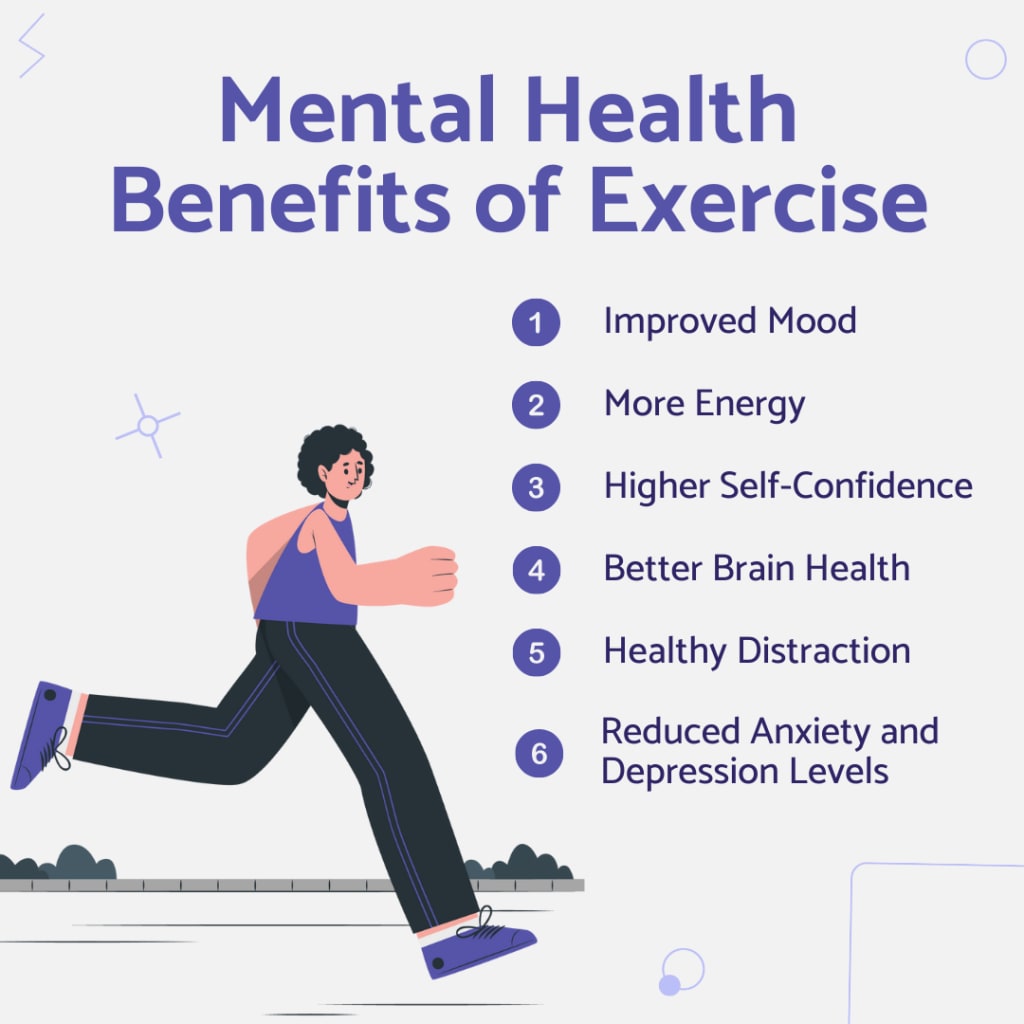
Introduction
The majority of individuals who consider exercise tie it to physical improvements like weight, strength, or heart. However, research over the last couple of decades has consistently highlighted that exercise also plays an important role in mental health. Body exercise doesn't just shape the body—it profoundly affects the brain, emotions, and overall psychological health.
Exercise can reduce symptoms of depression, lower anxiety, improve sleep, and increase resilience against stress. It is increasingly recognized as both a preventive measure and a complementary treatment for many mental health conditions. This article explores in depth how exercise supports mental health, what science tells us, and how individuals can integrate movement into daily life for lasting emotional balance.
The Science Linking Exercise and Mental Health
When we exercise, our body goes through numerous physiological and neurological changes that have a direct impact on mood and cognition. Some of the most important mechanisms include:
1. Release of Endorphins
Exercise causes the release of endorphins—brain chemicals also referred to as "feel-good hormones." These create a natural state of euphoria, referred to as a "runner's high."
2. Regulation of Neurotransmitters
Exercise stimulates the creation of serotonin, dopamine, and norepinephrine. They are crucial for mood regulation and are typically the focus of antidepressant medication.
3. Reduction of Stress Hormone
Physical activity reduces cortisol and adrenaline levels, two hormones that are released in response to stress. Lowering them is calming on the nervous system.
4. Neuroplasticity and Brain Development
Regular exercise increases brain-derived neurotrophic factor (BDNF), which promotes the growth of new neurons and strengthens neural connections, particularly in the hippocampus—a region critical to memory and emotion regulation.
5. Improved Sleep
Physical fitness helps regulate circadian rhythms, resulting in improved sleep and more refreshing, restorative rest, with direct effects on mental well-being.
Exercise and Depression
Depression is a major mental health disorder worldwide, and exercise has come to be recognized as a powerful intervention.
Clinical Evidence: Regular aerobic exercise has been found to be as effective as drug treatment for lessening the symptoms of mild to moderate depression.
Mechanism: Exercise opposes the lethargy and negative thinking typical of depression by increasing energy, leading to success, and enhancing social contact (if with others).
Long-Term Benefit: Those who engage in active living have a much reduced probability of experiencing repeated episodes of depression.
Physical Activity and Anxiety
Anxiety disorders often lead to racing thoughts, restlessness, and physical complaints like increased heart rate or shortness of breath. Exercise helps by:
Emulating Stress Response: Aerobic exercise briefly raises the heart rate and respiration, which paradoxically habituates the body to more readily tolerate these sensations, reducing fear of panic attacks.
Mindfulness in Action: Activities like yoga, tai chi, or even mind walking welcome awareness in the present moment, grounding fearful thoughts.
Instant Relief: One episode of physical activity can decrease symptoms of acute anxiety by engaging relaxation responses.
Exercise and Stress Control
Stress is unavoidable, yet continuous stress damages mental and physical health. Exercise is a natural stress reducer by:
Spiking stress hormones.
Encouraging rhythmic breathing and movement leading to relaxation.
Providing a healthy outlet for frustration and bottled-up tension.
Improving problem-solving capacity through increased mental clarity following exercise.
Cognitive Gains from Exercise
Mind health isn't all about mood—it's also about how well our brains function. Exercise benefits brain health by:
Improving focus and memory.
Slowing cognitive decline with advancing age.
Improving executive functions such as planning and decision-making.
Deterrent action on neurodegenerative illnesses such as Alzheimer's and dementia.
Social and Psychological Benefits
Physical activity, particularly in groups, confers psychological benefits separate from biology.
Social Bonding: Group exercise with sports teams, walking groups provides an opportunity to establish supportive relationships and reduce isolation.
Sense of Mastery: Conquering fitness barriers—running a mile or performing a yoga pose—enhances self-worth and self-efficacy.
Routine and Structure: Having a daily exercise routine gives life rhythm and predictability, something that is especially useful for individuals who are struggling with depression or bipolar disorder.
Types of Exercise Beneficial to Mental Health
Not everything has to be high-intensity exercise to be good. Different physical activities enhance mental well-being in different ways:
1. Aerobic Exercise (Running, Cycling, Swimming):
Aids in elevating mood, reducing anxiety, and enhancing brain function.
2. Strength Training (Weightlifting, Resistance Exercises):
Linked with reductions in depression and increases in self-esteem.
3. Yoga and Mind-Body Exercise:
Reduce stress, promote relaxation, and increase emotional awareness.
4. Walking and Light Activity:
Even simple walking has been found to reduce stress and improve mood.
5. Team Sports and Group Fitness:
Provide greater social benefits and accountability.
Overcoming Barriers to Exercise
Despite its advantages, several people struggle with maintaining a regular exercise routine due to barriers such as:
Low Motivation: Depression drains energy, and exercise will feel too much. Starting with just 5–10 minutes activity can make it feel more achievable.
Time Constraints: Schedules are too busy for exercise. Integration into daily routine (e.g., walking instead of driving short distances) helps avoid this.
Fear of Judgment: Being seen exercising in public may feel embarrassing for some people. Home or private routines can build confidence.
Physical Barriers: Those with chronic disease or disability may be restricted. Modified exercises (chair yoga, water therapy, slow stretching) provide potential alternatives.
Practical Tips to Incorporate Exercise into Mental Health
Start Small: Start brief, manageable sessions—like a 10-minute walk—before adding intensity.
Choose Enjoyable Activities: Enjoyment is compliance. Dancing, hiking, or gardening is as good as gym aerobics.
Establish Realistic Expectations: Opt for regularity over perfection.
Use Technology for Support: Fitness apps, wearable tech, or online fitness forums might be able to offer support.
Pair with Other Tactics: Exercise is most beneficial when combined with therapy, medication (if prescribed), mindfulness, and eating well.
Case Examples
Case 1: Anxiety Alleviation through Yoga
A 32-year-old female patient with generalized anxiety disorder struggled with racing thoughts. Her therapist recommended two sessions of yoga per week. After six months, she reported increased calmness, reduced panic attacks, and sleep improvement.
Case 2: Running to Recover from Depression
A 45-year-old man with major depressive disorder started a gradual running program. Within three months, he showed increased energy, improved self-esteem, and reduced depression symptoms, along with supplementing his therapy sessions.
Research Evidence
According to an Harvard Medical School report (2019), running for 15 minutes a day or walking for an hour reduces the risk for major depression by 26%.
The American Psychological Association highlights exercise as a first-line therapy for mild and moderate depression.
Randomized controlled trials suggest that strength training decrease symptoms of depression and anxiety significantly.
Mind-body practices like yoga have been shown to decrease cortisol levels and improve stress resiliency.
Final Thoughts
Exercise is not merely about body strength—it's a cornerstone of mental health. From mood control and anxiety reduction to self-esteem and cognitive defense, physical activity offers a holistic mind-body solution to mental health. While it will never be used as a replacement for professional therapy or medication in deep-seated issues, it is a powerful, evidence-based complement.
Exercise is beauty as it is available. A walk, a yoga session, or a football practice with friends, whatever it is, movement in all its forms results in better mental health. The only thing is to stay constant, enjoy the process, and find a way that fits into one's lifestyle.
For expert guidance and mental well-being support, visit:
About the Creator
Keep reading
More stories from Naveen Garg and writers in Education and other communities.
How Nutrition Affects Mental Health?
Introduction The old saying "you are what you eat" has never sounded truer than when it comes to mental health. Diet is not generally accorded the importance it ought to have when emotional well-being comes up for consideration, but it plays an enormously important part in the way we feel, think, and behave. Just as food sustains the body, it fuels the brain—the command center for emotions, thinking, and recovery. In recent decades, scientific evidence has increasingly revealed that diet is not only essential in the prevention of physical illnesses like diabetes or heart disease but also in the preservation of healthy brain function and the prevention of psychiatric disorders.
By Naveen Garg5 months ago in Education
How to Succeed at the Benson Directory®
Congratulations and welcome to the Benson Directory® employee #22391! As our newest call handler, you will have the privilege of speaking with dozens of unique and interesting people on a daily basis as well as the opportunity to earn bonuses for high performance. Contained within this handbook you will find a set of ease to follow instructions designed to help you settle in to your new role and begin paving the way to success.
By S. A. Crawford2 days ago in Fiction




Comments
There are no comments for this story
Be the first to respond and start the conversation.