
What is the relationship between sleep and mental health, and how can better sleep hygiene support recovery?
relationship between sleep and mental health
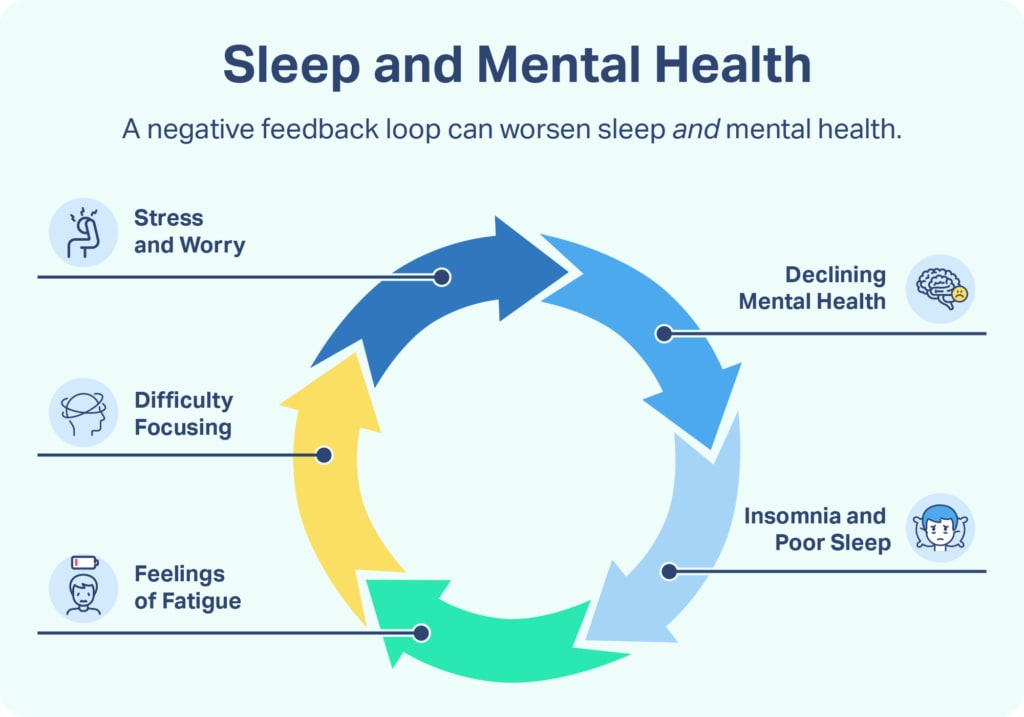
Sleep and mental health are closely linked. While most people know that a good night’s sleep helps us feel refreshed and alert, quality sleep is essential for emotional control, thinking ability, and overall psychological health. Disturbances in sleep can be both a symptom and a cause of various mental health disorders. On the other hand, dealing with sleep problems can greatly aid recovery and build resilience.
The Bidirectional Link Between Sleep and Mental Health
Mental health and sleep affect one another in a two-way manner. Poor sleep can trigger or worsen mental health problems, and mental health issues can cause sleep disturbances.
Poor Sleep → Mental Health Problems
Not getting enough sleep affects brain areas that control decision-making, emotional management, and concentration. It can raise stress hormone levels, like cortisol, increase anxiety, and disrupt mood stability.
Mental Health Problems → Poor Sleep
Conditions like anxiety, depression, PTSD, and bipolar disorder often disrupt the sleep-wake cycle, leading to insomnia, hypersomnia, nightmares, or restless sleep.
This cycle can quickly become harmful: a person's mental state disrupts sleep, and poor sleep worsens emotional and cognitive functioning, further affecting their mental health.
How Different Mental Health Conditions Affect Sleep
1. Depression
Insomnia is one of the most common signs of depression, especially trouble falling asleep or waking up too early.
Others may feel excessively tired and still need more sleep.
Sleep problems can happen before depression starts and increase the chance of relapse after recovery.
2. Anxiety Disorders
Racing thoughts, restlessness, and tension can make it hard to fall or stay asleep.
People might lie in bed worrying or feel physical symptoms like a racing heartbeat or shallow breathing that disrupt their rest.
3. Bipolar Disorder
During manic phases, people often need less sleep and may go days with little rest.
In depressive phases, they might oversleep or suffer from insomnia.
4. Post-Traumatic Stress Disorder (PTSD)
Nightmares and night terrors are key symptoms, interrupting sleep patterns.
Those with PTSD may also avoid sleep due to fears of distressing dreams.
5. Schizophrenia
Sleep fragmentation and irregular REM sleep are common.
Disrupted sleep patterns can worsen psychotic symptoms and hinder medication adherence.
The Science Behind Sleep and Brain Function
Sleep is not just a passive state; it’s an active process with complex interactions in the brain and body.
Key Roles of Sleep in Mental Health:
Memory Consolidation: Sleep helps our brains process and store daily information, aiding learning and emotional control.
Mood Stabilization: Sleep balances neurotransmitters like serotonin and dopamine, which are vital for emotional well-being.
Stress Recovery: Sleep lowers stress hormone levels and restores energy, helping us handle daily pressures better.
Neuroplasticity: Deep sleep assists the brain in adapting and recovering from trauma, building new neural connections.
When these functions are disrupted by inadequate or poor-quality sleep, individuals may face irritability, lower coping skills, concentration issues, and emotional instability.
What Is Sleep Hygiene?
Sleep hygiene consists of practices and habits that promote consistent, uninterrupted, and restorative sleep. Just like physical hygiene supports your body, sleep hygiene supports your brain and emotional health.
Practical Sleep Hygiene Tips for Better Mental Health
Applying good sleep hygiene practices can greatly improve sleep quality and support mental well-being.
1. Maintain a Regular Sleep Schedule
Go to bed and wake up at the same time daily, even on weekends.
This regularity helps set your body’s internal clock, making it easier to fall and stay asleep.
2. Create a Sleep-Conducive Environment
Make sure your bedroom is dark, quiet, and cool.
Invest in a comfortable mattress and pillow.
Limit noise and consider blackout curtains or white noise machines as needed.
3. Limit Screen Time Before Bed
Blue light from devices can reduce melatonin, the hormone that helps us sleep.
Avoid screens at least 60 minutes before bedtime.
4. Wind Down with a Relaxing Routine
Establish a pre-sleep routine like reading, taking a warm bath, or practicing gentle yoga or meditation.
These cues tell your brain it’s time to relax and prepare for sleep.
5. Avoid Stimulants and Alcohol
Cut back on caffeine after the afternoon.
Stay away from nicotine and alcohol close to bedtime—while alcohol might help you fall asleep, it disrupts the sleep cycle and leads to frequent awakenings.
6. Exercise Regularly
Physical activity supports deeper sleep.
Try to finish intense workouts at least 3–4 hours before bedtime to avoid overstimulation.
7. Avoid Napping Late in the Day
Naps during the day, especially after 3 p.m., can interfere with nighttime sleep.
If you need to nap, keep it to 20–30 minutes.
8. Use Bed Only for Sleep (and Intimacy)
Don’t work, eat, or watch TV in bed.
This helps maintain the connection between your bed and sleep.
9. Manage Worries
Keep a journal to write down worries or a to-do list before bed.
Cognitive behavioral therapy for insomnia (CBT-I) can help reframe negative sleep thoughts.
10. Seek Professional Help When Needed
If sleep problems continue despite your efforts, consult a sleep specialist or mental health professional.
The Role of Treatment and Therapy
In many cases, improving sleep can significantly enhance mental health. For those who struggle with persistent sleep issues:
CBT-I (Cognitive Behavioral Therapy for Insomnia) is the top non-medication treatment.
Medications may help reset the sleep-wake cycle under medical supervision, but should only be used as needed.
Treating underlying mental health issues can often also improve sleep.
It’s essential to view sleep issues as part of a broader mental health care plan, not as something separate.
Sleep and Recovery from Mental Illness
Better sleep quality is linked to:
- Fewer symptoms of depression and anxiety
- Better medication adherence
- Improved quality of life
- Reduced relapses in bipolar disorder
- Decreased risk of suicide
Restorative sleep can boost emotional control, mental clarity, and overall resilience. It builds a strong foundation for other treatment methods to work effectively.
Final Thoughts
The connection between sleep and mental health is significant. Sleep disturbances often signal emotional issues and can be among the last symptoms to resolve. For those recovering from mental illness, making sleep a priority is crucial.
Making small changes in daily routines, combined with professional support, can lead to major improvements. Focusing on sleep hygiene helps not only in mental health recovery but also builds the emotional strength needed to face life’s challenges.
If you're dealing with ongoing sleep issues or mental health concerns, seeking professional help is vital. You don’t need to tackle these challenges by yourself.
Visit: https://www.delhimindclinic.com/
https://www.craftcmsdeveloper.in/ Feel free to reach out if you’d like to make changes to your Craft website or just want to discuss your Craft project. I’m available for a free consultation!
Let me know if you’re ready for Question 4: How can mindfulness and meditation be used to manage mental health conditions like anxiety and depression?
About the Creator
Keep reading
More stories from Naveen Garg and writers in Education and other communities.
From Despair to Hope: How Animal Rescue Efforts Rebuild Broken Lives
Animal rescue efforts stand as a powerful response to suffering that often goes unseen. Across towns, cities, and rural areas, animals face neglect, abandonment, injury, and fear every day. Many are left without food, shelter, or medical care. Others are harmed by abuse or natural disasters. Without help, their future is uncertain. Through patience, care, and action, animal rescue efforts transform despair into hope and give animals the chance to heal and live safely.
By Brenda McGrane5 days ago in Education




Comments
There are no comments for this story
Be the first to respond and start the conversation.