
What is the Purpose of Asset Tags and Barcodes?
Asset Tagging Barcode IFMS

Every business, no matter its size, has assets. These assets—ranging from office equipment to high-value machinery—are essential for operations. But how do companies ensure these assets are well-managed? Enter asset tags and barcodes. These simple yet powerful tools have revolutionized how businesses track and manage their resources. Let’s dive into their purpose and how they can transform your operations.
What Are Asset Tags?
Asset tags are labels or plates affixed to physical assets to identify and track them. They typically include a unique identifier like a serial number, barcode, or QR code.
- Common Materials Used
- Asset tags are crafted from various durable materials, such as:
- Metal (e.g., aluminum or stainless steel)
- Plastic
- Vinyl
Types of Asset Tags
- Permanent Asset Tags: Ideal for high-value equipment, offering long-lasting durability.
- Tamper-Evident Tags: These indicate if someone has attempted to remove them.
- RFID Tags: Use radio frequency for advanced tracking.
What Are Barcodes?
Barcodes are machine-readable representations of data. They appear as a series of parallel lines (linear barcodes) or more complex patterns like QR codes.
Types of Barcodes
- Linear Barcodes: Found on most retail products.
- QR Codes: Hold more data and can be scanned with smartphones.
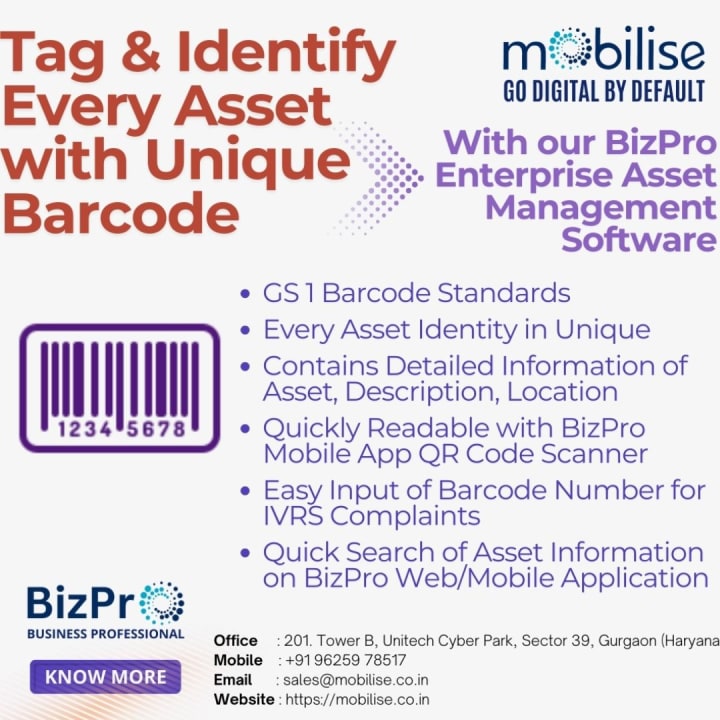
The Core Purpose of Asset Tags and Barcodes
- Tracking Physical Assets
These tools ensure that companies know the location, usage, and status of their assets.
- Enhancing Inventory Management
By automating inventory tracking, businesses can avoid overstocking or understocking.
- Reducing Human Error
Manual processes often lead to mistakes. Asset tags and barcodes reduce errors by automating data entry.
- Asset Tracking in Business
- Simplifying Equipment Tracking
With asset tags and barcodes, tracking even thousands of items becomes manageable.
- Ensuring Accountability
Assigning assets to individuals promotes responsibility and reduces loss.
- Improving Operational Efficiency
Knowing what assets are available allows for better allocation and usage.
The Role of Barcodes in Asset Management
- Quick and Accurate Data Input
- Scanning a barcode is far faster and more accurate than manual entry.
- Integration with Asset Management Systems
- Barcodes seamlessly connect to software, providing real-time updates.
Benefits of Using Asset Tags and Barcodes
- Increased Productivity
- Less time is wasted searching for or tracking assets.
- Cost Savings
- Preventing theft, loss, and damage leads to significant savings.
- Enhanced Data Accuracy
- Reliable data ensures better decision-making.
How Asset Tags and Barcodes Work Together
- The Process of Assigning Tags and Codes
- Each asset is tagged and coded, linking it to a database.
- Synchronization with Software
- Data is updated in real time, offering visibility across departments.
Industries That Rely on Asset Tags and Barcodes
- Healthcare
- To manage medical equipment and supplies.
- Manufacturing
- For tracking tools, machinery, and materials.
- Retail
- Streamlining inventory management and sales.
- Logistics
- Optimizing supply chain operations.
- Customization Options for Asset Tags and Barcodes
- Unique Designs
- Tags and codes can reflect branding or unique requirements.
- Tamper-Resistant Features
- Added security to prevent unauthorized removal.
- Environmental Considerations
- Tags designed to withstand harsh conditions like heat or moisture.
- Challenges and Solutions
- Durability Issues
Implementation Tips for Businesses
- Choosing the Right Tags and Barcodes
- Consider the environment, asset type, and tracking needs.
- Training Employees
- Ensure staff understand how to use the system effectively.
- Regular Maintenance
- Inspect tags, barcodes, and scanners periodically.
The Future of Asset Tags and Barcodes
- Emerging Technologies
Advanced features like RFID and near-field communication (NFC) are becoming mainstream.
- Integration with IoT and AI
Smart systems that predict maintenance needs or automate ordering processes.
Conclusion :
Asset tags and barcodes are much more than labels; they are the backbone of efficient asset management. By leveraging these tools, businesses can save money, reduce errors, and enhance productivity. Whether you’re running a small startup or a large corporation, asset tags and barcodes are indispensable for optimizing your operations.
Asset tags and barcodes play a crucial role in modern asset management systems by providing an efficient and reliable method for tracking and organizing equipment, inventory, and resources. They help streamline operational processes, reduce errors, and improve accuracy in inventory control, maintenance schedules, and financial tracking. By assigning a unique identifier to each asset, these tools facilitate easy monitoring, ensure better accountability, and enhance the ability to quickly locate and manage items. Whether in a corporate, educational, or healthcare setting, asset tags and barcodes offer significant value in improving operational efficiency, reducing costs, and ensuring the longevity and functionality of valuable assets.
FAQs
1. What materials are commonly used for asset tags?
Ans. Common materials include metal, plastic, and vinyl, chosen for durability and specific use cases.
2. Can barcodes work without a management system?
Ans. Barcodes can function independently, but integrating them with a system unlocks their full potential.
3. How do asset tags help prevent theft?
Ans. By assigning a unique identifier, stolen items can be easily tracked and traced.
4. Are QR codes better than linear barcodes?
Ans. QR codes are better for holding large amounts of data, but linear barcodes are simpler and faster for basic tasks.
5. What industries benefit most from asset tracking?
Ans. Industries like healthcare, retail, manufacturing, and logistics see the most significant benefits.
About the Creator
Nick
ERP Software Expert at www.mobilise.co.in
What Market Volatility Means for Your Investment Plan and Financial Future
Market volatility is a common but often misunderstood feature of investing. It refers to the unpredictable and sometimes dramatic changes in asset prices over short periods. These fluctuations are driven by factors such as economic data, corporate earnings, geopolitical events, and investor sentiment. For many, volatility can cause anxiety, but with the right knowledge and strategy, it becomes something to navigate, not fear.
By Winston Feng4 days ago in Education
Mum Says University “Failed” Son Who Took His Own Life After Grade Error
The day the email arrived was supposed to be a turning point. For months, the family had been waiting for it the final confirmation that years of late nights, student loans, and quiet sacrifice had been worth it. Instead, the message contained a mistake that would unravel a young man’s confidence and, according to his mother, expose a system that failed him when he needed it most.
By Omoogun oluwaseun mercya day ago in Education




Comments
There are no comments for this story
Be the first to respond and start the conversation.