
What is obsessive-compulsive disorder (OCD), and how can it be treated effectively?
obsessive-compulsive disorder (OCD)
What is obsessive-compulsive disorder (OCD), and how can it be treated effectively?
Obsessive-Compulsive Disorder (OCD) is a highly misrepresented but highly influential mental health disorder that touches the lives of millions of people around the world. It is not just a matter of being "organized" or "neat," like common stereotypes would have one believe. OCD is a complex and frequently disabling condition that drastically interferes with an individual's thoughts, actions, and general quality of life.
This is a response meant to explain what OCD actually is, how it looks, the challenges it poses, and most significantly, the ways in which it is treated and dealt with. With knowledge and compassion, the OCD sufferer can lead a full, empowered life.
Understanding OCD: Definitions and Misconceptions
Obsessive-Compulsive Disorder is characterized by a struggle between obsessions and compulsions:
Obsessions are recurring, intrusive, unwanted thoughts, images, or impulses that produce a great deal of distress or anxiety.
Compulsions are ritualistic mental or behavioral patterns that a person has a feeling of an uncontrollable compulsion to perform in response to an obsession, often to reduce the anxiety or avoid a feared result.
It's comforting to learn that people with OCD don't find pleasure in these rituals—rather, they're compelled by them. The behavior is neither habits nor quirks, but responses to intense internal distress.
Myths and Facts About OCD:
Myth: OCD is cleanliness- or neatness-oriented.
Fact: While some individuals experience contamination-related obsessions, OCD can be about any topic, including morality, harming others, religion, or relationships.
Myth: People with OCD can "just stop" their rituals or thoughts.
Fact: OCD is a neurobiological disorder. If left untreated, it can be extremely difficult to control.
Myth: OCD is rare.
Fact: OCD affects about 2-3% of the global population. It affects children, teenagers, and adults of every type.
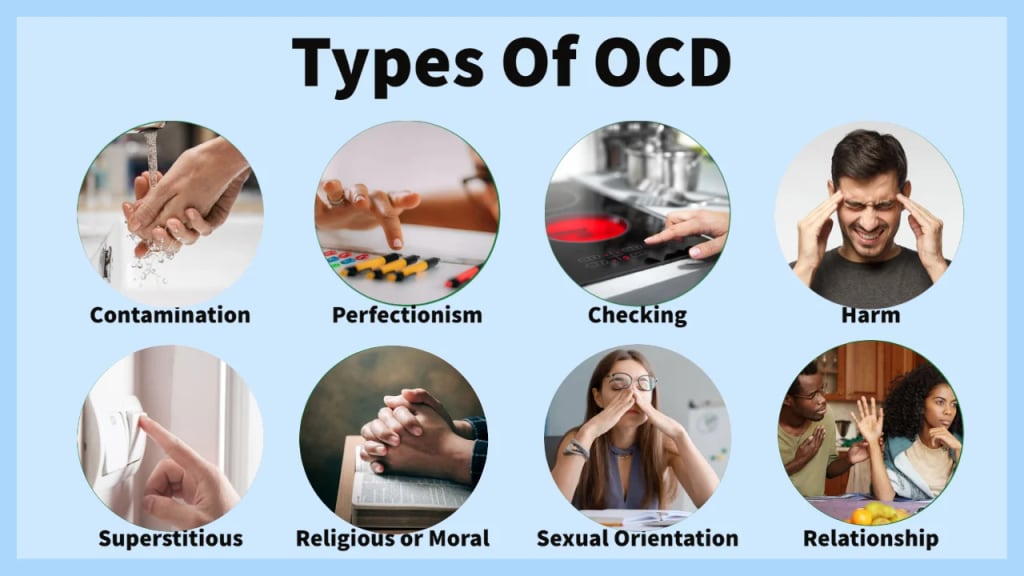
Common Types of OCD
Themes for OCD are numerous, but some of the most common types include:
Contamination OCD
Fear of germs, illness, or bodily fluids, most often leading to over-washing, sanitizing, or avoidance.
Harm OCD
Repeated thoughts of harming others accidentally or intentionally (e.g., "I may hurt someone with a knife").
Checking OCD
Frequent checking of doors, machinery, or aches and pains to prevent injury or accident.
Symmetry and Ordering OCD
Need for objects to be "just so" or performing acts in a certain order or number.
Sexual, Religious, or Moral Obsessions
Recurring taboo thoughts that go against the individual's values and induce intense guilt and distress.
Relationship OCD (ROCD)
Preoccupations and over-thinking about one's love relationship (e.g., "Do I really love them?", "Are they right for me?").
These are not mutually exclusive—most people have multiple themes that may evolve over time.
What Causes OCD?
OCD is believed to arise from a combination of:
Biological causes: Abnormalities in brain circuits, such as the serotonin system.
Genetic causes: A family history of OCD or anxiety disorders may increase risk.
Psychological causes: Trauma or some styles of thinking may be involved.
Environmental stressors: Events like illness, abuse, or major life changes can trigger or worsen OCD symptoms.
It is not because of a person's choices, character, or upbringings only.
Effect of OCD on Daily Life
OCD can be very disabling. Individuals may spend several hours a day engaging in compulsions or trying to conceal obsessions. This can interfere with:
School or work performance
Family and friend relationships
Physical health (such as over-washing or sleep disturbance)
Emotional well-being (leading to depression, anxiety, or social isolation)
In other instances, individuals with OCD avoid activities altogether to restrict exposure to the stimulus, leading to further impairment in functioning.
Effective Treatments for OCD
The good news is that OCD can be treated, and many people get a great deal of relief with effective treatment. Evidence-based therapies are:
1. Cognitive Behavior Therapy (CBT), especially Exposure and Response Prevention (ERP)
ERP is the preferred treatment for OCD. It involves:
Gradual, controlled exposure to feared objects or situations
Learning not to respond to the urge to perform compulsions
Habituation to the anxiety over time
ERP redirects the brain's response to fear and breaks the cycle of obsession-compulsion. It is intense but highly effective when practiced consistently with professional guidance.
2. Medication
Certain medications, particularly Selective Serotonin Reuptake Inhibitors (SSRIs) such as fluoxetine, sertraline, and fluvoxamine, can significantly reduce symptoms of OCD. More severe cases may require higher doses.
Medication can be quite helpful when combined with therapy.
3. Acceptance and Commitment Therapy (ACT)
ACT teaches individuals to accept intrusive thoughts without compulsion and anxiety and live according to their values, not in fear or compulsion.
4. Mindfulness-Based Approaches
Mindfulness raises awareness of intrusive thoughts without acting on impulse. It encourages a relaxed, nonjudgmental attitude toward internal experiences.
5. Deep Brain Stimulation (DBS) or Transcranial Magnetic Stimulation (TMS)
For treatment-resistant OCD, though, these neurological treatments can be a source of relief. They are only resorted to after the conventional treatments fail.
Self-Help Strategies and Lifestyle Support
Although professional care is required, patients can also obtain assistance from supportive day-to-day habits:
Restrict reassurance-seeking: Refrain from constantly seeking other people's approvals because it enhances the cycle.
Practice mindfulness: Notice thoughts without reacting or engaging.
Join OCD support groups: Sharing with others who understand can reduce shame and increase motivation.
Exercise regularly: Exercise stabilizes mood and keeps anxiety in check.
Sleep and nutrition: Consistent sleep and eating well support overall mental health.
Track triggers and patterns: Use diaries or apps to build awareness of your OCD and monitor progress.
Helping a Loved One with OCD
If you have a loved one with OCD
Be understanding: Recovery from OCD is often a slow and painful process.
Don't enable: Politely refuse to participate in compulsions or rituals.
Learn about OCD: Understanding the nature of OCD makes you a stronger ally.
Support treatment: Offer to locate therapists or accompany them to appointments.
Be a cheerleader: Congratulate on each small step, however small.
Above all, let them know that they are not alone and what they experience is real.
Hope and Recovery Are Possible
Living with OCD is exhausting, but hopeless, it's not. Most individuals continue to live productive lives, filled with connections, meaning, and serenity. It may be a matter of time, patience, and persistent effort, but recovery is highly achievable if one receives proper treatment and support.
Healing begins with understanding—and with the realization that OCD is not you. It is a disease you carry with you, not your identity. The brain may be rewired, and so may your future.
For expert mental care and treatment of OCD and other disorders, see:
https://www.delhimindclinic.com/
https://www.craftcmsdeveloper.in/
Feel free to contact me if you would like to modify your Craft site or simply would like to chat about your Craft project. I am here to provide a free consultation!
About the Creator
Keep reading
More stories from Naveen Garg and writers in Education and other communities.
How does trauma influence mental health, and what are the paths to recovery?
Trauma is an individual and often secret damage. It alters the way people think, feel, relate to others, and perceive the world around them. Whether resulting from a single life-or-death encounter or through a series of painful experiences stretching over time, trauma has a deep impact on mental health. For most people, it remains long after the time of harm, shaping behaviors, emotions, and even biology in ways both subtle and not so subtle.
By Naveen Garg6 months ago in Education
From Despair to Hope: How Animal Rescue Efforts Rebuild Broken Lives
Animal rescue efforts stand as a powerful response to suffering that often goes unseen. Across towns, cities, and rural areas, animals face neglect, abandonment, injury, and fear every day. Many are left without food, shelter, or medical care. Others are harmed by abuse or natural disasters. Without help, their future is uncertain. Through patience, care, and action, animal rescue efforts transform despair into hope and give animals the chance to heal and live safely.
By Brenda McGrane4 days ago in Education




Comments
There are no comments for this story
Be the first to respond and start the conversation.