
What Is Dark Web:The Unknown Part Of Our Internet
Exploring the Hidden Corners of the Internet

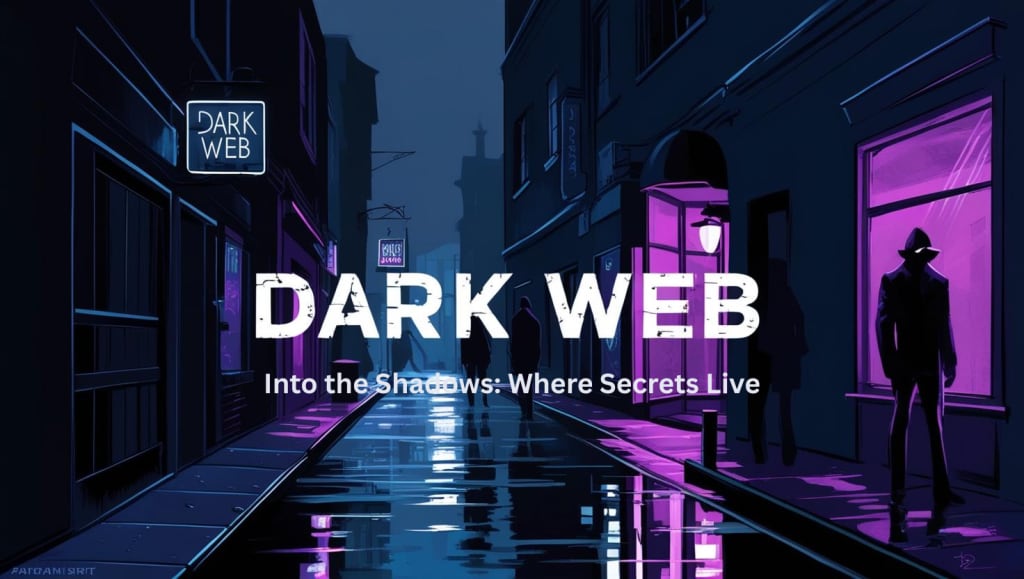
Unveiling the Dark Web: Myths vs. Reality:
Introduction
The dark web has long been a subject of intrigue, often portrayed as a shadowy underworld filled with cybercriminals, secret dealings, and hidden communities. But is this depiction entirely accurate? While some corners of the dark web are indeed used for illicit purposes, this network also serves as an important tool for privacy advocates, journalists, and individuals seeking anonymity. In this blog, we'll explore the realities behind the dark web, break down the myths, and delve into the different types of links found within it.
Understanding the Layers of the Internet:Most people only interact with the surface level of the internet, but beneath that lies a much deeper structure:
1.Surface Web – The part of the internet indexed by search engines like Google and Bing. This includes websites, blogs, news platforms, and social media accounts.
2.Deep Web – Content that is not indexed by search engines. This includes online banking systems, academic journals, medical records, cloud storage, and subscription-based content.
3.Dark Web – A small subset of the deep web that requires special software, such as Tor or I2P, to access. It is decentralized and built to allow anonymous communication.
How the Dark Web Works:
Unlike the surface web, dark web websites use a different domain structure—typically “.onion” sites—which are only accessible through the Tor network. The Tor browser works by directing users’ traffic through layers of encrypted relays, obscuring IP addresses and making tracking extremely difficult. This feature makes the dark web attractive to privacy-focused individuals, whistleblowers, and even cybersecurity researchers.
However, this anonymity is also exploited by cybercriminals who engage in illegal activities, such as selling stolen data, drugs, and weapons. While law enforcement agencies actively monitor and shut down illicit marketplaces, new ones frequently emerge to replace them.
Different Types of Links Found on the Dark Web:
Unlike the surface web, links on the dark web lead to diverse types of services, ranging from legal privacy tools to black markets. Here are some common categories:
1. Legal and Privacy-Focused Platforms
Not everything on the dark web is illegal—many services are designed to help protect privacy and provide unrestricted access to information.
1.Whistleblower portals – Secure sites used by activists and journalists to share critical information away from government surveillance.
2.Privacy-focused email services – Encrypted email providers allow anonymous communication without tracking.
3.Academic databases – Hidden repositories containing research papers, books, and other scholarly resources.
2. Marketplaces (Legal & Illegal)
The dark web is home to a range of marketplaces, some legitimate and others illegal.
1.Legal markets – Some platforms offer cybersecurity tools, privacy-enhancing software, and cryptocurrency exchanges.
2.Black markets – While heavily monitored, illicit marketplaces exist for purchasing counterfeit goods, stolen data, and narcotics.
3. Forums & Underground Communities
Beyond commerce, the dark web is also a hub for discussions and niche communities.
1.Hacker forums – These range from ethical cybersecurity discussions to illegal hacking groups.
2.Political & activism groups – Safe spaces for organizing social movements and promoting free speech.
Conspiracy theory discussions – These forums often include speculative or unverifiable claims about global events.
4. Financial Services
Since the dark web prioritizes anonymity, cryptocurrency is widely used.
1.Bitcoin tumblers/mixers – Services designed to anonymize transactions and prevent tracking.
2.Escrow services – Platforms that facilitate secure trades between anonymous users.
Debunking Myths About the Dark Web
Many misconceptions surround the dark web, so let’s set the record straight.
1. The Dark Web Is Entirely Illegal
Not true! Many individuals use it legally for privacy protection, anonymous browsing, and secure communication.
2. It’s the Largest Part of the Internet
The deep web is large, but the dark web makes up only a tiny fraction of it.
3. It Guarantees Complete Anonymity
While Tor provides strong privacy measures, law enforcement has successfully tracked criminals by exploiting vulnerabilities.
4. Everything Sold Is Genuine
Scams are common, and fraudulent listings often target inexperienced buyers.
Final Thoughts
The dark web is neither inherently good nor bad—it is simply a tool. Like any tool, its ethical or unethical use depends on the individual navigating it. While illegal markets exist, the dark web also offers privacy protections and secure communication channels that serve a legitimate purpose. The key takeaway is to approach the topic with understanding rather than fear.
Disclaimer:
This blog is only for educational and informational purposes. It does not endorse, promote, or support illegal activities involving the dark web. The dark web can provide anonymity and privacy, but it also carries risks, such as the possibility of being exposed to harmful content, cyber threats, and fraudulent schemes. When exploring online spaces, readers should exercise caution and adhere to all applicable laws. This information does not constitute expert legal or security advice and is based on publicly available sources.
About the Creator
Noob Hacker
Noob In Writing
Keep reading
More stories from Noob Hacker and writers in Education and other communities.
The Mysteries of the Bermuda Triangle: Fact, Fiction, and Fascination
The Bermuda Triangle, also referred to as the Devil's Triangle, is one of the most fascinating and enigmatic places on Earth. Spanning a loosely defined area in the Atlantic Ocean between Bermuda, Florida, and Puerto Rico, it has captivated the imagination of adventurers, scientists, and conspiracy theorists alike. Stories of mysterious disappearances, strange phenomena, and legends have built an aura of intrigue around this triangular stretch of ocean. While the Bermuda Triangle's reputation is partially based on myths, it continues to inspire curiosity and debate.
By Noob Hacker9 months ago in History
Healing the Hidden: Healthcare for the World’s Most Remote Populations
Across the globe, millions of people live in areas where access to healthcare is limited or nearly impossible. These communities, often tucked away in mountains, deserts, forests, or on distant islands, face challenges beyond the scope of ordinary medical care. Isolation, inadequate infrastructure, and shortages of trained medical professionals create a situation in which even basic health services are hard to obtain. Addressing these challenges requires creative solutions, collaboration, and a commitment to ensuring that no population is left behind.
By Baitulmaal5 days ago in Education



Comments (1)
This was such an engaging read! I really appreciated the way you presented your thoughts—clear, honest, and thought-provoking. Looking forward to reading more of your work!