
How Stock Investing Is Reshaping The World’s Economy?
An insight into how the surge in equity investing is redefining saving patterns, liquidity, and the world’s future economy.
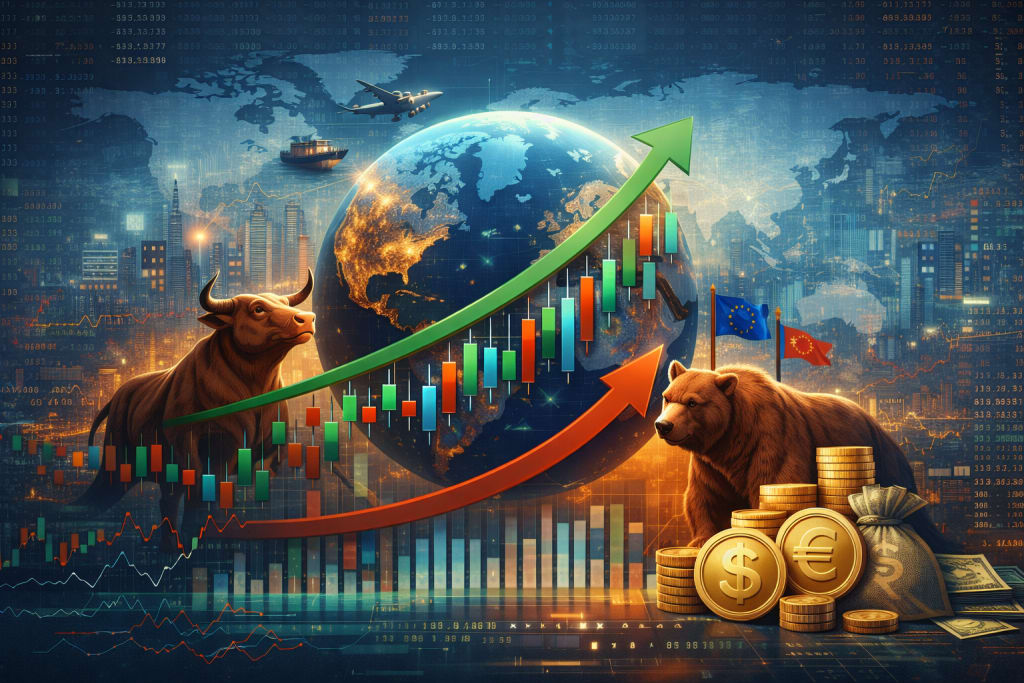
The global financial landscape is undergoing a profound transformation.
Once, the typical household trusted only bank savings and fixed deposits as the default route for preserving wealth.
Today, a rising number of individuals are venturing into stock markets, mutual funds, and other market-linked instruments, fundamentally altering how savings, investments, and capital flows work in the economy.
This shift is not merely a matter of personal finance because it is reshaping the traditional banking system and influencing the future trajectory of the world's economy in meaningful ways.
The Rise of Market-Linked Investing
In the past few years, the world has witnessed a sharp increase in retail participation in equities and mutual funds.
Data from major financial markets and regulator reports show that millions of new investors, particularly from younger demographics and tier-2 and tier-3 cities, have opened Demat accounts and begun investing directly in stocks or through mutual funds.
Mutual fund assets under management have surged, and the number of folios managed by individual investors has grown significantly.
The share of household investment in equities and mutual funds has risen as savings in these market-linked instruments slowly replace traditional instruments like bank FDs and small savings.
Why the Shift?
Several factors are driving this trend:
Digital access: Mobile investing apps with paperless onboarding make markets accessible to a broader population.
Increased financial literacy: Investors today are more aware of the benefits of diversified portfolios.
Higher Returns: Higher potential returns than traditional savings accounts or fixed deposits made it popular among youngsters.
Regulatory support: Simplified processes and investor education campaigns have made participation easier.
This shift reflects not just a change in preference, but a structural transformation in how the world thinks about wealth creation and risk.
Impact on Traditional Banking
Banks have traditionally relied on savings deposits as a low-cost source of funds. These deposits enable banks to lend, earn interest spreads, and support economic growth through credit.
But as households increasingly place more money into equities and mutual funds, the growth of bank deposits is slowing down relative to credit needs.
Declining Deposits and Changing Ratios
Even the governor of the Reserve Bank of India has acknowledged that Household savings are moving away from banks to capital markets, affecting banks’ liquidity and deposit base.
Recent data suggests banks’ credit-to-deposit ratios have climbed significantly, meaning banks are lending more compared to the deposits they hold.
A rising ratio can indicate stronger credit demand but also highlights the challenge of mobilising enough deposits to fund lending sustainably.
This shift has several implications:
Banks may need to offer more attractive products to keep savers engaged.
Competition for deposits may increase as funds flow toward market products.
Banks may innovate with wealth-management services and market-linked offerings to retain customers.
Instead of losing relevance, banks are being prompted to evolve, offering hybrid products that blend traditional banking security with the returns potential of market exposure.
Short-Term Volatility and Retail Risk
While more individuals investing can deepen market participation, it also brings higher levels of retail influence over price movements. High retail participation can amplify market swings, making indices more sensitive to sentiment and short-term trends.
The key here is right knowledge and long-term planning.
If investors approach equities with adequate knowledge and a focus on long-term horizons, the trend can contribute to a more financially literate population and robust domestic capital markets.
Broader Economic Implications
The shift toward stocks and market instruments has far-reaching implications for India’s future economy:
1. Capital Market Growth
A larger, more active investor base enhances market liquidity and depth. This attracts more issuers, encourages IPO activity, and broadens opportunities for companies to raise capital without depending solely on bank loans.
2. Diversified Funding Options
Companies are increasingly tapping into equity and corporate bond markets for financing. This diversification reduces reliance on bank credit and fosters healthier corporate balance sheets as firms can choose from a wider range of funding mechanisms.
3. Economic Resilience
Market savers contribute directly to investment capital, potentially accelerating growth and innovation. Their participation helps in the better allocation of capital across sectors, driving productivity and employment.
4. Wealth Creation and Inclusion
When more people participate in market growth, wealth distribution can broaden beyond traditional saving classes. This democratization of finance contributes to overall economic inclusion and empowers households financially.
Challenges and The Road Ahead
As with any structural shift, there are risks and challenges to manage:
Market volatility can erode savings for unprepared investors.
Financial literacy gaps still exist, especially in smaller cities.
Banks need to reimagine value propositions to remain core to financial life.
Looking ahead, a synergy between capital markets and traditional banking could emerge as the optimal landscape. Banks may morph into full-service financial hubs, offering everything from savings accounts to investment advisory and wealth management.
The Global Stock Market Industry
The current trend of rising stock market investment reflects a fundamental shift in how individuals think about money, risk, and growth.
Savings are migrating from traditional bank instruments toward market-linked assets, reshaping how banks mobilise funds and how capital flows through the economy.
This evolution is not without challenges, but if coupled with financial literacy and prudent regulation, it can drive a more dynamic, resilient, and inclusive global economy.
About the Creator
Keep reading
More stories from Debangana C and writers in Education and other communities.
When My Mother Forgot My Name, But Not Me...
My mother... She always remembered everything about me. Everything like what cereal I loved, which shirt I hated, where I first crawled… all those things that even I never thought about. The little, ordinary details that somehow made up the fabric of my childhood.
By Debangana C4 days ago in Confessions




Comments
There are no comments for this story
Be the first to respond and start the conversation.