
Value Analysis / Value Engineering
Supply Chain Procurement

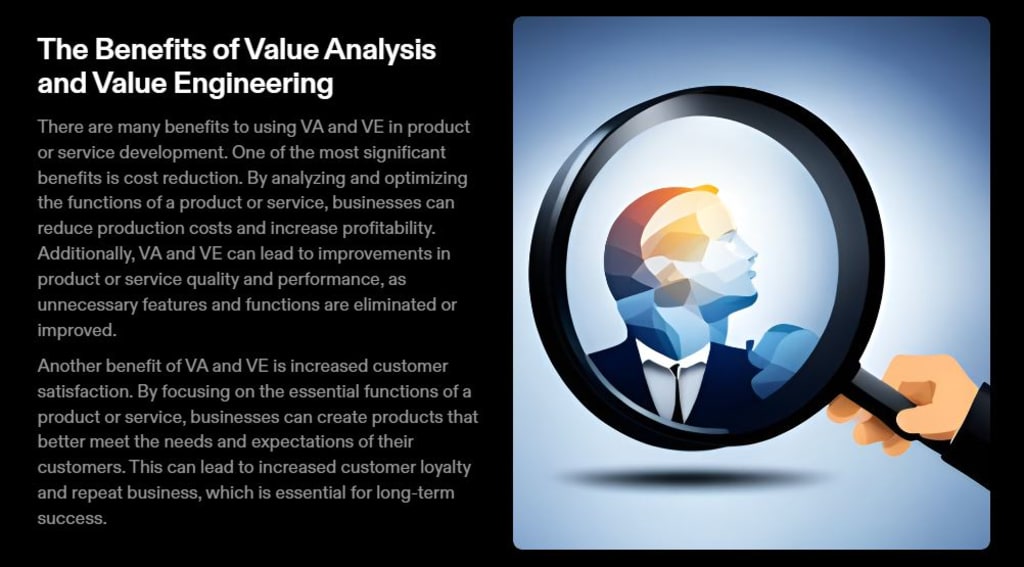
In the context of procurement, VA and VE are two related concepts that stand for Value Analysis (VA) and Value Engineering (VE). They are systematic approaches used to enhance the value of products, services, or processes while optimizing costs. Let's explore each concept in more detail:
Value Analysis (VA): Value Analysis is a methodical examination of products, services, or processes to identify areas where improvements can be made to increase value or reduce costs. The primary focus of VA is to understand the functions and requirements of a particular item or process and find alternative ways to fulfill those requirements more efficiently and effectively. VA involves the following steps:
a. Identification of functions: Determine the essential functions and purpose of the product, service, or process being analyzed.
b. Analysis of costs: Evaluate the costs associated with different components, materials, or processes involved in delivering the functions.
c. Assessment of alternatives: Explore various alternatives to meet the functions at a lower cost without compromising quality or performance.
d. Value enhancement: Implement the identified changes or improvements that provide increased value or cost savings.
VA aims to eliminate unnecessary expenses, streamline processes, improve quality, and increase customer satisfaction while maintaining or enhancing the desired functionality.
Value Engineering (VE): Value Engineering goes a step further than Value Analysis by actively seeking opportunities for cost reduction and value enhancement during the design or development stage of a product, service, or process. VE typically involves cross-functional teams consisting of engineers, designers, procurement specialists, and other relevant stakeholders. The key steps in VE include:
a. Identification of functions: Clearly define the functions and requirements of the item or process under consideration.
b. Idea generation: Brainstorm and generate creative ideas and alternatives to achieve the desired functions more efficiently or at a lower cost.
c. Evaluation of alternatives: Assess the feasibility, cost implications, risks, and benefits of the generated ideas to determine the most valuable options.
d. Implementation: Implement the selected alternatives and continuously monitor their performance and effectiveness.
VE aims to optimize costs, enhance value, improve quality, and maximize performance through innovative design, process improvements, and efficient resource utilization.
Both VA and VE are systematic approaches that can be applied to various aspects of procurement, including sourcing, supply chain management, and vendor selection. These methodologies help organizations identify cost-saving opportunities, eliminate waste, improve efficiency, and ultimately achieve better value for their procurement investments.
Technical productivity in procurement refers to the efficiency and effectiveness of procurement processes and activities, specifically in terms of achieving technical or functional requirements. It focuses on how well procurement operations contribute to the successful acquisition of goods, services, or works that meet the organization's technical specifications and standards.
Here are some key aspects related to technical productivity in procurement:
Supplier Evaluation and Selection: The procurement function plays a crucial role in evaluating and selecting suppliers based on their technical capabilities and adherence to specified requirements. This involves assessing suppliers' technical expertise, past performance, quality control measures, certifications, and compliance with industry standards. A high level of technical productivity in supplier evaluation ensures that the selected suppliers can consistently meet the organization's technical requirements.
Specifications Development: Technical productivity in procurement includes the development of accurate and detailed specifications for the goods, services, or works being procured. Clear specifications outline the required technical features, performance criteria, measurements, and any other technical considerations necessary for the successful fulfillment of the procurement objectives. Effective collaboration between procurement professionals, technical experts, and end-users is essential to ensure that the specifications are comprehensive and align with the organization's needs.
Request for Proposal (RFP) Development: When procuring complex or technical goods or services, an RFP is often used to solicit proposals from potential suppliers. Technical productivity in procurement involves developing RFP documents that provide a clear understanding of the organization's technical requirements, evaluation criteria, and expectations. Well-defined RFPs enable suppliers to submit accurate and relevant proposals, facilitating the selection of the most suitable provider.
Quality Assurance and Control: Procurement professionals are responsible for implementing and monitoring quality assurance and control measures throughout the procurement process. This includes verifying that procured goods, services, or works meet the specified technical requirements, conducting inspections, and ensuring compliance with relevant quality standards. Technical productivity in procurement involves establishing robust quality management processes to minimize the risk of receiving substandard or non-compliant deliverables.
Technical Expertise and Collaboration: Procurement teams with technical expertise and the ability to collaborate effectively with stakeholders are better equipped to ensure technical productivity. By understanding the organization's technical needs and working closely with end-users, engineering teams, and subject matter experts, procurement professionals can make informed decisions, provide valuable input on technical specifications, and facilitate successful procurements that meet technical objectives.
Enhancing technical productivity in procurement requires a combination of strong technical knowledge, effective communication, collaboration, and attention to detail. By prioritizing technical requirements, implementing rigorous supplier evaluation processes, and maintaining quality control measures, organizations can optimize procurement outcomes and ensure that acquired goods, services, or works align with their technical specifications and standards.
About the Creator
Sendil Arasu Vijaya Kumar
I attained bachelor degree in mechanical engineering and master degree in marketing management, having 21 Years of professional work experience. International exposure in Supply Chain Procurement domain. Author of "The Procurement Acumen"
Keep reading
More stories from Sendil Arasu Vijaya Kumar and writers in Education and other communities.
Zero Base Cost
Zero base cost in procurement refers to the practice of starting the budgeting process from a baseline of zero, rather than using historical figures or previous budgets as a starting point. It involves a thorough evaluation and justification of every expense or investment, requiring each item to prove its value and necessity before being included in the budget.
By Sendil Arasu Vijaya Kumar3 years ago in Education



Comments
There are no comments for this story
Be the first to respond and start the conversation.