

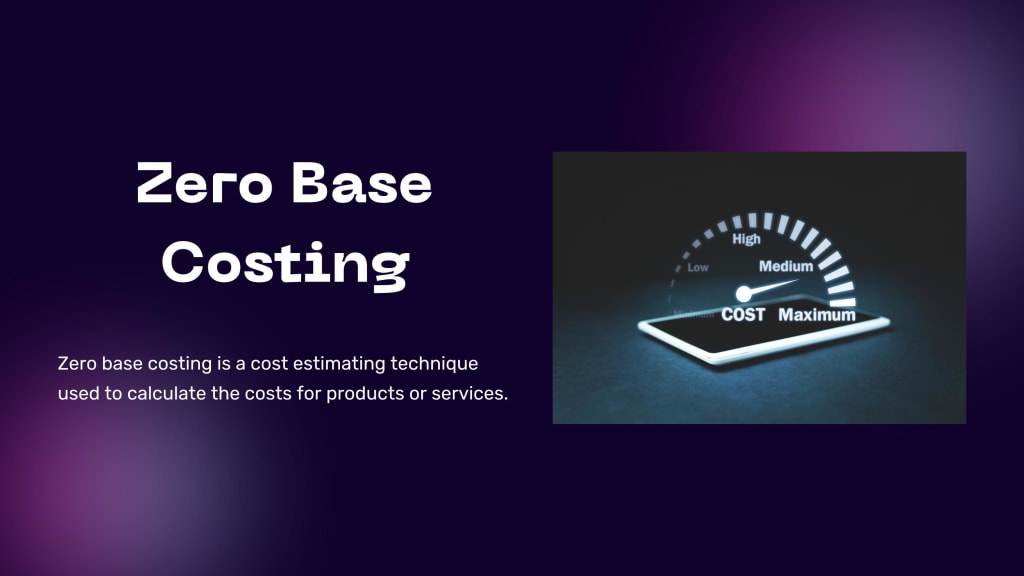
Zero base cost in procurement refers to the practice of starting the budgeting process from a baseline of zero, rather than using historical figures or previous budgets as a starting point. It involves a thorough evaluation and justification of every expense or investment, requiring each item to prove its value and necessity before being included in the budget.
The concept of zero base cost in procurement was popularized by Peter Pyhrr, an accountant and consultant, in the 1970s. The underlying principle is to challenge the assumption that existing expenses are automatically justified and instead encourage a critical review of each cost item. By doing so, organizations can identify inefficiencies, eliminate redundant or low-value expenditures, and allocate resources more effectively.
Zero base cost in procurement typically involves the following steps:
Identifying objectives: Clearly define the organization's goals and objectives for the budgeting period.
Evaluating activities: Assess all activities, projects, and expenses to determine their relevance and alignment with the objectives. Each item is evaluated based on its merits, irrespective of whether it existed in previous budgets.
Cost analysis: Analyze the cost drivers and associated benefits of each activity. Determine the cost of maintaining the current level of service and the cost of alternative solutions.
Decision making: Prioritize activities and allocate resources based on their value and importance. Justify and approve expenses based on their alignment with objectives and expected outcomes.
Monitoring and review: Continuously monitor the implementation of the budget, track expenses, and assess the effectiveness of the chosen activities. Adjustments may be made based on changing circumstances or new information.
Here are some examples of zero base cost in different contexts:
Budgeting: In budgeting, zero base cost involves starting the budgeting process from scratch, rather than basing it on previous budgets. Each expense or investment is evaluated and justified based on its value and necessity. This approach helps identify and eliminate unnecessary or low-value expenditures. For example, a company may use zero base cost budgeting to review all departments' expenses and determine the actual need for each line item.
Marketing Campaigns: When planning marketing campaigns, zero base cost can be applied to review and justify every marketing activity and expense. Each campaign element, such as advertising channels, promotions, and events, is evaluated to ensure its effectiveness in reaching the target audience and generating desired outcomes. This approach helps eliminate ineffective or redundant marketing efforts and allocate resources more efficiently.
IT Infrastructure: Zero base cost can be employed in assessing IT infrastructure and technology investments. Instead of automatically renewing contracts or maintaining existing systems, organizations can evaluate each IT component and justify its value. This analysis can involve reviewing software licenses, hardware maintenance contracts, cloud service subscriptions, and other IT-related expenses to identify potential cost savings or alternative solutions.
Project Management: In project management, zero base cost can be utilized to evaluate project requirements, tasks, and resource allocations. Each project element is thoroughly assessed to determine its necessity, cost-effectiveness, and alignment with project goals. This approach helps prevent unnecessary scope creep and ensures that project resources are allocated based on their value and importance to the overall project success.
Supply Chain Optimization: Zero base cost can be applied in supply chain management to review and optimize procurement and logistics processes. Each step of the supply chain, from sourcing materials to transportation and distribution, is examined to identify areas for cost reduction, process improvement, or alternative suppliers. This approach helps eliminate inefficiencies and streamline the supply chain while maintaining or improving the quality and timeliness of deliveries.
These examples illustrate how zero base cost can be applied in different areas to challenge assumptions, identify inefficiencies, and optimize resource allocation. The specific implementation of zero base cost may vary depending on the organization and its objectives, but the underlying principle remains the same: evaluating and justifying every expense based on its value and necessity.
Here are some examples of zero base cost in procurement:
Vendor Evaluation: When reviewing vendors and suppliers, a zero base cost approach involves reassessing existing relationships and considering new options. Each vendor's performance, pricing, quality, and delivery capabilities are evaluated to ensure they align with the organization's current needs and objectives. This process helps identify opportunities for cost savings, negotiate better contracts, and ensure that vendors provide the best value for the organization's procurement requirements.
Contract Renewals: Instead of automatically renewing contracts with suppliers or service providers, a zero base cost approach requires a thorough evaluation of the existing contract terms and pricing. This includes comparing market rates, seeking alternative bids, and determining if the current contract still represents the best value for the organization. By starting from zero, organizations can renegotiate contracts or explore new vendors to optimize costs and improve service quality.
Inventory Management: Zero base cost can be applied to inventory management by assessing the stock levels and replenishment practices. Rather than relying on historical data or traditional ordering patterns, organizations review each inventory item's usage, demand, carrying costs, and lead times. This analysis helps identify slow-moving or obsolete items, optimize reorder points, and adjust stock levels to align with actual requirements. The goal is to minimize carrying costs while ensuring adequate availability of essential inventory items.
Supplier Consolidation: A zero base cost approach can be used to evaluate the number of suppliers and consolidate them where possible. Organizations review their supplier base and identify opportunities to reduce duplication, streamline processes, and negotiate better pricing and terms through consolidating their purchasing volume with fewer vendors. This consolidation can lead to better cost control, improved supplier relationships, and increased efficiency in procurement operations.
Service Level Agreements (SLAs): Zero base cost can also be applied to review existing service level agreements with suppliers or service providers. Each SLA's performance metrics, penalties, and associated costs are examined to ensure they are aligned with the organization's current needs and industry standards. By starting from zero, organizations can renegotiate SLAs to better reflect their priorities, quality requirements, and cost considerations.
These examples demonstrate how zero base cost can be applied specifically in the context of procurement. By reevaluating supplier relationships, contracts, inventory practices, and service agreements, organizations can identify opportunities for cost reduction, process improvement, and enhanced value in their procurement activities.
Implementing a zero base cost approach in procurement requires careful planning, collaboration, and transparency within the organization. It can lead to more efficient resource allocation, increased cost control, and a focus on value creation. However, it also demands significant time and effort to thoroughly evaluate and justify all expenses, and it may encounter resistance from stakeholders accustomed to traditional budgeting methods.
About the Creator
Sendil Arasu Vijaya Kumar
I attained bachelor degree in mechanical engineering and master degree in marketing management, having 21 Years of professional work experience. International exposure in Supply Chain Procurement domain. Author of "The Procurement Acumen"
Keep reading
More stories from Sendil Arasu Vijaya Kumar and writers in Education and other communities.
Globalization, Regionalization, and Localization
Globalization has been driving the market since 19th century and at present its true dominance has been observed due to advancement in communication and transportation. I could see a rat race among the top organizations across the globe to capitalize their benefits by adopting different globalization strategies to accelerate their business growth. This scenario motivates one to look for the opportunities that are needed to be explored to meet various customer demands.
By Sendil Arasu Vijaya Kumar3 years ago in Education
From Job to Prison: Revenge, Sacrifice, and Ending
The story begins by showing a bald and strong man named Bradley, who is a car mechanic by profession. As usual, Bradley reaches the garage with a broken car, but after arriving there, he sees that the garage owner is anxiously waiting only for him, which makes him a little surprised. Then the garage owner calls him into his office. Hearing this, Bradley understands that he is about to be fired from his job, and exactly that happens. The owner tells him that these days the garage is going through a financial crisis, and that is why he is being forced to fire some workers. But this is only an excuse, because Bradley is a hard-tempered man, and the owner wants to remove him and hire someone who flatters him. Now since Bradley is a tough man, he does not argue with the owner. He goes to the locker room, takes out his belongings, takes his car, and silently leaves for home. And yes, friends, this is where the downfall of Bradley’s life begins, which continues straight until the end of the story and ends there. Anyway, Bradley stops his car in front of his house, and at the same time he sees that his wife Lauren is sitting in her car, talking to someone on the phone. Bradley becomes suspicious of her. To know the truth, he keeps watching her carefully for some time. When he becomes sure, he immediately goes to Lauren and tells her to open the car door. His wife says, “You came back from work very early today.” At the same moment, Bradley notices marks of someone else’s lips on her neck and says to Lauren, “Give me your phone.” But Lauren refuses to give the phone, because of which Bradley forcefully snatches the phone from her, and his suspicion turns out to be correct. She is talking on the phone with another man. In anger, Bradley tells Lauren to go inside the house. Lauren says, “At least listen to me.” Bradley says, “I said go inside the house.” Then Lauren silently goes inside the house. Now, he had already been fired from his job a little while ago, and now his wife’s affair, because of which he had become even more disturbed, so he starts taking out all his anger on Lauren’s car. How? You can see that yourself. Yes, he is so angry that he does not even realize that his hands have been badly injured. After that, he calms himself down and goes inside the house and questions Lauren about how many days she has been with the other man. Lauren tells him everything, that for the past three months she had been having an affair with someone else. Actually, Bradley’s wife had an abortion a few days earlier, because of which she used to remain sad, and Bradley often stayed busy with his work. Because of this, Lauren felt lonely and very depressed at home, and to fill this emptiness, she had to take support from another man. Hearing these things, Bradley realizes that he should have given time to Lauren. He apologizes to Lauren for this and says that from today, from right now, they will both start a new life. Lauren agrees. After that, Bradley tells Lauren that he has been fired from his job and now he will work for a man named Gil, who is a drug lord. As soon as she hears Gil’s name, Lauren clearly refuses and says, “You yourself said that you would never work with Gil.” Bradley says, “Yes, but in such circumstances, we cannot live like a prosperous family. To run a family, money is needed, and at this time I have no other option.” He also assures Lauren that he will do this work very carefully.
By Filmon Ke Raaz | Movie Mysteries Explainedabout 10 hours ago in Education
Beyond Speed: How High-Performance Computing Is Shaping Tomorrow’s Discoveries
High-Performance Computing is changing how people explore ideas, test theories, and solve complex problems. It allows machines to work together at great speed. These systems can handle tasks that are far too large for standard computers. As a result, High-Performance Computing and the future of discovery are closely linked.
By Jason Pruetabout 21 hours ago in Education


Comments
There are no comments for this story
Be the first to respond and start the conversation.