
Unveiling the Secrets of Ninja Swords: History and Design!
Ninja sword

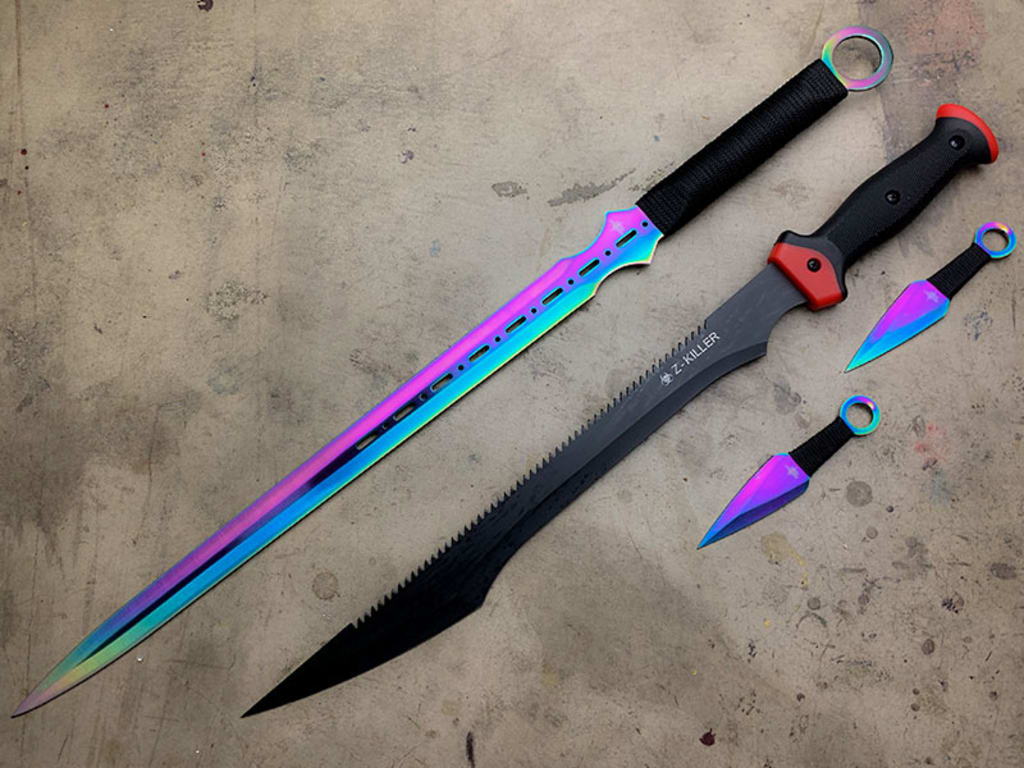
"Ninja swords," also known as "ninja-to" or "ninjaken," are usually connected with ninjas, mythical clandestine operatives from feudal Japan. In contrast to the curved katana, these swords usually have straight blades and are distinguished by a square guard (tsuba) and a straight, sometimes slightly curved blade. They were intended to be adaptable and effective in close combat and stealth missions.
The design frequently favors speed and agility over the katana's raw cutting power, reflecting the ninja's preference for agility, surprise strikes, and unconventional fighting tactics. The history of ninja swords is inextricably linked to the evolution of ninjutsu and the specific needs of ninja fighters throughout medieval Japan's Sengoku period (15th to 17th centuries). Unlike the curved katanas used by samurai, ninja swords were specifically built for stealth and close-quarters warfare.
They often had straight blades, which allowed for faster pulls and rapid, silent strikes, both of which were necessary for surprise attacks and covert operations. Ninja swords were likewise designed with concealment in mind, with shorter lengths and simpler fittings than ornate samurai swords. These changes were critical for ninjas, who relied on stealth, agility, and innovative tactics rather than direct combat, making these swords a unique and useful instrument in their arsenal.
Key Design Features of Ninja Swords:
The primary design elements of ninja swords (ninja-to or ninjaken) reflect their specific role in ninjutsu and covert operations during medieval Japan. Here are the primary features:
Straight Blade: Unlike the curved katana used by samurai, ninja swords usually have a straight blade. This design enables for faster drawing from concealment and facilitates thrusting and stabbing actions, which are useful in close-quarters combat.
Shorter Length: Ninja swords are often shorter than standard samurai swords, measuring 60 to 70 cm (24 to 28 inches) in length. The shorter blade improves maneuverability in tight spaces and agility during fast movements.
Simple Tsuba (Guard): Ninja guards (tsuba) are often plain and modest in comparison to the complex tsuba of samurai swords. This basic design saves weight and prevents snagging on clothing or objects, which is critical for stealth and rapid deployment.
Concealable Design: These swords are intended to be easily concealed beneath clothing or in a variety of settings. Their small size and lack of decoration allow them to remain hidden until needed, fitting with ninja tactics of surprise and stealth.
Practical Construction: The design of swords favors functionality over aesthetic flourishes. They are frequently made from robust but simple materials to ensure combat dependability and resilience to wear and tear over extended usage in difficult situations.
Versatile Use: While ninjato swords were primarily employed for close combat, they were also versatile instruments. They might be used to cut ropes, scale walls, or even as a grappling assist, demonstrating their versatility in numerous clandestine missions.
These design elements demonstrate how these swords were designed to fit the special needs of ninjas, stressing stealth, agility, and successful close-quarters combat in their historical context.
Advantages Offered by Cool Ninja Swords:
Ninja swords, or ninja-to, have various benefits that are tailored specifically to the needs of ninjas and their operational methods. Here are several significant advantages:
Stealth and Concealment: These swords' straight blades and shorter lengths improve stealth capabilities. They are easily concealed under clothing or in hidden compartments, allowing ninjas to go undetected until they decide to engage.
Agility and Maneuverability: The lightweight and compact design of swords allows for quick movements and nimble combat techniques. This agility is critical for ninjas who rely on quick strikes, evasion, and rapid changes of position during combat.
Quick Draw and Deployment: Ninja swords' straight blade design enables rapid drawing from a variety of covert positions. This rapid deployment is critical for surprise attacks and defensive movements in close-quarters combat situations.
Versatility in Combat: These swords are flexible weapons that thrive in both attacking and defensive situations. Their straight blades are useful for thrusting, stabbing, and slashing techniques while dealing with several opponents or defending against attacks.
Adaptability to Environment: These swords' practical structure and simplistic design make them ideal for a wide range of situations and conditions. They are as effective indoors, in restricted spaces, and during nighttime activities.
Multi-functional Utility: In addition to combat, ninja swords were frequently used to cut ropes, scale walls, and even as survival gear in the woods. This adaptability demonstrates their importance as crucial tools for ninjas in a variety of operational scenarios.
Overall, these swords enhanced ninjutsu's stealth and agility-based tactics while also providing dependable and adaptable armament that contributed to the success of ninja operations during feudal Japan.
The Legacy and Significance of Ninja Swords!
Ninja swords are iconic symbols of the creativity and efficacy of ninjutsu in feudal Japan. Their straight blades and basic design exemplify the utility and versatility required by ninja fighters conducting covert operations.
These swords, unlike the curved katanas used by samurai, were designed for stealth and close-quarters combat, with shorter lengths and simple guards that allowed for quick, silent attacks and easy concealment. These swords not only enhanced ninjas' agile and secretive techniques, but they also acted as multi-functional weapons, assisting with activities ranging from battle to survival in a variety of circumstances.
The legacy of ninja swords goes beyond their martial utility; they represent the creativity and adaptability of ninjutsu practitioners, who depended on cunning and innovation to attain their goals. Today, these swords grab the imagination, signifying a time when ninjutsu was defined by talent, strategy, and specialized weaponry. These swords are valued as historical and martial objects, with continuing influence in both martial arts and popular culture.
About the Creator
Ashly Brine
Content Writer
SEO Specialist
Keep reading
More stories from Ashly Brine and writers in Education and other communities.
Choosing the Best Foam Swords for Your Adventures
Foam swords are recreational and costume props made from soft foam materials like polyurethane or latex foam, designed to resemble real or fantasy weapons while ensuring safety. They come in various designs, from medieval weaponry to popular culture, allowing enthusiasts of all ages to engage in simulated combat, theatrical performances, cosplay events, and live-action role-playing.
By Ashly Brineabout a year ago in Education


Comments
There are no comments for this story
Be the first to respond and start the conversation.