
Two Popular Myth about the Brain.
Do human actually use 10% of their brain? Is brain lateralization even true?

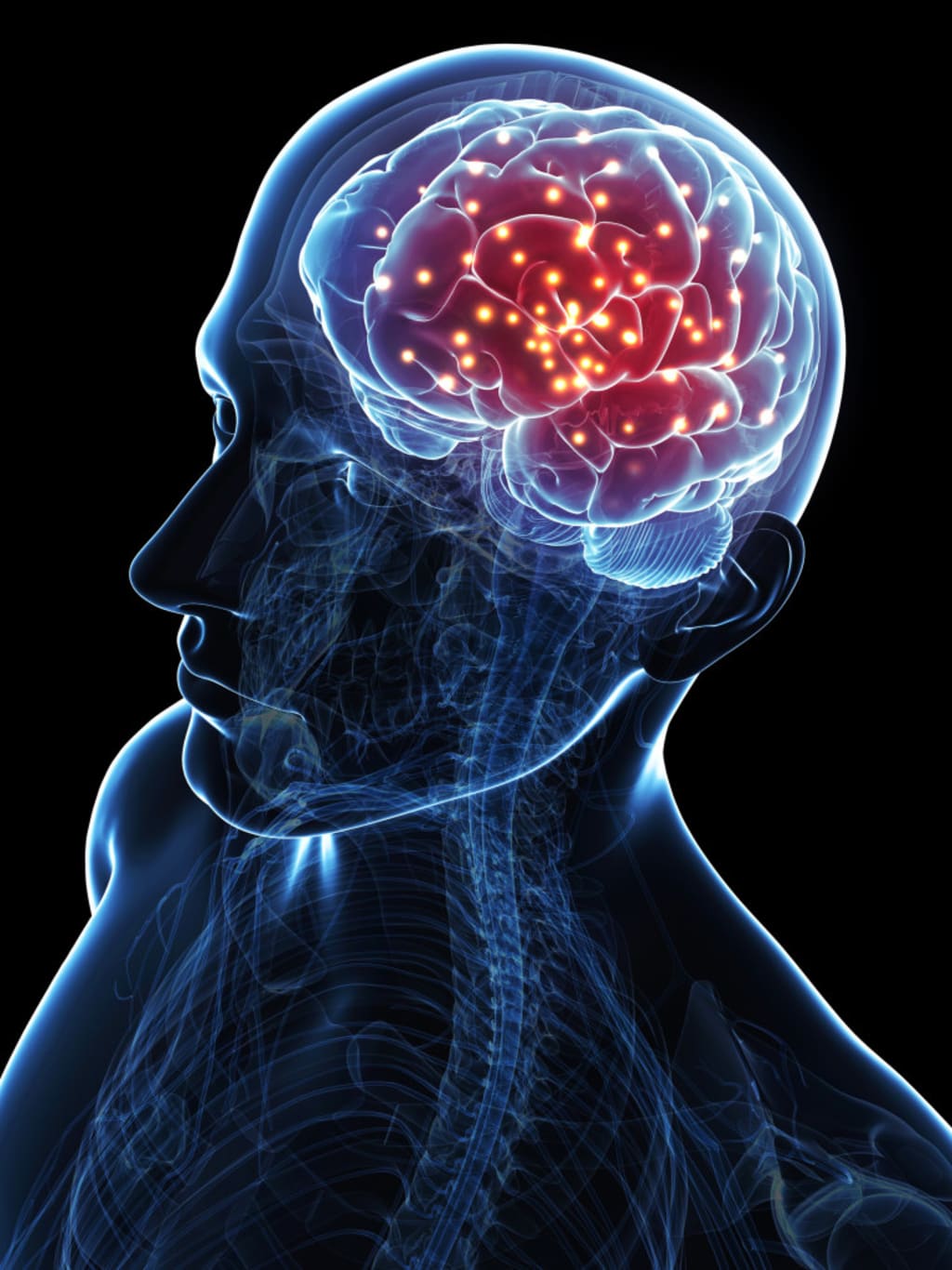
The human brain, a marvel of complexity and efficiency, has long captivated scientists, philosophers, and the general public. Despite significant advancements in neuroscience, several myths about the brain persist in popular culture. Two of the most prevalent myths are that humans only use 10% of their brains and that there are "left-brained" and "right-brained" people, each with distinct cognitive strengths. These myths, though widely believed, oversimplify the intricacies of our brain's functioning.
Myth 1: Humans Only Use 10% of Their Brains
The idea that humans only use 10% of their brains is one of the most enduring and widespread myths. This notion suggests that 90% of the brain's potential lies untapped, implying that we could unlock extraordinary mental abilities if we could access this dormant portion. This myth has been perpetuated through popular media, self-help books, and even some educational contexts.
Origins and Popularization
The origins of the 10% myth are murky, but it may trace back to misinterpretations of neurological research in the late 19th and early 20th centuries. Notable figures like psychologist William James and physicist Albert Einstein have been inaccurately cited as endorsing this idea. The myth gained traction through popular culture, particularly in movies and books that romanticize the concept of untapped mental potential.
Scientific Refutation
Neuroscience has thoroughly debunked the 10% myth. Modern imaging techniques, such as functional magnetic resonance imaging (fMRI) and positron emission tomography (PET), have shown that virtually all parts of the brain have known functions and that even simple tasks require activity distributed across multiple regions. The brain is highly efficient and energy-intensive, consuming about 20% of the body's energy despite representing only about 2% of its weight. Evolutionarily, it would make little sense for such an energy-demanding organ to lie mostly dormant.
Brain Plasticity
The concept of neuroplasticity further contradicts the 10% myth. Neuroplasticity refers to the brain's ability to reorganize itself by forming new neural connections throughout life. This adaptability is crucial for learning, memory, and recovery from brain injuries. If 90% of the brain were inactive, the scope for such plasticity and recovery would be severely limited. Instead, evidence shows that the brain constantly rewires itself in response to experiences and learning.
Myth 2: Left-Brained vs. Right-Brained People
The myth of left-brained versus right-brained people suggests that individuals have a dominant hemisphere that dictates their personality, skills, and cognitive abilities. According to this myth, left-brained people are logical, analytical, and detail-oriented, while right-brained people are creative, intuitive, and holistic thinkers.
Origins and Popularization
This myth has its roots in early neurological research, specifically the work of Roger Sperry in the 1960s, who studied patients with severed corpus callosums (the structure that connects the two hemispheres of the brain) to treat severe epilepsy. Sperry's research revealed that the two hemispheres have specialized functions: the left hemisphere is more involved in language and analytical tasks, while the right hemisphere is more involved in spatial and creative tasks.
Misinterpretation and Exaggeration
While Sperry's findings were groundbreaking, they have been misinterpreted and exaggerated over time. Popular media and educational materials often present the idea that people can be categorized strictly as left-brained or right-brained, leading to a simplistic and dichotomous view of cognitive abilities. This binary classification ignores the brain's complexity and the fact that most cognitive functions involve integrated activity across both hemispheres.
Scientific Refutation
Neuroscientific research has shown that the brain is highly interconnected, with most tasks requiring cooperation between both hemispheres. For example, language processing, traditionally associated with the left hemisphere, also involves the right hemisphere for context and nuance. Similarly, tasks involving spatial reasoning, typically linked to the right hemisphere, engage the left hemisphere for detail and precision. The corpus callosum plays a crucial role in facilitating this interhemispheric communication.
Brain Lateralization
While there is a degree of lateralization—specialization of function in one hemisphere or the other—the idea of strictly left-brained or right-brained individuals is a myth. Brain lateralization exists, but it is far more nuanced and variable than the popular myth suggests. Cognitive abilities and personality traits are not confined to one hemisphere but arise from the dynamic interplay between both hemispheres.
Conclusion
The myths that humans only use 10% of their brains and that people are either left-brained or right-brained persist despite overwhelming scientific evidence to the contrary. These misconceptions simplify the brain's complexity and undermine our understanding of its true capabilities. By debunking these myths, we can appreciate the brain's remarkable efficiency, plasticity, and interconnectedness, fostering a more accurate and nuanced view of human cognition. Understanding the true nature of our brains not only enhances our appreciation of this extraordinary organ but also empowers us to harness its full potential for learning, creativity, and recovery.
About the Creator
Keep reading
More stories from Ademola Olaleye and writers in Education and other communities.
Unleashing the Power: ASUS ROG Phone 7 Ultimate Review.
In the ever-evolving landscape of mobile gaming, the ASUS ROG Phone 7 Ultimate stands out as a beacon of innovation and performance. ASUS has long been a name synonymous with gaming excellence, and their latest addition to the ROG (Republic of Gamers) lineup does not disappoint. This phone is not just a device; it's a gaming powerhouse designed to elevate your mobile gaming experience to unprecedented heights.
By Ademola Olaleye2 years ago in Gamers
The One Lighting Move That Instantly Makes Your Photos Look Better
Photography advice often focuses on complex settings, advanced editing, or buying better equipment. While those things can help, they often distract from something far more powerful and immediate. One simple lighting habit can dramatically improve almost every photo you take, whether you’re shooting with a phone or a professional camera.
By Kelln Small4 days ago in Education
Managing Anxiety During Exams: A Student’s Guide
Exams are one of the most common sources of stress for students at every level. Even the most prepared individuals often feel nervous before or during a test. Exam anxiety is natural — it’s the body’s way of preparing for a challenge — but excessive stress can interfere with focus, memory recall, and overall performance. Understanding the causes of anxiety and learning effective coping strategies can make a significant difference. This guide provides practical, evidence-based techniques to manage stress before, during, and after exams.
By Games Mode On5 days ago in Education
Thoughts on Vocal and the way the world is
"Death cannot stop true love, only delay it." – Wesley in The Princess Bride. I decided to come back to Vocal on a very cold and dark night at the end of December. I had been, and still am, convalescing from a horrible staph infection that had gone misdiagnosed for months. This, paired with the increasing challenges of being healthy, making the best choices for my co-parented child, being a wife, and being a director at a new job, was a lot to manage.
By Jazzy 6 days ago in Confessions




Comments
There are no comments for this story
Be the first to respond and start the conversation.