
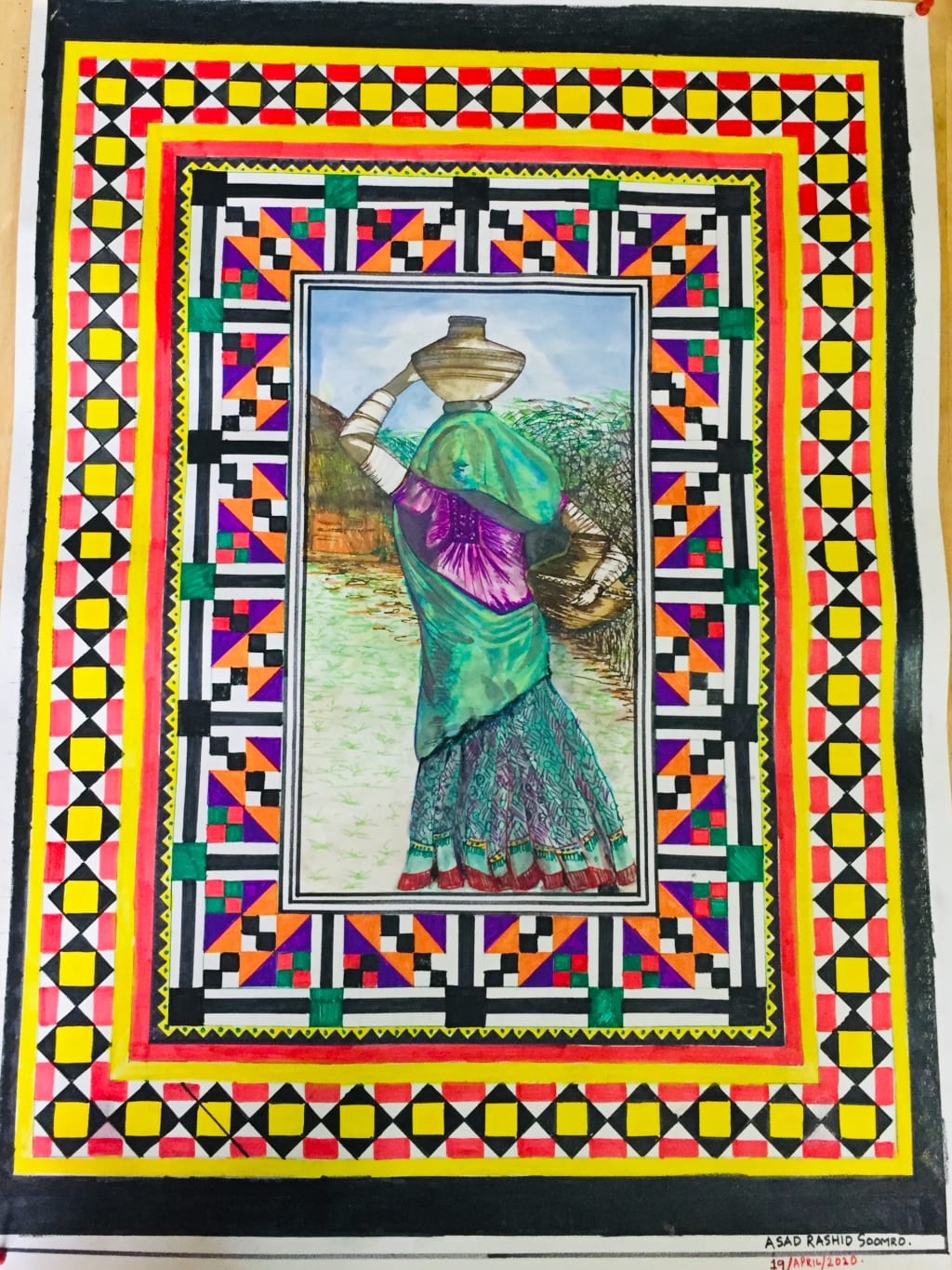
In this modern era, where technology is almost spreaded but not everywhere here’s the Tharr, located in Sindh, Pakistan. They walk many kilometres to get water in these clay pots. The image of traditional Thari women carrying water pots is a common and iconic sight in the Thar desert region of India and Pakistan. These women are called "bharni," which means "water-carrier" in the local language. They carry heavy water pots on their head while walking long distances in the desert heat to fetch water for their families and livestock. The water pots are usually made of clay and are adorned with intricate designs of flowers, animals, and geometric patterns. These designs represent the local culture and are often passed down from generation to generation in Thari families. Despite the challenging circumstances, these women display remarkable strength and resilience as they perform their daily tasks. This image is a reminder of the vital role that women play in managing households and communities, especially in areas with limited resources and access to basic amenities. Thar is a large desert region located in the northwest part of India and the east of Pakistan. The Thari people, also known as the Marwari community, are the inhabitants of this region. The Thar culture is unique and distinct from the rest of the Indian subcontinent due to its geographical and historical isolation. One of the most striking features of Thar culture is its rich oral tradition. The Thari people have a rich history of storytelling, which is primarily passed down from generation to generation through oral narratives. These stories are often accompanied by traditional folk music and dance, which are essential components of Thar culture. The Thari people are known for their colorful and vibrant clothes, which are often adorned with intricate embroidery and mirror work. Women typically wear ghagras, which are long skirts, paired with a choli, which is a blouse. Men wear traditional shirts and trousers along with colorful pagris or turbans. Thar also has a rich culinary heritage, with several unique dishes that are exclusive to the region. Popular dishes include dal batti churma, which is a quintessential Thar meal consisting of lentil soup (dal), baked wheat balls (batti), and sweetened gram flour (churma). Other popular dishes include ker sangri, laal maas, and gatte ki sabzi. Thar culture is deeply rooted in a sense of community and hospitality. The people of Thar are known for their warm and welcoming nature, and visitors are often welcomed with open arms. The Thari people are also deeply connected to their land and have developed a rich knowledge of the local ecosystem and natural resources, which is reflected in their traditional practices and way of life. The traditional clothing of the Thari people is an essential part of their culture and heritage. Tharis dress according to their traditional customs and beliefs, and their clothing provides a fascinating glimpse into their way of life. Here are the key characteristics and style of traditional Thari clothing:
Women's Clothing: Thari women dress in a frock-like dress called a frock, which is typically long and loose-fitting. The frock is worn with a dupatta, which is a long scarf draped over the head or wrapped around the neck. Thari women often embroider their frocks and dupattas with intricate designs, and they use a range of colors and patterns. They complete their look with traditional jewelry, including bangles, earrings, and necklaces.
In conclusion, traditional Thari clothing is colorful, loose-fitting, and comfortable, designed to protect people from the harsh desert environment. The Thari people take pride in their heritage, and their clothing reflects their rich history and culture. The Thar culture is a unique and diverse cultural heritage that is deeply intertwined with the region's history, geography, and natural resources. Its rich oral tradition, vibrant clothing, culinary heritage, and sense of community makes it a fascinating and colorful culture to explore.
About the Creator
Keep reading
More stories from writers in Education and other communities.
Leading With Care Under Pressure
Healthcare systems depend on strong leaders to guide teams, protect patients, and manage change. Today, healthcare leadership challenges are growing fast in medical settings of every size. Hospitals, clinics, and care centers face pressure from staffing shortages, rising costs, and rapidly advancing technology. Leaders must respond with skill, empathy, and clear thinking while keeping care safe and humane.
By Evyatar Nitzanyabout 12 hours ago in Education
What Real Residents Reveal About Co-Living in New York City
Finding housing in New York City can be overwhelming, especially for students, interns, and professionals moving from different parts of the world. While listings and pricing matter, real-life experiences often give the clearest picture of what living in a shared space is actually like. Looking at resident reviews can help uncover what truly makes a co-living experience successful—or challenging.
By Ausfab Group5 days ago in Education
How, Too
Many people wonder how, too. You are not alone, and I am an expert. I will teach you how, too! First, you need to remit a small application fee and fill out an application describing the nature of your financial situation and how often payments will be made, as this will have great bearing on how well I teach you how, too.
By Harper Lewis7 days ago in Fiction
Five—One Grounding
Five—Locked in a perpetual battle against my failing senses and reason, I fight to survive, to get through; I am afraid of... nothingandeverythingallatonce—...—my mouth is dry, and my muscles seize up... what can I see? I can see the birdcage and birds; I can see the watercolour my beautiful wife painted many years ago and unlocked her journey into art; I can see the empty mug of tea as it sits perilously on the arm of the sofa; how many is that now? Three down, two to go; I can also see a jackdaw on the roof of our neighbour's house across the road and a bookcase of potential—Five things you can see.
By Paul Stewart5 days ago in Poets



Comments
There are no comments for this story
Be the first to respond and start the conversation.