
Time Traveller
The Thrills and Dangers of Time Travel: Exploring the Concept of Time Travel and its Potential Challenges.

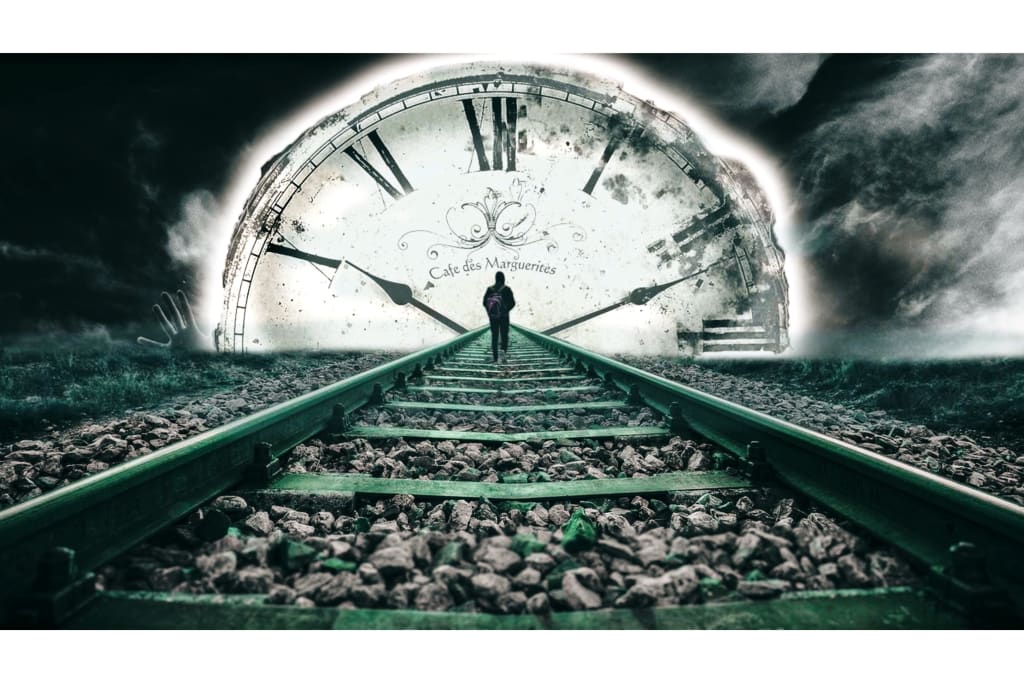
Time travel has long been a fascinating concept in science fiction and popular culture, captivating the imagination of people from all walks of life. The idea of being able to go back in time or travel forward to the future has intrigued many, sparking countless stories, movies, and TV shows about time travellers and their adventures. But what would it be like to be a time traveller?
Firstly, it's important to understand the basics of time travel. Time travel refers to the ability to move between different points in time, just as we move between different points in space. This concept is based on the idea that time is a physical dimension that can be travelled through, much like the three spatial dimensions we are familiar with (length, width, and height). While the concept of time travel is popular in science fiction, there is no scientific evidence to suggest that it is possible.
However, this has not stopped people from imagining what it would be like to travel through time. For many, the idea of being a time traveller is exhilarating. The thought of being able to witness historical events firsthand or to see the future is incredibly enticing. But being a time traveller would also come with many challenges and dangers.
One of the biggest challenges of time travel is the potential for paradoxes. Paradoxes occur when an action in the past affects the future in a way that makes the original action impossible. For example, if a time traveller went back in time and prevented their parents from meeting, they would never have been born, which means they would never have this paradox is known as the "grandfather paradox," and it is just one of many potential paradoxes that could occur when travelling through time.
Another challenge of time travel is the potential for unintended consequences. A small action in the past could have a ripple effect that drastically alters the future. For example, if a time traveller went back in time and accidentally stepped on a butterfly, that small action could lead to a chain of events that drastically alters the course of history.
Despite the challenges and dangers of time travel, many people still dream of being able to travel through time. For some, it is the thrill of adventure that drives them, while for others it is the desire to witness important events or to change the course of history. But regardless of the motivations behind time travel, it is important to remember that the concept is still just a fantasy.
One of the most intriguing aspects of time travel is the possibility of visiting different eras and experiencing history in a way that is impossible for us today. Imagine being able to witness the construction of the pyramids or the signing of the Declaration of Independence. Or what about travelling to the future to see how society has evolved and what advancements have been made? The possibilities are endless and the potential for discovery and exploration is incredibly exciting.
However, time travel also comes with a moral responsibility. If we were to travel back in time and change the course of history, would it be ethical to do so? Would altering the past create a better future or would it have unintended consequences that we cannot predict? These are difficult questions to answer, and they highlight the complex nature of time travel and its potential implications.
Another challenge of time travel is the impact it would have on our personal lives. If we were able to travel through time, would we still be the same person when we returned to our present day? Would we have memories of experiences that no one else had or would we create alternate timelines that diverge from our original reality? These questions raise important philosophical and psychological issues that we are only beginning to explore.
In popular culture, time travel has been used to explore themes such as fate, free will, and the nature of reality. Many movies and TV shows have tackled these themes, including the classic Back to the Future trilogy and the more recent series Dark. These stories often feature time travellers grappling with the consequences of their actions and struggling to make sense of the complex web of cause and effect that they have created.
While time travel may be a fantasy, the concept continues to inspire scientists, philosophers, and storytellers alike. By exploring the possibilities and implications of time travel, we can gain a deeper understanding of our place in the universe and the nature of time itself. Whether we are dreaming of travelling to the past or the future, the idea of being a time traveller will continue to captivate our imagination for years to come.
One interesting aspect of time travel is the different methods that have been proposed for achieving it. Some theories suggest that time travel could be achieved through the use of black holes, which are regions of spacetime where the gravitational pull is so strong that nothing, not even light, can escape. According to this theory, if a spacecraft were to enter a black hole and emerge from a white hole (which is the hypothetical exit point of a black hole), it would have travelled through time.
Other theories propose the use of wormholes, which are hypothetical tunnels through spacetime that connect two different points in space and time. If a wormhole could be created and stabilized, it would theoretically be possible to travel through it and emerge at a different point in time. Of course, these methods of time travel are purely theoretical and may never be possible to achieve. However, the exploration of these theories allows us to gain a deeper understanding of the nature of time and the universe we live in.
In recent years, there have been reports of people claiming to have experienced time travel. However, these claims have not been substantiated and are often met with scepticism from the scientific community. While it is certainly possible that time travel could exist in some form, it is important to approach any claims with a critical eye and rely on evidence-based scientific research.
In conclusion, time travel remains a fascinating concept that captures our imagination and inspires us to explore the mysteries of the universe. While we may never be able to travel through time in the way that we see in movies and TV shows, the exploration of this concept allows us to gain a deeper understanding of the nature of time and the universe we live in. Whether we are dreaming of travelling to the past or the future, the idea of being a time traveller will continue to captivate our imagination and inspire us to push the boundaries of scientific discovery.
About the Creator
Kamalesh Das
I have several years of writing experience, both academically and professionally. I have written research papers, essays, and articles on a variety of subjects. I have also worked as a content writer for several websites and companies.
Keep reading
More stories from Kamalesh Das and writers in Education and other communities.
"The Hiroshima Mission: A Time Traveler's Attempt to Alter History"
It was a bright and sunny day in the year 2150, and John, a renowned physicist, was sitting in his lab contemplating the mysteries of the universe. Suddenly, his thoughts were interrupted by a loud beeping noise. He looked up to see that the time machine he had been working on for years was finally ready. John had always been fascinated by time travel and had spent most of his career trying to build a device that could transport people through time.
By Kamalesh Das3 years ago in Education
Half Dollars That Defied Time: Kennedy, Franklin & Walking Liberty
If you’ve found yourself holding an old half dollar, you’ve probably wondered: is this just pocket change, or could it be something more? I’ve had that same conversation with countless collectors in my eight years as a numismatist. The answer often hinges on three legendary names: Walking Liberty, Franklin, and Kennedy. More than just silver, these coins are tangible pieces of 20th-century America. This guide will help you understand their stories, values, and which one might be the perfect fit for your goals, whether you're building a collection or an investment.
By Laura Bennett6 days ago in Education
How Early Hustle Jobs Build Real Mental Toughness for Life
Early hustle jobs—like babysitting, mowing lawns, stocking shelves, or working the drive-thru—might seem small on paper, but they often shape big psychological strengths. These first experiences with responsibility, pressure, and real-world expectations can build mental toughness in ways school alone usually can’t.
By David Lipanabout 4 hours ago in Education
Center Stage with Paul Stewart
*** I'm keen to republish the interviews I did for my series with Vocal creators. It's been a few years and I thought it might be nice to revisit these wonderful conversations. I'll be releasing them one at a time for a few weeks/months.
By Heather Hubler5 days ago in Interview



Comments
There are no comments for this story
Be the first to respond and start the conversation.