
TikTok Preparing to Launch New App Version for U.S. Users Amid Potential Sale
Uncertainty Looms as ByteDance Races to Comply with U.S. Demands and Retain Market Presence


TikTok, the globally popular video-sharing platform, is preparing to roll out a new version of its app specifically designed for U.S. users as it navigates the uncertainties surrounding its potential sale in the United States.
According to a report by the prominent technology and business news website The Information, cited by the British news agency Reuters, TikTok plans to release this new version on September 5. However, users will eventually be required to download the updated app if they wish to continue using TikTok’s services. While the existing version will remain operational until March 2026, these timelines are still subject to change depending on regulatory developments and business decisions.
The report comes at a time of renewed scrutiny and negotiations over TikTok’s ownership in the U.S., a market with over 150 million users. Former U.S. President Donald Trump recently stated that he plans to initiate talks as soon as Monday or Tuesday regarding a possible agreement with China about the app’s future in the United States. Trump emphasized that the U.S. already has what he described as a “fully worked-out agreement” regarding TikTok’s sale, although he did not disclose specific terms or the identities of potential American buyers.
Background of the Controversy
The debate over TikTok’s ownership and operations in the U.S. has persisted for years. At the heart of the issue are concerns over data security and the Chinese government’s potential access to sensitive information about American users. TikTok’s parent company, ByteDance, is headquartered in Beijing, which has fueled bipartisan fears in Washington about possible misuse of user data and broader national security risks.
In July, President Trump issued an executive order demanding that ByteDance divest TikTok’s U.S. assets by September 17. The order cited national security grounds, arguing that the app could potentially be used by China’s ruling Communist Party to gather personal data, track U.S. government employees, and shape public opinion through algorithmic recommendations.
This new development follows earlier negotiations in which TikTok explored transferring its American operations into a new entity controlled by U.S.-based investors. In the first months of this year, discussions reportedly centered on forming a separate U.S.-registered company to operate TikTok independently from ByteDance’s China business. However, after President Trump imposed steep tariffs on Chinese goods, Beijing signaled reluctance to approve any deal that could be perceived as a forced sale under economic pressure.
Uncertain Future and Potential Implications
Analysts note that the planned launch of a new app version in the U.S. could be part of TikTok’s contingency planning as it faces legal and political challenges. If ByteDance fails to finalize a sale or secure regulatory clearance to continue operations, TikTok risks being banned in the U.S., which is its second-largest market after China.
Industry experts also point out that even if an agreement is reached, implementing a technical separation between TikTok’s global and U.S. operations would be a complex undertaking. The app’s recommendation engine and data infrastructure rely on sophisticated algorithms developed by engineers in China. Creating an independent American version that complies with U.S. national security requirements could take considerable time and investment.
Company Response and Public Reaction
TikTok did not immediately respond to Reuters’ request for comment on The Information’s report, and Reuters itself has not independently verified the timeline or details of the new app’s planned launch.
Meanwhile, many users and creators have expressed anxiety about the platform’s uncertain future. Over the past year, TikTok has become a crucial tool for influencers, small businesses, musicians, and educators to reach large audiences. According to some estimates, U.S.-based TikTok creators collectively generate billions of dollars in economic activity through advertising partnerships and branded content.
A Broader Geopolitical Backdrop
The escalating tensions over TikTok illustrate the growing technological rivalry between the U.S. and China. The debate around TikTok is part of a wider effort by American policymakers to limit Chinese technology firms’ influence over critical digital infrastructure and consumer data. In parallel, China has imposed stricter controls over the export of sensitive technologies, making it harder for companies like ByteDance to comply with foreign demands without government approval.
Whether the proposed sale will ultimately proceed—and whether the September 5 launch of the new app will go ahead as planned—remains to be seen. For now, TikTok users in the United States face continued uncertainty as the world’s two largest economies clash over control of digital platforms that shape the culture and economy of the 21st century.
About the Creator
Data Driven Private Investing: Why Deal Intelligence Determines Long-Term Returns
Private markets offer access to high-growth companies, specialized assets, and differentiated return streams. However, the complexity of private transactions requires more than capital commitment. Smarter investing begins with disciplined private deal intelligence, which transforms fragmented information into structured insight. Investors who rely on verified data rather than promotional narratives are better positioned to generate sustainable returns.
By Michael Christopher Venturino6 days ago in Education
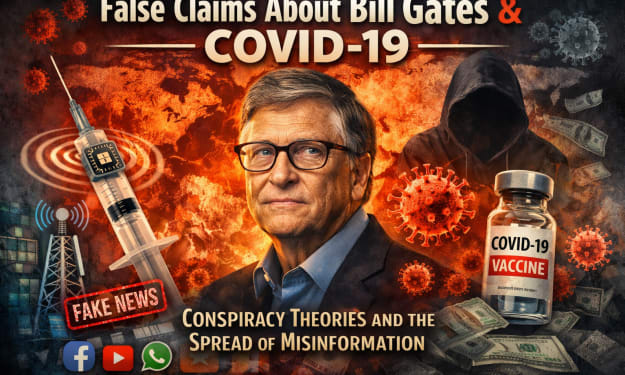
How False Claims About Bill Gates and COVID-19 Spread Online
The COVID-19 pandemic was one of the most disruptive global events in recent memory. With fear, uncertainty, and rapidly changing science driving public discourse, misinformation spread almost as quickly as the virus itself. Among the many unfounded claims that circulated, one of the most persistent involved Microsoft co-founder Bill Gates — wrongly accused of using the pandemic for personal gain, control, or even population manipulation. But why did such false narratives take hold, and how did Bill Gates become a focal point of COVID-related conspiracy theories?
By Irshad Abbasi 6 days ago in Education



Comments
There are no comments for this story
Be the first to respond and start the conversation.