
Thriving in a Digital World: My Journey to Mental Wellness as a Student
Practical Strategies and Real-Life Insights on Finding Balance in the Chaos of Student Life and Digital Distractions
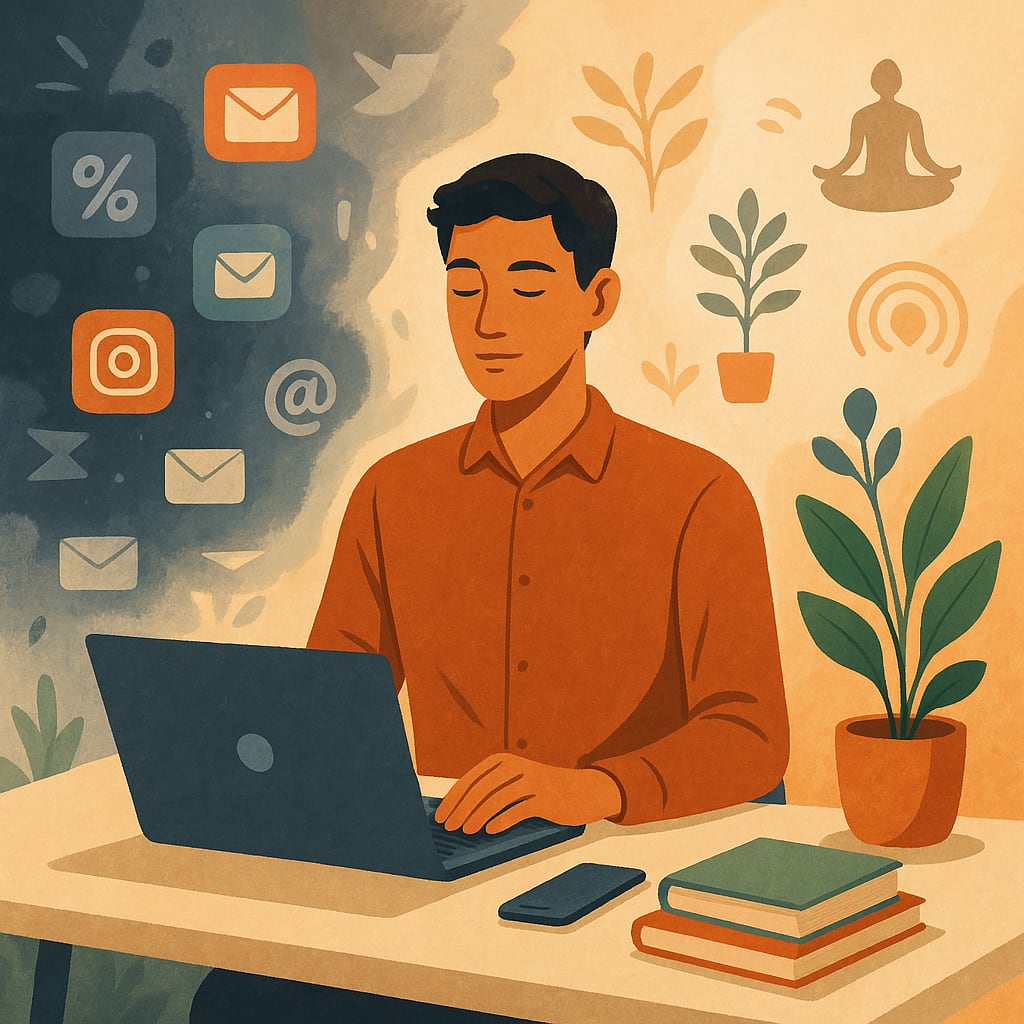
In today’s fast-paced digital age, student life is more demanding than ever before. We’re constantly expected to juggle academic workloads, social commitments, part-time jobs, and personal goals—all while staying connected online 24/7. For many of us, it feels like the line between productivity and burnout is becoming thinner every day.
As a student navigating this chaotic digital landscape, I found myself trapped in a cycle of constant comparison, mental fatigue, and digital overload. It took hitting a personal low point to realize that my mental wellness wasn’t just something to think about when I had time—it had to become a priority.
This is the story of how I went from surviving to thriving, and the practical strategies I discovered along the way to protect my mental health and build a balanced, intentional life.
---
The Wake-Up Call: Digital Overwhelm & Emotional Burnout**
At first, I didn’t recognize the signs. I chalked up my restlessness, procrastination, and constant fatigue to “just being a student.” I scrolled endlessly between social media apps, jumping from Instagram to TikTok to YouTube, convinced it was helping me “relax.” But instead of feeling recharged, I felt more anxious and unfocused.
My grades began to slip. I stopped enjoying hobbies I used to love. I was always connected, yet felt disconnected from myself. That’s when I knew something had to change.
---
Strategy 1: Embracing Digital Minimalism**
The first and most impactful step was reducing digital clutter. I started by tracking my screen time and was shocked to see how much of my day vanished into the black hole of scrolling. I deleted apps that served no real purpose and silenced non-urgent notifications.
I also implemented “digital boundaries.” No phone during meals. No screens after 10 PM. And one full day every week where I disconnected from all social media. These habits weren’t easy at first, but they helped me reclaim my time—and more importantly, my peace of mind.
---
Strategy 2: Creating a Grounded Daily Routine**
Structure became my anchor. I developed a routine that prioritized not only my academic goals but also my mental and emotional health. My mornings started with stretching, hydration, and quiet reflection instead of instantly checking my phone. I used time-blocking to focus on deep work during my most productive hours, with intentional breaks to rest or take a walk.
This shift turned my chaotic days into more manageable ones. I wasn’t just reacting to everything anymore—I was taking the lead in how my time and energy were spent.
---
Strategy 3: Prioritizing Mental Health Like a Class**
Just like any other important subject, mental wellness deserves daily attention. I started journaling every night to process my thoughts. I experimented with mindfulness apps and eventually built a consistent meditation habit. I even reached out to a counselor on campus, something I never thought I’d do.
This step was empowering. Talking about what I was going through and learning tools to manage stress made me feel more in control. I realized that taking care of my mental health wasn’t a weakness—it was strength.
---
Strategy 4: Redefining Productivity & Success**
One of the hardest lessons I learned was that success isn’t always about doing more—it’s about doing what matters. I stopped glorifying busyness and began measuring productivity by how aligned my actions were with my values.
Some days, success meant completing a big project. Other days, it meant taking a break and saying “no” to another commitment. I let go of the constant pressure to “keep up” and embraced the idea that rest and joy are essential parts of growth.
---
Strategy 5: Curating Connection Over Comparison**
Social media was a major trigger for my stress. I started curating my online spaces to inspire rather than drain me. I followed accounts that made me feel uplifted and unfollowed anything that triggered comparison or self-doubt.
But the biggest change happened offline. I made more time for real-life conversations, meaningful friendships, and face-to-face connection. I found that when I was truly present with others, I felt more grounded in myself.
---
Conclusion: Wellness is a Journey, Not a Destination**
Mental wellness isn’t a checklist—it’s an ongoing journey. There are still tough days. But I now have a toolkit to navigate them with more resilience and self-compassion. In a world that never stops moving, I’ve learned how to pause. In a world that rewards constant connection, I’ve learned how to disconnect and reconnect with what matters most—myself.
If you’re a student struggling with digital distractions, burnout, or overwhelm, know this: you’re not alone, and you are not powerless. Small, intentional choices can create big changes over time. Don’t wait for a breaking point to start prioritizing your mental health.
You deserve to thrive—not just academically, but emotionally, mentally, and spiritually. Because in the end, the most important project you’ll ever work on… is you.
---
Would you like me to format this into a publish-ready document, add a title image, or help you write your author bio too?
About the Creator
Keep reading
More stories from Kashi's Mindspace and writers in Education and other communities.
Tethered to the Other Side
--- I was standing at the end of the hallway, just outside the bedroom where she died, holding the locket she gave me, as tightly as I could, hoping it might tether her soul long enough for one last goodbye. She would’ve turned twenty-one next month; I had just turned twenty-two. I stood there, paralyzed, as the candlelight flickered unnaturally in the corner of the room. I didn’t know how to explain the cold that rolled through the hallway or the way the air thickened like fog. Forty-eight hours ago, we had danced in the field behind my house beneath a moon so full it lit her eyes like stars. Now, those eyes stared from photographs, still warm with memory. The priest had just finished the rites, but the house hadn’t let her go. Not completely. It had only been ten days since she whispered to me that the shadows were watching. Ten days from butterflies in her stomach to frost in her veins. When the clock in the hall stopped ticking, it marked not just the end of her life—but the beginning of something neither of us could name. This was the breach, the splinter between worlds, when love refused to leave even as death came knocking.
By Kashi's Mindspace10 months ago in Confessions
Historical Background of Panasonic Avionics Corporation
From my research, Panasonic Avionics Corporation was originally founded in 1979 under the name Matsushita Avionics Systems Corporation. Over the decades, the company evolved alongside commercial aviation, aligning its products with aircraft cabin modernization and passenger comfort.
By Beckett Dowhan6 days ago in Education
Thoughts on Vocal and the way the world is
"Death cannot stop true love, only delay it." – Wesley in The Princess Bride. I decided to come back to Vocal on a very cold and dark night at the end of December. I had been, and still am, convalescing from a horrible staph infection that had gone misdiagnosed for months. This, paired with the increasing challenges of being healthy, making the best choices for my co-parented child, being a wife, and being a director at a new job, was a lot to manage.
By Jazzy 7 days ago in Confessions



Comments
There are no comments for this story
Be the first to respond and start the conversation.