
The Transformative Future: How AI and Automation Are Shaping Our Lives
Exploring the Opportunities, Challenges, and Ethical Implications of a Technologically-Driven World

Future of Technology: How AI and Automation Will Change Our Lives
The world that we understand today is poised on the edge of an enormous leap. With how fast and swift technology evolves, what once were terms like "AI" and "Automation" are not just trendy jargon, but agents to change the future we shall live with. These technological advancements are going to revolutionize industries, make our everyday life easier, and generally open up a whole new range of ways to live and work. The promise that has come with AI and automation holds tremendous potential; however, it also has huge challenges that we need to face and prepare for. Article goes into the future on how AI and automation may transform our lives in the coming years.
Emergence of Artificial Intelligence
There is no doubt that artificial intelligence is fast becoming a cornerstone in modern technology. It refers to machines and software designed to perform tasks that typically require human intelligence. Such tasks include decision-making, problem-solving, learning, and even language processing. AI systems, with the most advanced algorithms, are already part of every walk of life. For example, AI systems are Siri and Alexa voice assistants, the search engines that can predict what one wants to find, and the recommended music or videos on any given platform.
AI will only continue to grow in the future, becoming smarter and more intuitive. Possibly most interesting is the fact that researchers break through to creating AI to perform difficult cognitive tasks-that is, to analyze giant datasets, to make critical decisions in real time capable of affecting everything from operating a business to health-care delivery. More than ever, AI is likely the one that will take the center stage of meeting many global challenges from climate and medical research and poverty elimination. It will provide solutions faster, more efficient, and more scalable than ever.
Automation: Revolutionizing the Workforce
Automation is the usage of machines or technology on tasks that are normally human. Even though automation took its first currency several decades ago beginning from manufacturing industries, such trends have recently spread its frontiers into areas heretofore immune like health and education, even more to creative industries.
Hence, in this regard, the future of so many routine and repetitive jobs is automation, hence leaving more complex and strategic work for human workers. For instance, logistically, robots and drones have been applied in several industries with the aim of reducing the extent of human error when doing tasks hence ensuring much efficiency. For example, in health care industries, automation applies when doing some surgeries and administrative tasks to leave time to doctors and spend quality moments with the patients. When AI-based automation systems finally emerge in industries, those industries may run at incredible speeds thereby potentially lowering cost and enhancing productivity in industries across board.
On the other hand, job displacements would also result with a rise in automation. Jobs are likely to change fundamentally when machines take over to perform routine tasks. Different skills from the labor would be required. Some of the jobs are bound to be lost, but newer ones will emerge in terms of AI programming, learning machines, and data analytics. Workers should be taught new skills and learn throughout their lives for such transformations.
The Integration of AI and Automation in Daily Life
The most exciting applications of AI and automation lie in how it will change our lives day to day. Not too far from now, smart homes will be the norm. All things-from temperature and lighting controls to orders of groceries and managing appointments-will be controlled by AI-powered assistants. Such automation would come in unprecedented ways to bring about more convenience and free our time for meaningful activities and experiences.
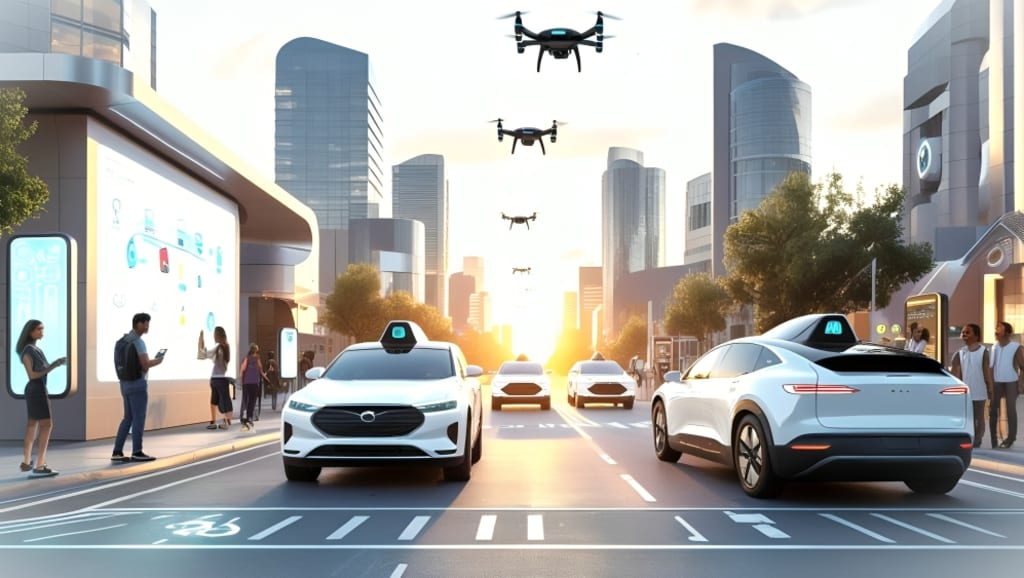
Transportation is another aspect that is going to change in a radical way. Cars, trucks, and even drones already are being experimented in various parts of the world. The technology will soon make its way mainstream over the next few years. Cars that drive themselves will save lives by reducing road traffic accidents and also re-define the way humans think about mobility for years. The self-driving cars, operating with AI, will optimize routes thus reducing the time traveled along with the amount of fuel consumed.
Healthcare will also transform with AI and automation. AI development has made it quite possible to have personalized medicines and tailored treatments based on unique genetic profiles. In surgeries, robots will be used so that precision and consistency can be maintained, no human hand can provide. Further, AI will engage in monitoring patients' health and detecting early signs of diseases and providing real-time treatment recommendations.
Ethics and Challenges
The future is bright for AI and automation, but raises some significant ethical concerns and challenges. It questions issues such as privacy, data security, and biases in decision making with the advent of AI in our lives. It would be crucial to protect that amount of personal data gathered and processed by AI systems.
Besides, more automation would lead to the wide expansion of the social gap. People who do not have the flexibility to adapt to the changing labor market would feel economic shocks. The governments and other organizations must join hands in formulating policies that make workers become retrained and get equal benefits of automation.
Preparation for the Future
We should take action today to look forward to tomorrow with the future of AI and automation. This would mean education and training programs that put people in possession of those skills needed for tomorrow's jobs. AI and automation, in addition to opening up new opportunities, will stretch human creativity and ingenuity. As we settle into this new millennium, it is of the essence to remember ethics and push for a future where man is elevated by technology, not lowered.
Conclusion
The future of technology is exciting and unpredictable. The change in the way people live and work because of AI and automation is going to be both opportunities and challenges. With a step forward, there is much more need to evolve in an integrated approach which involves innovating but at the same time keeping a watch over the issues arising in the society and ethics. That is the way we shall ensure that AI and automation bring improvement to our lives and create a brighter future, even more efficient and equal.
About the Creator
ZAINRAZA
Welcome to My World of Words and Wisdom!
Passionate writer, translator, and book reviewer. Sharing knowledge, history, and motivation through impactful stories. Explore wisdom and creativity with me on a journey to inspire and inform! ✍️📚
Data Driven Private Investing: Why Deal Intelligence Determines Long-Term Returns
Private markets offer access to high-growth companies, specialized assets, and differentiated return streams. However, the complexity of private transactions requires more than capital commitment. Smarter investing begins with disciplined private deal intelligence, which transforms fragmented information into structured insight. Investors who rely on verified data rather than promotional narratives are better positioned to generate sustainable returns.
By Michael Christopher Venturino7 days ago in Education
How False Claims About Bill Gates and COVID-19 Spread Online
The COVID-19 pandemic was one of the most disruptive global events in recent memory. With fear, uncertainty, and rapidly changing science driving public discourse, misinformation spread almost as quickly as the virus itself. Among the many unfounded claims that circulated, one of the most persistent involved Microsoft co-founder Bill Gates — wrongly accused of using the pandemic for personal gain, control, or even population manipulation. But why did such false narratives take hold, and how did Bill Gates become a focal point of COVID-related conspiracy theories?
By Irshad Abbasi 6 days ago in Education




Comments (2)
thanks
nice