
"The Taj Mahal: India's Crowning Jewel"
Taj Mahal: A Monument of Love and Mystery
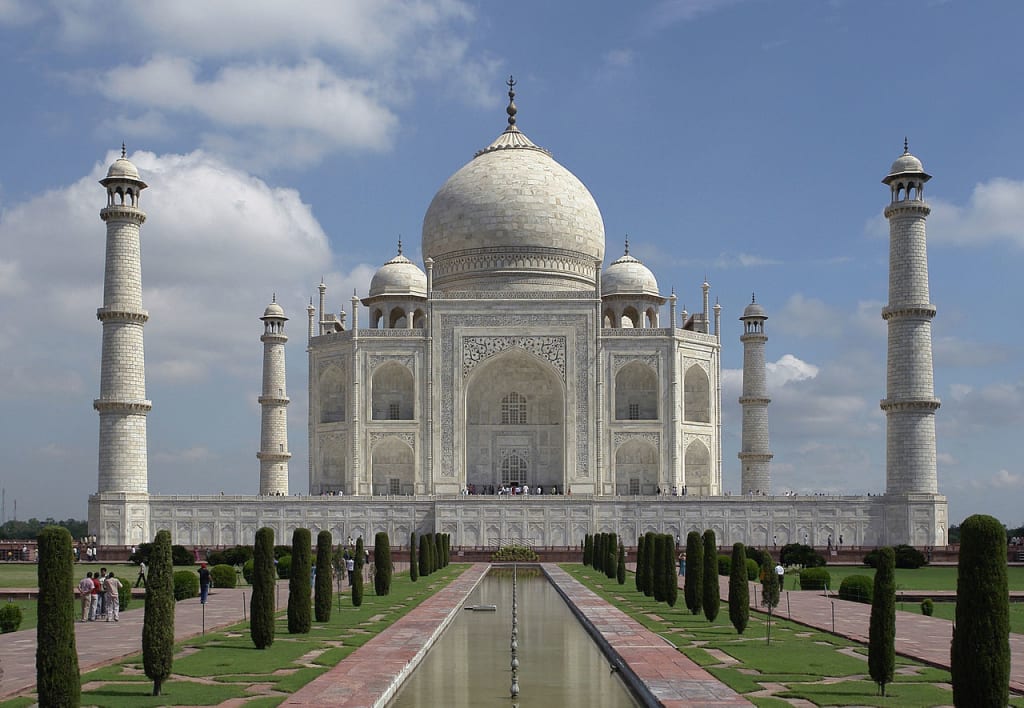
The Taj Mahal is one of the most iconic and beautiful monuments in the world, attracting millions of visitors every year. Located in the Indian city of Agra, the Taj Mahal is a testament to love and devotion, as it was built by the Mughal Emperor Shah Jahan in memory of his beloved wife Mumtaz Mahal. However, despite its fame and beauty, the Taj Mahal holds many hidden secrets and mysteries that continue to fascinate people from all over the world.
Construction and Architecture of Taj Mahal
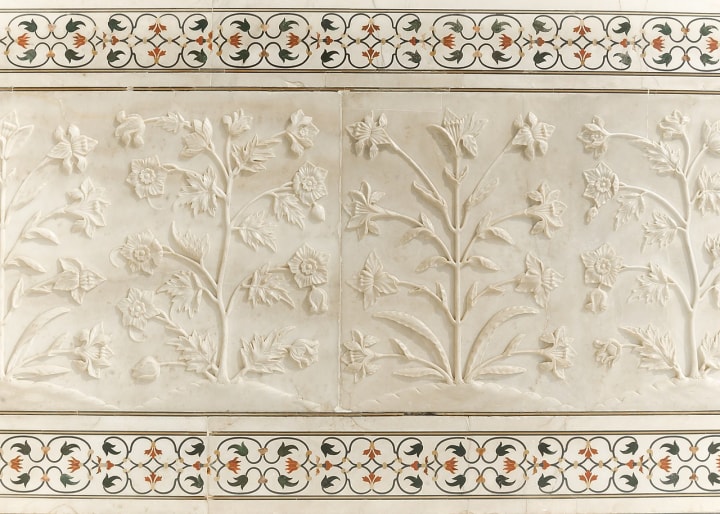
Construction of the Taj Mahal began in 1632 and took over 20 years to complete. The monument was built using white marble and precious stones, such as jade, crystal, and turquoise. It features a central domed structure flanked by four minarets, all of which are adorned with intricate carvings and delicate inlay work.
The Taj Mahal's design is a blend of various architectural styles, including Islamic, Persian, and Indian. The monument's symmetrical layout and use of intricate geometric patterns are typical of Islamic architecture, while its use of delicate inlay work and floral motifs is more in line with traditional Indian design. The result is a stunning fusion of styles that has made the Taj Mahal one of the most unique and recognizable structures in the world.
Hidden Secrets of Taj Mahal
Optical Illusions: Did you know that the Taj Mahal appears to change color depending on the time of day? During sunrise, the white marble glows pink, while at sunset, it appears to turn a golden hue. The architects used optical illusions to create this effect, and it's just one of the many tricks they used to create the Taj Mahal's stunning beauty.
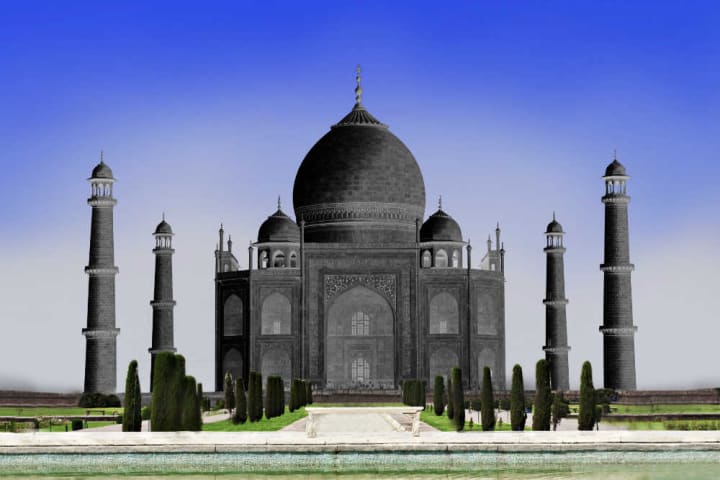
The Black Taj Myth: Legend has it that the Mughal emperor Shah Jahan had planned to build a Black Taj Mahal right across the river from the white one. But the emperor's son Aurangzeb deposed him before he could execute his plan. There's no evidence to support this theory, but it's an intriguing story nonetheless.
The Underground Chambers: Beneath the Taj Mahal lies a network of hidden chambers and tunnels. Some of these were used to store precious stones and other valuables, while others served as escape routes for the royal family. There are also rumors that Shah Jahan's body was initially buried in one of these underground chambers before being moved to the main tomb.
The Missing Ruby: The Taj Mahal is adorned with precious stones, including diamonds, emeralds, and rubies. However, there's a small detail that's often overlooked - one of the rubies on the tomb's main gate is missing. No one knows what happened to it, and its absence has become one of the Taj Mahal's enduring mysteries.
The Calligraphy Puzzle: The walls of the Taj Mahal are covered with intricate calligraphy, which was hand-carved by skilled artisans. But there's a puzzle hidden in this beautiful script - the calligrapher intentionally misspelled a few words to create a sense of fluidity and movement. It's a subtle detail that few people notice, but it adds an extra layer of depth to the Taj Mahal's already rich history.
Secret Behind the Pillars:
One of the most intriguing secrets of the pillars of the Taj Mahal is that they are not completely vertical. In fact, they are slightly tilted outwards at an angle of approximately 1.5 degrees. This tilt was intentional and was incorporated into the design to ensure that the pillars would remain standing in the event of an earthquake or other natural disaster.
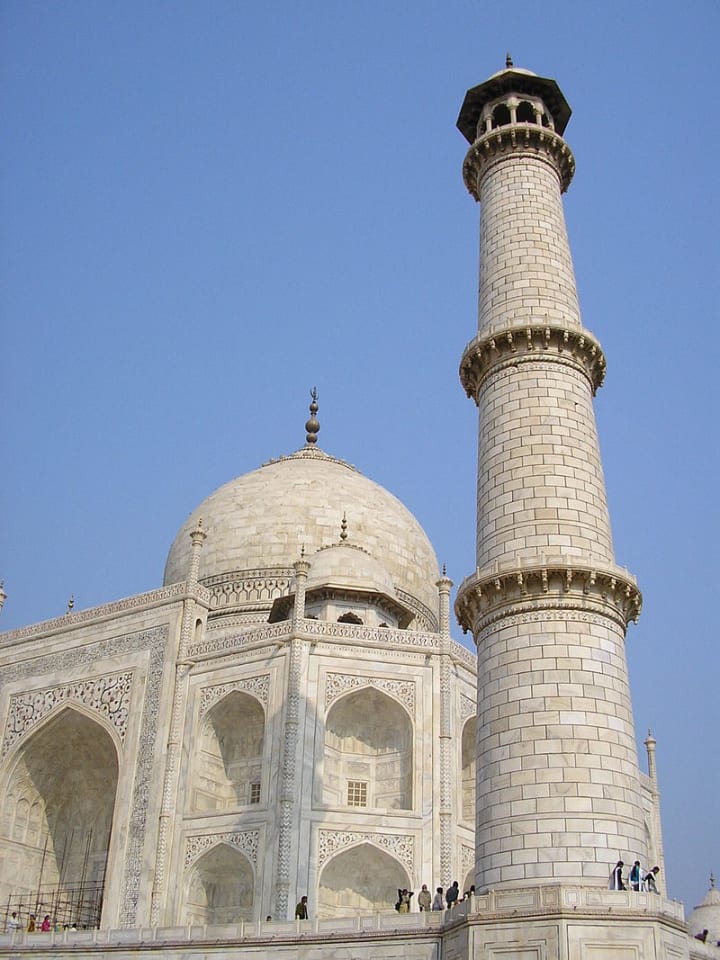
The tilt of the pillars is known as "entasis," which is a technique used in classical architecture to create an optical illusion of straightness. Without entasis, columns and pillars can appear thinner in the middle and thicker at the top and bottom due to the way light reflects off their surfaces.
In the case of the Taj Mahal, the entasis is subtle but effective. The slight outward tilt of the pillars counteracts the visual distortion caused by the curvature of the dome and creates a sense of stability and balance. This design feature is a testament to the skill and ingenuity of the architects and engineers who designed the Taj Mahal, and it is just one of the many hidden secrets that make this monument so fascinating.
In conclusion, the Taj Mahal is a fascinating monument that continues to inspire and captivate visitors from all over the world. While its beauty is evident at first glance, the hidden secrets and mysteries beneath the surface make it even more intriguing. From optical illusions to underground chambers, the Taj Mahal is a treasure trove of secrets waiting to be discovered.
About the Creator
Keep reading
More stories from jagadish k and writers in Education and other communities.
The Magnificent Legacy of Chola Architecture in India
The Brihadisvara Temple, also known as the Peruvudaiyar Kovil or RajaRajeswara Temple, is a historic Hindu temple located in Thanjavur (formerly known as Tanjore), a city in the southern Indian state of Tamil Nadu. The temple is one of the largest and most magnificent examples of Dravidian architecture and is considered a masterpiece of the Chola dynasty, which ruled Tamil Nadu between the 9th and 13th centuries CE.
By jagadish k3 years ago in Education
Entering the Golden Alchemical Door to Teaching and Healing
It starts with love . . . Entering the Golden Door: Who Am I? Going through cancer treatments with chemo, a strange thing happened, for I started to forget things, even who I am because my wife ghosted me and my friends would have nothing to do with me. Without human contact, you forget what it means to be human. I am a professor at a university, but I forgot what I taught. . . .
By WILD WAYNE : The Dragon King5 days ago in Education
Historical Background of Panasonic Avionics Corporation
From my research, Panasonic Avionics Corporation was originally founded in 1979 under the name Matsushita Avionics Systems Corporation. Over the decades, the company evolved alongside commercial aviation, aligning its products with aircraft cabin modernization and passenger comfort.
By Beckett Dowhan2 days ago in Education
Affection and Healing for Yourself
During the night of the last quarter moon, I gathered my ritual supplies. I carefully handled the chunk of black tourmaline that would protect me from your overall negative and narcissistic energy. I carefully walked the house with my stick of selenite in hand, asking the universe to cleanse our working space.
By Alisha Wilkins ✒️🦋🖋️a day ago in Fiction


Comments
There are no comments for this story
Be the first to respond and start the conversation.