
The Silent Storm: Inside the UK’s Hidden Mental Health Crisis
How a global report exposed an unexpected truth about life in the United Kingdom

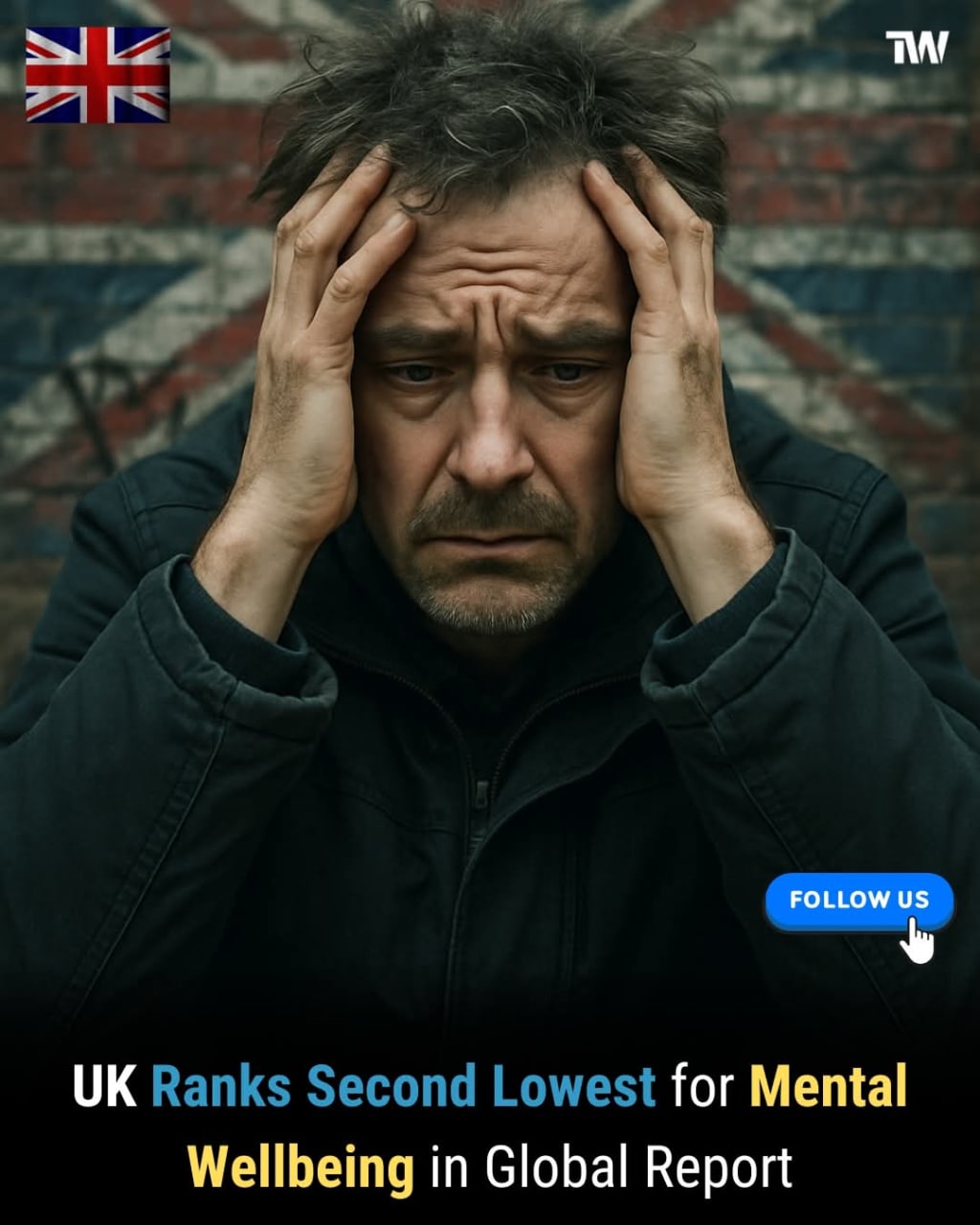
On a cold morning in London, commuters sweep through the train stations like waves—heads down, eyes tired, headphones in, hearts heavy. To an outsider, the UK looks organised, stable, and full of opportunity. But beneath the calm surface, a silent storm has been building for years, and its impact is now impossible to ignore.
In 2023, the Global Mind Project released one of the largest mental health studies ever conducted: The Mental State of the World Report. Over 400,000 people, from 71 countries, took part in a deep evaluation of their emotional and psychological wellbeing. The findings shocked the world—and the UK most of all.
Despite its wealth, strong institutions, and high living standards, the United Kingdom ranked second lowest in global mental wellbeing. Only Uzbekistan scored worse. For many, this was not just a number. It was a mirror reflecting how people in the UK truly feel behind the politeness and quiet routines.
The study used the Mental Health Quotient (MHQ), a comprehensive measure of stress, anxiety, sleep quality, loneliness, emotional control, sense of purpose, and clarity of focus. Unlike the usual national rankings based on money or safety, this report focused entirely on how people actually feel when no one is watching.
And people in the UK weren’t feeling okay.
Stress levels were rising. Anxiety and depressive symptoms were widespread. Loneliness was becoming common. Many struggled with their emotions, sleep, concentration, and overall mental balance. These findings revealed a reality many had been experiencing quietly for years.
But the most worrying discovery was the generational divide. Older adults, despite financial pressures or health challenges, reported better wellbeing than the younger generation. Teens, young adults, and those in their twenties and early thirties scored dramatically lower.
The youngest generation, raised in a world of constant notifications and endless digital comparisons, reported intense anxiety, emotional instability, difficulty focusing, hopelessness, and social isolation. Their struggles were not hidden behind poverty or violence, but rather behind fast-paced routines, silent pressure, and the expectation to always appear strong.
One young respondent captured the feeling perfectly: “I feel like the world moved too fast and left me behind. Everything is loud, but inside it’s quiet.”
Researchers suggested several major reasons for this decline. Loneliness has been rising across the UK for years. Many people feel isolated even when surrounded by others. The pandemic also left deep marks on mental health, disrupting routines, relationships, and stability. Digital overload and social media burnout are draining emotional energy daily. Poor sleep and chronic stress are now part of everyday life for millions. And societal pressure—whether in school, work, or personal life—has become heavier than ever.
All these factors combine to create a silent crisis. Most people suffering never show it. A well-dressed worker on the Underground may be fighting panic attacks. A university student laughing with friends may go home feeling empty. A teenager scrolling through their phone may feel completely alone.
This is what the report exposes: mental suffering does not always look dramatic. More often, it looks like someone calmly saying, “I’m fine.”
The message of the report is clear. Mental health struggles are not just personal problems. They are societal issues. A nation’s wellbeing depends not only on money or infrastructure, but also on the emotional health of its people.
The findings urge people to reach out to one another. A simple message asking “Are you okay?” can mean more than anyone realizes. Genuine listening matters. Honest conversations matter. Encouraging rest instead of constant productivity matters. Recognizing emotional pain instead of ignoring it matters.
The UK’s ranking is not a final judgment. It is a warning and an opportunity. It shows that despite material comfort, there are emotional wounds beneath the surface that must be acknowledged instead of buried.
Healing begins with awareness. Recovery begins with connection. Strength grows when people stop suffering alone. Every conversation, every act of kindness, every moment of understanding becomes a step toward rebuilding wellbeing.
Behind every statistic in the report is a real person with real feelings. Someone who may need help, support, or simply someone who cares. The silent storm may be strong, but it does not have to be permanent. When people choose to listen, share, and support, the silence begins to break.
And sometimes, the most powerful words in the world are the simplest ones: “I’m here for you.”
About the Creator
Keep reading
More stories from DigitalAddi and writers in Education and other communities.
Why Goat Milk May Be a Better Muscle Booster Than Cow’s Milk
Milk has long been praised for its role in building strong muscles, healthy bones, and overall wellness. While cow’s milk remains the dominant choice around the world, a growing body of research is putting the spotlight on goat milk—suggesting it may actually provide more powerful benefits, especially for muscle development and recovery.
By DigitalAddi6 months ago in Education
Earning Money Online Through Freelancing
Earning Money Online Through Freelancing In today’s digital world, earning money online has become easier than ever before. One of the most popular and trusted ways to make money online is through freelancing. Freelancing allows people to work independently, use their skills, and earn income without being tied to a traditional office job. With just a computer, an internet connection, and useful skills, anyone can start freelancing from anywhere in the world.
By Bilal Mohammadi3 days ago in Education


Comments
There are no comments for this story
Be the first to respond and start the conversation.