
The Silent Guardian: Secrets of the Moon Unveiled
Beyond its glow lies a tale of cosmic mysteries, ancient collisions, and Earth's eternal companion.

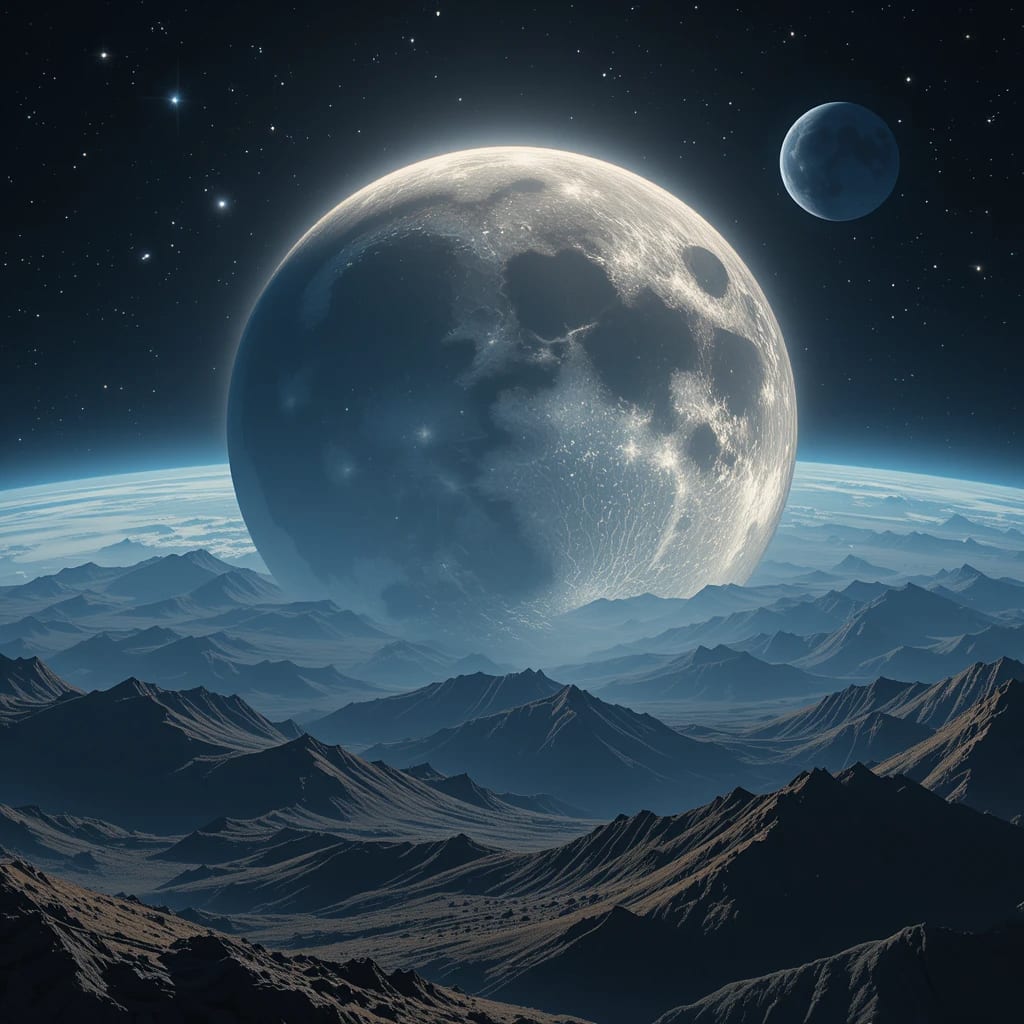
When we gaze at the night sky, the Moon greets us with a tranquil presence—a silver sentinel hanging above us, offering light, rhythm, and wonder. Yet behind its gentle glow lies a world brimming with cosmic secrets. The Moon, often romanticized in poetry and painted in stories, is far more than a beautiful celestial body. It is a silent guardian of Earth and a witness to the violent birth of our solar system.
The Moon’s Origin: A Collision of Worlds
Scientists believe the Moon was born approximately 4.5 billion years ago, shortly after Earth itself formed. The prevailing theory suggests a Mars-sized object named Theia collided with Earth, causing massive debris to orbit our planet. Over time, this debris coalesced, forming what we now see as the Moon. This cosmic crash not only shaped our Moon but also contributed to Earth’s tilted axis, giving rise to seasons.
Locked in Dance: Earth and Moon’s Gravitational Bond
The Moon is tidally locked with Earth, meaning the same side always faces us. This synchronous rotation has created a balance—a cosmic dance—that has stabilized Earth’s wobble and, by extension, its climate. Without the Moon’s gravitational pull, tides would be minimal, and the delicate balance of marine life would be disrupted.
A Record of Time: The Lunar Surface
Unlike Earth, which constantly reshapes itself through weather and tectonic activity, the Moon’s surface is ancient and largely unchanged. Craters from meteoroid impacts, vast lava plains called maria, and towering mountains reveal a timeline of cosmic events etched in stone. Every mark on the Moon is a story—untouched, preserved, and waiting to be understood.
Human Footprints and Future Dreams
In 1969, Neil Armstrong left the first human footprint on the Moon, declaring, “That's one small step for man, one giant leap for mankind.” That moment symbolized the peak of human achievement and sparked a renewed curiosity about our nearest neighbor. Since then, we’ve sent multiple missions to study the Moon’s surface, composition, and hidden treasures. Water ice, discovered in shadowed craters, offers hope for future lunar bases that may one day support human life.
The Moon’s Influence on Culture and Myth
Beyond science, the Moon has always had a profound effect on human imagination. From ancient civilizations who worshipped it as a deity to modern lovers who admire its glow, the Moon has been a muse, a mystery, and a mirror. In Chinese folklore, it’s home to the Moon Goddess Chang’e. In Native American traditions, it marks time and seasons. In modern science fiction, it’s a setting for futuristic colonies and alien life.
Why the Moon Still Matters
With growing interest in space exploration, the Moon is once again in the spotlight. Nations and private companies alike are racing to establish a permanent presence on its surface. Why? Because the Moon may be the gateway to deeper space. Its low gravity and close proximity make it an ideal launchpad for Mars missions and beyond. Moreover, studying the Moon helps us understand planetary formation, cosmic evolution, and even Earth’s own geological past.
A Guardian in Silence
The Moon does not speak, but it tells a story louder than words. It controls our tides, brightens our nights, and stands as Earth’s closest ally in the cosmos. It is a silent guardian—watchful, unwavering, and mysterious. As we continue to uncover its secrets, one truth remains: the Moon is not just a rock in space. It is a part of who we are.
About the Creator
Noman Afridi
I’m Noman Afridi — welcome, all friends! I write horror & thought-provoking stories: mysteries of the unseen, real reflections, and emotional truths. With sincerity in every word. InshaAllah.
Keep reading
More stories from Noman Afridi and writers in Education and other communities.
Wheels of Freedom: The Timeless Journey of the Bicycle
There are few inventions in history as simple, elegant, and enduring as the bicycle. With just two wheels, a frame, pedals, and a handlebar, this humble machine has rolled its way into almost every corner of the world — and every corner of the human experience.
By Noman Afridi8 months ago in Education
From Despair to Hope: How Animal Rescue Efforts Rebuild Broken Lives
Animal rescue efforts stand as a powerful response to suffering that often goes unseen. Across towns, cities, and rural areas, animals face neglect, abandonment, injury, and fear every day. Many are left without food, shelter, or medical care. Others are harmed by abuse or natural disasters. Without help, their future is uncertain. Through patience, care, and action, animal rescue efforts transform despair into hope and give animals the chance to heal and live safely.
By Brenda McGrane5 days ago in Education
How to Gain Real Work Experience in Wealth Management
Breaking into wealth management can feel confusing at first. Many roles ask for experience, but it is not always clear how to get it. The good news is that real wealth management work experience comes from action, not just titles. With the right approach, you can build skills, credibility, and confidence before landing a full-time role.
By John Lennox Cummings4 days ago in Education
So You Decided To Become a Nurse Practitioner:
So you decided to become an "Advanced Practice" nurse. Congratulations!... is what I would say if this was a good idea. Grad school? In this economy? What were you thinking? Likely it was something along the lines of either 1) “I've seen these other chucklefucks do it— Why can't I?” or even 2) “I've got a nice career, I should shake it up. I miss feeling like I have no clue what I'm doing.”
By Sandor Szabo2 days ago in Fiction



Comments
There are no comments for this story
Be the first to respond and start the conversation.