
The Silent Cost of Midnight Oil: What Happens When We Study Late at Night
How Late-Night Studying Affects the Mind, Body, and Soul

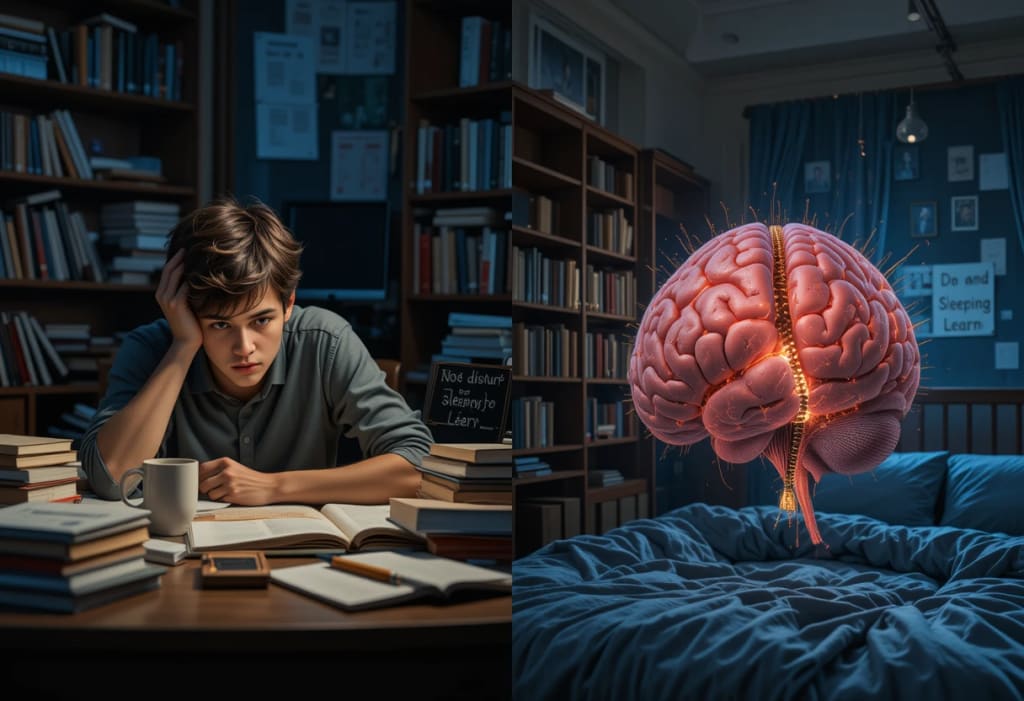
The Silent Cost of Midnight Oil: What Happens When We Study Late at Night
For many students, the quiet of the night becomes a refuge for cramming information, finishing assignments, and catching up on readings that were pushed aside during the day. The silence after sunset, the absence of distractions, and the pressure of looming deadlines create the perfect storm for late-night study sessions. But beneath this habit lies a deeper impact that slowly shapes not only academic performance but mental, emotional, and physical well-being.
This is the story of Amina—a bright, ambitious university student—and how her habit of studying late into the night changed her life in ways she never expected.
Amina had always been a top performer in school. She was organized, driven, and motivated to build a future her parents would be proud of. But college was different. The assignments were more demanding, the reading lists never-ending, and the pressure to maintain scholarships unbearable. Slowly, she started slipping into the habit of studying late at night, thinking it was a clever way to get ahead.
At first, it worked.
The world would go quiet after 10 PM. Her phone buzzed less, the house was peaceful, and she could finally focus. With a cup of strong coffee and her playlist humming gently in the background, she would study until 2 or 3 AM. She felt productive and in control. Her grades stayed high. Her professors praised her. Her classmates envied her discipline.
But the cracks began to show.
The Physical Toll
It started with headaches. Then came the constant yawning during morning lectures. No matter how much she slept during the day, it never felt enough. Her circadian rhythm—the natural cycle that regulates sleep and wakefulness—had been disrupted.
Doctors call it “sleep debt”—the cumulative effect of not getting enough rest. Amina’s immune system weakened. She got sick more often. Her skin broke out. She gained weight due to late-night snacking and lack of exercise. Her body was telling her something she didn’t want to hear: rest is not optional.
The Mental Decline
The real shock came during midterms. Amina had studied all night—pages and pages of notes—but during the exam, her mind went blank. She stared at questions she had reviewed a hundred times, but nothing came. Her brain, fogged by fatigue, couldn’t retrieve the answers.
This is where science agrees: late-night study may help short-term memory, but it harms long-term retention. The brain consolidates information during deep sleep. Without enough rest, facts don’t stick. Worse, concentration and critical thinking suffer.
Amina started noticing she was more anxious. Her thoughts raced at night, and she struggled to fall asleep even when she wanted to. The more she studied late, the more restless she became. She wasn’t just tired—she was burnt out
The Emotional Impact
The people around her started to notice. She was snappy with her friends, distant with her family, and cried more often than she used to. The emotional cost of sleep deprivation is profound. It makes people more irritable, more vulnerable to stress, and more likely to feel depressed.
Amina, once full of life, now felt like a shell of herself. She started questioning everything—her abilities, her choices, even her worth. The habit that once felt empowering was slowly undoing her spirit.
The Turning Point
One day, after collapsing from exhaustion and being taken to the campus clinic, she finally heard what she needed: “Your body is not a machine. You can’t keep running on empty and expect no consequences.”
It was a wake-up call.
With the help of a counselor, Amina started reshaping her routine. She began waking up early instead of staying up late. She broke her study hours into manageable chunks and started taking short naps during the day to reset her brain. She reduced caffeine and increased water intake. She learned to prioritize sleep—not just as a necessity, but as a powerful tool for success.
The Lesson
Studying late at night may seem like a solution when there are too many tasks and not enough hours. But in reality, it’s a short-term fix with long-term consequences.
Research shows that students who sleep 7–9 hours consistently perform better, think clearer, and manage emotions more effectively. Sleep isn't wasted time—it's part of the learning process. It’s when the brain organizes and strengthens what it has learned. Skipping sleep is like trying to write an essay without saving the file—you’ll end up losing more than you gain.
Conclusion
Amina’s story is not unique. It echoes the experiences of thousands of students across the world who are trying to do more by sacrificing sleep. The truth is, late-night studying may help you survive a quiz or two, but it won't help you thrive.
The best academic tool isn’t a textbook, or a flashcard app, or even coffee—it’s rest. A rested mind learns faster, remembers better, and feels stronger.
So next time you’re tempted to burn the midnight oil, ask yourself: Is it worth the cost?
Because sometimes, the smartest thing you can do for your brain… is to let it sleep.
About the Creator
Keep reading
More stories from waseem khan and writers in Education and other communities.
The Day I Realized My Childhood Was Over
The Day I Realized My Childhood Was Over It was the summer I turned fifteen when it happened. The day wasn’t extraordinary. No dramatic lighting. No fireworks. Just a quiet Tuesday in late July, the kind that hums with heat and smells like dry grass and melting pavement.
By waseem khan8 months ago in Education
What Raquel Zamora Says She’ll Bring to LAUSD Board District 2
“LAUSD has some of the strongest special education services in the nation." — Raquel Zamora In the 2022 election, Dr. Rocío Rivas won the race to fill the Board District 2 seat that was held by Monica García, who was forced from office due to term limits. In her first attempt at re‑election, Rivas will face Raquel Zamora. With only two candidates on the ballot, the June 2, 2026, primary will be a winner‑take‑all contest.
By Carl J. Petersen5 days ago in Education
Foreclosure vs. Short Sale: 7 Key Differences Every Real Estate Pro MUST Know
You are driving through a target neighborhood and spot a classic "diamond in the rough." The lawn is overgrown, mail is spilling out of the box, and the shutters are hanging by a thread. To the untrained eye, it is just a neglected house. To a seasoned real estate professional, it is a potential high-margin opportunity.
By REI Data Solutions6 days ago in Education




Comments
There are no comments for this story
Be the first to respond and start the conversation.