
The Silent Addiction: How Social Media Hijacked My Mind (And How I Took It Back)
An honest confession of how social media slowly consumed my mental health — and the small steps that helped me reclaim my peace. ________________________________________ ________________________________________
I never imagined I would call myself an addict.
To me, addiction was always tied to substances or extreme behaviors — something you’d see in documentaries or hear about in whispered conversations.
People like me? Ordinary, disciplined, working-from-home adults?
We couldn’t possibly be addicts.
Or so I thought.
But sometimes, the most dangerous addictions are the ones that hide in plain sight, masked by cultural norms and disguised as harmless distractions.
For me, it was social media.
________________________________________
The Invisible Trap
It started innocently enough. During the pandemic lockdowns, when the world outside turned silent, my phone became my escape hatch.
Instagram offered me a peek into a life beyond my four walls.
TikTok served me endless laughs and life hacks.
Twitter gave me breaking news and the illusion of staying informed.
At first, it felt like connection.
But slowly, that connection became a crutch. And then, a cage.
I justified my screen time at first.
"I’m staying connected."
"I deserve a break."
"It’s how I relax after work."
But soon, the lines blurred.
Work breaks turned into hour-long scrolling marathons.
Evenings meant binge-watching reels instead of unwinding with a book or a walk.
And mornings? They started with notifications instead of mindfulness.
The scary part?
I didn’t notice the shift right away.
It was subtle — the way an ocean tide slowly pulls you further from shore.
Until one day, you look back and realize you can no longer see the land.
________________________________________
The Comparison Vortex
Perhaps the most insidious part of social media wasn’t the time I lost — it was the way it distorted my self-image.
I found myself comparing every aspect of my life to carefully curated snapshots of strangers.
People my age seemed to be doing more, achieving more, living in prettier apartments, traveling to dream destinations, glowing up physically and financially.
It didn’t matter that I knew these were highlight reels, filtered realities, or even outright fake.
Emotionally, I still felt like I was falling behind.
I began questioning my worth, my progress, my appearance, my choices.
I wasn’t just addicted to scrolling.
I was addicted to comparing.
________________________________________
The Doom scrolling Spiral
And then came the news cycle.
It felt like a duty to stay informed, but staying informed morphed into doomscrolling — consuming a never-ending stream of bad news, disasters, scandals, and tragedies.
Every swipe left me more anxious, more hopeless.
I couldn’t look away, but I also couldn’t do anything about what I was seeing.
The combination of helplessness and overstimulation was a toxic cocktail for my mental health.
________________________________________
The Breaking Point
The moment that changed everything came quietly.
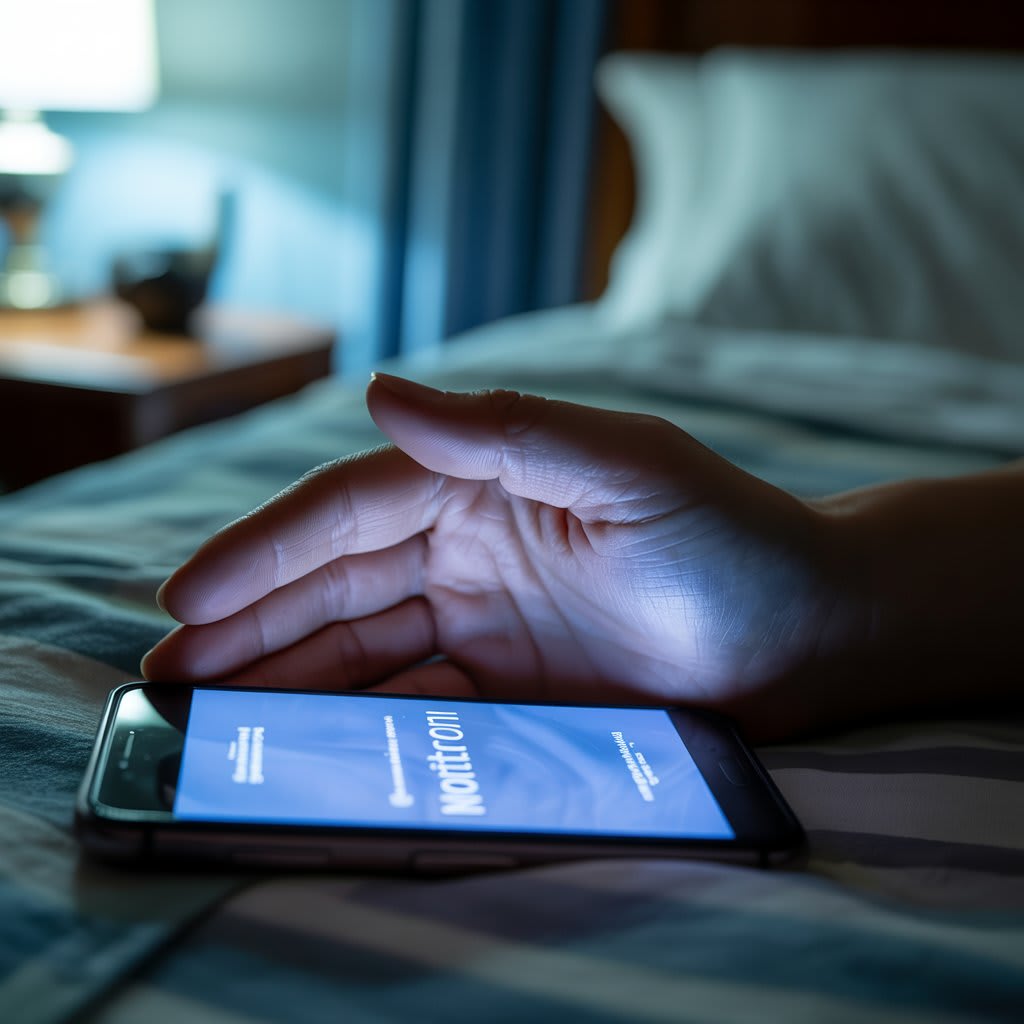
One night, after hours of scrolling TikTok in the dark, I caught a glimpse of myself in the reflection of my phone screen.
My eyes were hollow.
My posture slumped.
My spirit... depleted.
It hit me like a punch to the gut:
"This isn’t me. This isn’t the life I want to live."
That night, I finally admitted to myself what I had been avoiding for months:
I had lost control.
________________________________________
The Path Back to Myself
I didn’t go cold turkey. That wasn’t sustainable for me.
Instead, I took small but intentional steps to reclaim my attention and my life.
First, I turned off all notifications.
No more dopamine hits every few minutes from likes, comments, or breaking news alerts.
Next, I set strict phone-free zones in my home — starting with the bedroom.
My phone stopped sleeping next to me.
I replaced it with an old-school alarm clock and a paperback book.
I installed apps like “One Sec” that forced me to pause and breathe before opening social media, creating friction in my previously mindless habit.
But most importantly, I replaced the habit itself.
When the urge to scroll crept in, I filled that space with something nurturing:
• Walks in nature
• Journaling
• Reading
• Simply sitting in silence, allowing myself to feel bored without reaching for a screen
It wasn’t easy.
In fact, the first few weeks felt like withdrawal.
I realized how often I turned to social media to escape discomfort — boredom, loneliness, sadness.
But on the other side of that discomfort, I found something unexpected:
Peace.
________________________________________
The Lesson No One Talks About
We often hear that social media is the villain.
But I no longer believe that.
Social media is a tool.
It’s how we use it — or how it uses us — that determines the outcome.
What no one tells you is that you don’t have to live at the mercy of an algorithm.
You can set boundaries. You can choose mindful consumption.
You can still enjoy the connections and creativity social media offers — without letting it hijack your life.
The truth is:
The world beyond the scroll is richer, messier, and far more beautiful than any curated feed.
And the best part?
It’s waiting for you to come back.
________________________________________
💬 I'd love to hear from you.
Have you ever felt trapped in the endless scroll?
Share your story in the comments — let’s open up the conversation together.
About the Creator
Keep reading
More stories from writers in Education and other communities.
Rooted in Conviction: Lessons on Spiritual Leadership and Social Order from Iglesia ni Cristo
Spiritual leadership has always played an essential role in guiding communities toward shared values and ethical living. In a world where leadership styles constantly evolve, religious institutions continue to offer enduring perspectives on responsibility and social harmony. Iglesia ni Cristo (INC), a Christian church founded in 1914 in the Philippines, presents a distinctive model of spiritual leadership that emphasizes order, unity, and moral discipline. Its influence reaches beyond religious practice and offers valuable lessons for society as a whole.
By Iglesia Ni Cristo6 days ago in Education
Autonomy Is The Real Privilege
Good morning, freedom-seekers! Today we’re gonna be looking at autonomy. A strange word, I know; one many would probably look at blankly and run away from on sight. We’re gonna figure out what it actually means, consider how it’s achieved, and decipher just how deeply most of us are tangled up in dependence without realising it.
By That ‘Freedom’ Guy4 days ago in Humans



Comments
There are no comments for this story
Be the first to respond and start the conversation.