
The Shocking History and Bright Future of Electricity: Transforming Our World for Over a Century
Exploring the Benefits, Challenges, and Innovations of this Revolutionary Technology

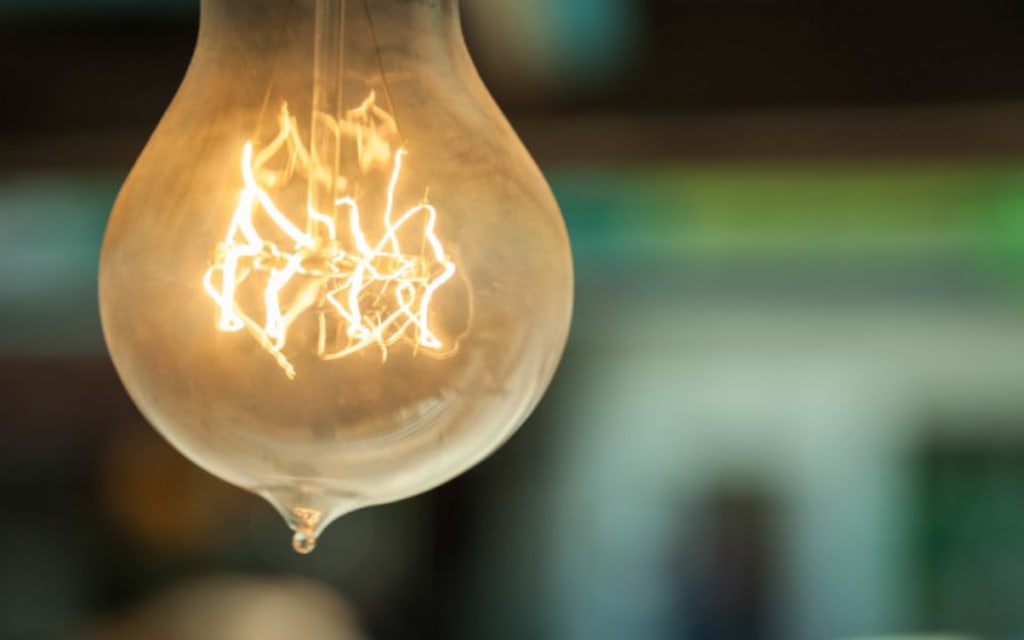
Electricity is one of the most important inventions in human history. It is difficult to imagine a world without electricity, as it is an essential part of our daily lives. From lighting our homes and powering our devices to running industries and transportation systems, electricity has transformed the way we live, work, and interact with the world around us.
The history of electricity can be traced back to the ancient Greeks, who discovered that rubbing certain materials together, such as amber and fur, created a static charge. However, it was not until the 18th century that scientists began to understand the nature of electricity and how to harness it for practical applications.
One of the key figures in the history of electricity was Benjamin Franklin, who is famous for his experiments with lightning and the invention of the lightning rod. In 1752, Franklin conducted his famous kite experiment, in which he flew a kite during a thunderstorm and observed that electricity could be conducted from the lightning to the kite via a metal key attached to the string. This experiment helped to establish the link between lightning and electricity and led to the development of the lightning rod, which is still used today to protect buildings from lightning strikes.
In the decades that followed, scientists and inventors continued to make important discoveries in the field of electricity. In the 1800s, Alessandro Volta invented the first battery, which provided a continuous source of electrical energy. This invention paved the way for the development of electric motors and generators, which became the basis for many of the technological advancements of the Industrial Revolution.
One of the most important figures in the history of electricity was Thomas Edison, who is credited with inventing the first practical incandescent light bulb. Edison's invention of the light bulb revolutionized the way we light our homes and businesses, and it paved the way for the development of a vast array of electrical devices and appliances.
In addition to the light bulb, Edison also developed the first electric power distribution system, which made it possible to bring electricity to homes and businesses on a large scale. Edison's work on the power distribution system laid the foundation for the modern electrical grid, which is used to deliver electricity to millions of people around the world.
The impact of electricity on society has been enormous. It has transformed the way we live, work, and interact with the world around us. The widespread availability of electricity has made it possible to build cities and infrastructure on a massive scale, and it has enabled the development of industries that would have been impossible without a reliable source of electrical power.
One of the most important applications of electricity has been in the field of communication. The invention of the telegraph and the telephone made it possible to send messages and communicate with people over long distances, and these technologies paved the way for the development of modern telecommunications systems.
Today, electricity is more important than ever before. It powers our homes and businesses, and it is essential for running the technologies that we rely on every day, such as computers, smartphones, and the internet. In addition, electricity is playing an increasingly important role in the transition to a cleaner and more sustainable energy system, as more and more countries and companies turn to renewable energy sources such as wind and solar power.
However, there are also challenges associated with the widespread use of electricity. One of the most pressing issues is the environmental impact of electricity generation, which is a major source of greenhouse gas emissions and air pollution. In addition, there are concerns about the security of the electrical grid, as it is vulnerable to cyber attacks and other forms of sabotage.
In conclusion, the invention of electricity has been one of the most transformative events in human history. It has enabled us to build the modern world and to achieve levels of technological progress that would have been unimaginable just a few centuries ago. While there are certainly challenges associated with the
About the Creator
Keep reading
More stories from Vijay Periannan and writers in Education and other communities.
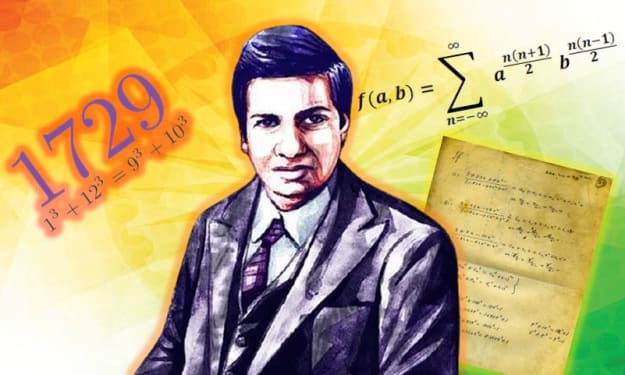
The Genius from India: The Inspiring Story of Ramanujan, a Mathematician Ahead of His Time
Srinivasa Ramanujan is one of the most celebrated mathematicians of the 20th century. Born in Erode, Tamil Nadu, India in 1887, Ramanujan showed exceptional mathematical ability from a young age, and by the time he was a teenager, he had developed his own theories and methods that would eventually earn him a place among the greatest minds in the history of mathematics.
By Vijay Periannan3 years ago in Education
Designing a Meaningful Future: Strategic Planning for Mission-Focused Entrepreneurs
In today’s evolving business landscape, entrepreneurs are increasingly motivated by more than financial success. Many are building companies around a mission to create social, environmental, or community-driven impact. While passion and vision ignite these ventures, strategic planning transforms purpose into a lasting, scalable business. For mission-focused entrepreneurs, planning is not about restriction but about clarity, alignment, and sustainable growth.
By Mario Payne2 days ago in Education
Why Did Einstein Dislike Quantum Mechanics? The Greatest Scientific Disagreement Ever
Einstein Helped Create Quantum Mechanics It is often forgotten that Einstein was a pioneer of quantum physics. In 1905, Einstein proposed that light comes in discrete packets called photons. This explained the photoelectric effect and earned him the Nobel Prize. His work was one of the pillars of quantum theory.
By shahkar jalal6 days ago in Education


Comments
There are no comments for this story
Be the first to respond and start the conversation.