
The Role of Technology in Transforming the Bachelor in Design Course
Today's Bachelor in Design programs incorporate a range of digital tools and software that enhance the learning experience and expand the creative possibilities for students.

Technology has permeated every aspect of our lives, revolutionising industries and reshaping the way we think, work, and create. The field of design is no exception. The role of technology in design education, particularly in the Bachelor in Design (B Design) course, has become increasingly significant. This article explores how technology impacts design education, focusing on the integration of digital tools, the evolution of creative design thinking, and the broader implications for future designers.
The Integration of Digital Tools in Design Education
In the past, design education relied heavily on manual skills, such as sketching, model-making, and hand-drawing. While these skills are still valuable, the integration of digital tools has transformed the landscape of design education.
Today's Bachelor in Design programs incorporate a range of digital tools and software that enhance the learning experience and expand the creative possibilities for students.
B Design Software

One of the most notable impacts of technology in design education is the introduction of specialised software tailored to various design disciplines. For instance, Adobe Illustrator has become a staple in graphic design education.
This powerful vector graphics editor allows students to create detailed illustrations, logos, and other visual elements with precision and ease. It also enables students to experiment with different styles, colours, and compositions, thus enhancing their creative design thinking.
For those interested in product design or interior design, 3D modelling software such as 3D Model Maker and SketchUp Free offers invaluable tools. These programs allow students to create detailed three-dimensional models, enabling them to visualise and iterate on their designs.
Such software not only improves the accuracy and efficiency of the design process but also provides a platform for students to experiment with materials, textures, and lighting, offering a more comprehensive understanding of their designs.
The Evolution of Creative Design Thinking
Technology has also influenced the way students approach creative design thinking. With access to a wealth of online resources, digital tools, and collaborative platforms, students are now able to explore new ideas and innovative solutions more freely. This shift has led to a more dynamic and interdisciplinary approach to design education.
Enhancing Creativity Through Technology
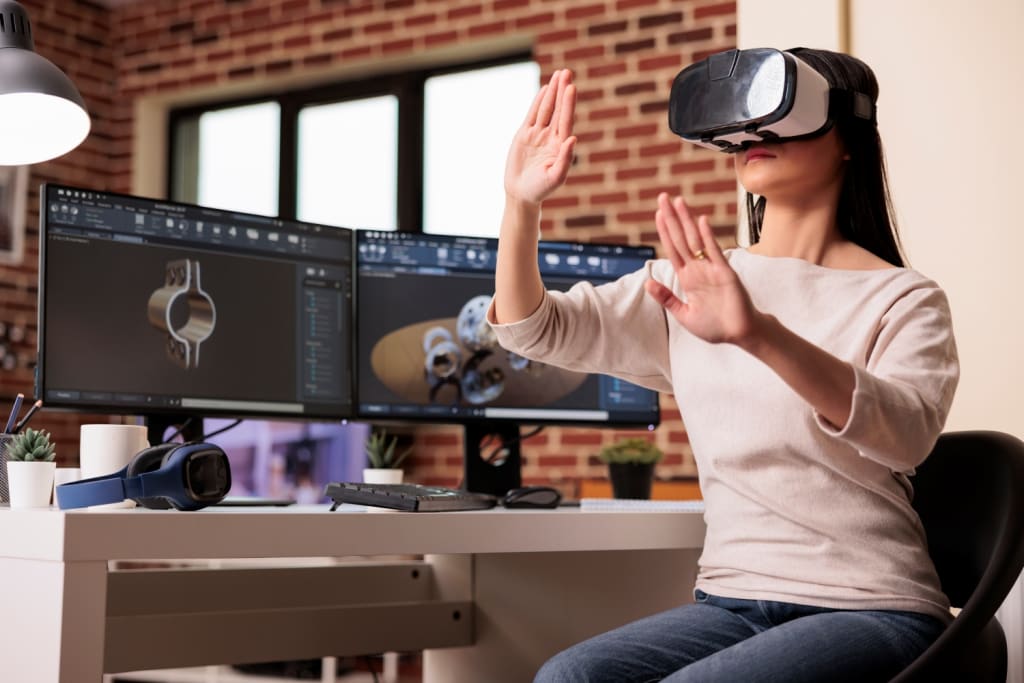
Digital tools enable designers to break free from traditional constraints. For example, virtual reality (VR) and augmented reality (AR) technologies offer immersive experiences that blend the physical and digital worlds. In a Bachelor in Design course, students can use VR to create and explore virtual environments, providing a unique platform for creative expression. This not only expands the range of possibilities for design projects but also allows students to experiment with interactive and experiential design.
The internet provides access to a vast array of design resources, tutorials, and inspiration. Platforms like Behance and Dribbble showcase the work of designers from around the world, offering students insights into global design trends and standards. Online forums and communities also provide a space for students to share their work, receive feedback, and collaborate with others, fostering a sense of community and continuous learning.
Interdisciplinary Approaches
The role of technology in design has also facilitated the adoption of interdisciplinary approaches. In modern design education, it's increasingly common for students to work on projects that intersect with other fields, such as engineering, computer science, and marketing. For instance, a product design student might collaborate with a computer science student to create a smart device that combines aesthetic appeal with functional technology. This interdisciplinary approach not only broadens students' skill sets but also prepares them for the collaborative nature of the professional design world.
Implications for Future Designers
The integration of technology in design education has far-reaching implications for the future of the design industry. As digital tools and platforms continue to evolve, so too must the skills and competencies of aspiring designers. A Bachelor in Design course that embraces technological advancements provides students with a competitive edge in an increasingly digital world.
Preparing for a Digital-First Industry
The design industry is rapidly shifting towards digital-first solutions, and designers must be adept at using the latest technologies. This includes not only traditional design software like Adobe Illustrator and 3D modelling tools but also newer technologies like AI-powered design tools and generative design. These technologies use algorithms to generate design solutions based on specific parameters, allowing designers to explore a wide range of possibilities quickly.
Understanding coding and web design is becoming increasingly important for designers, particularly those interested in digital and UX/UI design.
Knowledge of HTML, CSS, and JavaScript can enhance a designer's ability to create interactive and responsive websites, apps, and digital products. As such, many Bachelor in Design programs now include basic coding courses to equip students with these essential skills.
Ethical and Sustainable Design
Technology also plays a crucial role in promoting ethical and sustainable design practices. With the help of digital tools, designers can create more efficient and sustainable products, minimising waste and reducing the environmental impact.
For example, 3D modelling software allows designers to prototype and test products virtually, reducing the need for physical prototypes and materials.
Additionally, data analytics can help designers understand consumer behaviour and preferences, leading to more targeted and sustainable design solutions.
Furthermore, technology enables transparency and accountability in the design process. Blockchain technology, for example, can be used to track the provenance of materials and ensure ethical sourcing. As consumers become more conscious of sustainability and ethics, these technologies will become increasingly important in the design industry.
Shoolini university also emphasises the importance of creative design thinking and interdisciplinary collaboration. Through workshops, projects, and industry partnerships, students gain practical experience and exposure to real-world design challenges. This hands-on approach, combined with a strong foundation in technology, prepares students for successful careers in the design industry. Students at Shoolini University have access to state-of-the-art facilities and resources, including advanced computer labs, VR equipment, and 3D printers.
The role of technology in the Bachelor in Design course is transformative, reshaping how students learn, create, and innovate.
From digital tools like Adobe Illustrator and 3D Model Maker to the incorporation of VR and AI technologies, the integration of technology in design education has expanded the horizons of creative design thinking. As the design industry continues to evolve, staying abreast of technological advancements will be crucial for aspiring designers.
A comprehensive design education that embraces technology not only equips students with the technical skills they need but also fosters a mindset of innovation and adaptability. As seen at institutions like Shoolini University, a balanced approach to traditional and digital design practices can provide a solid foundation for a successful career in the ever-evolving world of design. Whether designing the next generation of consumer products, creating immersive digital experiences, or promoting sustainable design practices, the designers of tomorrow will undoubtedly be shaped by the technologies of today.
About the Creator
Rahul Dhamija
I'm passionate about helping students navigate the ever-changing world of higher education.
I share my knowledge and the latest updates on college applications, financing your education, and making the most of your college experience
Keep reading
More stories from Rahul Dhamija and writers in Education and other communities.
Can Machines Write the Truth? The Future of Journalism in the AI Era
The rise of artificial intelligence (AI) has fundamentally altered various industries, and journalism is no exception. As we navigate the future of journalism, it is essential to examine how AI impacts the industry, the potential benefits and drawbacks, and the importance of maintaining journalistic integrity.
By Rahul Dhamijaabout a year ago in Education
Managing Anxiety During Exams: A Student’s Guide
Exams are one of the most common sources of stress for students at every level. Even the most prepared individuals often feel nervous before or during a test. Exam anxiety is natural — it’s the body’s way of preparing for a challenge — but excessive stress can interfere with focus, memory recall, and overall performance. Understanding the causes of anxiety and learning effective coping strategies can make a significant difference. This guide provides practical, evidence-based techniques to manage stress before, during, and after exams.
By Games Mode Ona day ago in Education
Best Tools and Tips for Project Managers to Manage Projects Effectively
Project management plays a critical role in ensuring that business goals are achieved on time and within budget. In today’s fast-paced and competitive environment, project managers must balance multiple responsibilities, manage diverse teams, and adapt to constant changes. Using the right tools along with proven management techniques can significantly improve project efficiency and success.
By Muhammad Hussaina day ago in Education



Comments (2)
Nice article
Thanks for sharing