
The Role Of Schizosaccharomyces pombe In The Age of Gene Editing
A complete overview on the important applications of S. pombe to the world of molecular biology and its usage as an essential model organism

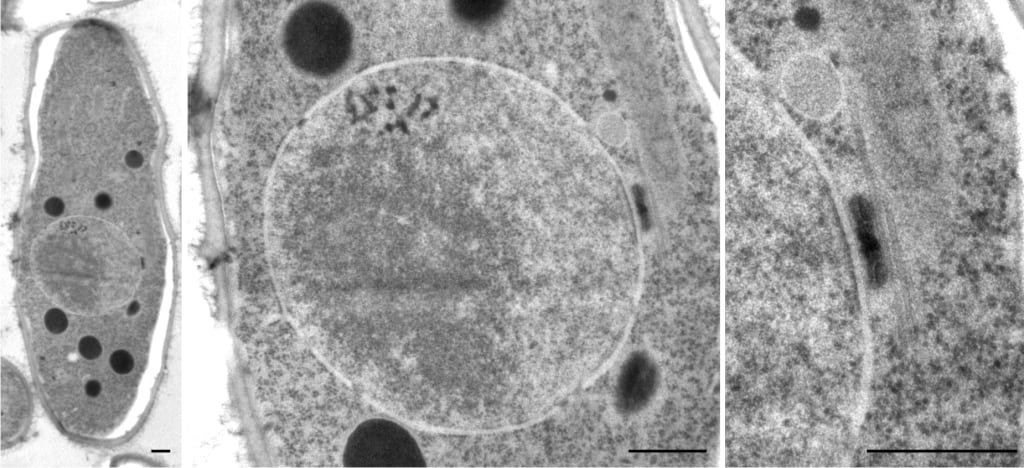
In the ever-evolving world of molecular biology, the need for an organism with a genetically tractable genome is crucial for many large findings. For the study of eukaryotic cells, one of the most important simple model organisms of the past twenty years has been yeast. Saccharomyces cerevisiae known as bakers yeast and Schizosaccharomyces pombe known as fission yeast are at the forefront of cell cycle and cell division research for their applications as model(1). S. pombe is commonly referred to as “an ancient yeast”(1) when compared to its common ancestor S. cerevisiae. The conservation of S. pombe has led to it being a highly viable organism to study human cells1 as it represents eukaryotes higher than itself and can be used to closely study crucial characteristics of the cell cycle(1).
When speaking of yeast as a model system, this relates to both S. pombe and S. cerevisiae. They are distantly related to each other since their branching event from Ascomycota on the Tree of Life1 and they exhibit different characteristics. Firstly, S. cerevisiae reproduces through budding while S. pombe reproduces through fission(2). Due to the differences in their reproduction, S. cerevisiae exists as a diploid and S. pombe exists as a haploid cell(2). Their daughter cells are also different in shape and size. In S. cerevisiae, the two daughter cells are not equal in size and are round while in S. pombe, they are rod-shaped and equal in size(1). S. pombe also contains more introns in its genome than S. cerevisiae where S. pombe contains ~ 5000 and S. cerevisiae ~ 2502. Of the genes present in both these organisms, S. pombe is the only one that has RNAi machinery genes present whereas S. cerevisiae does not. S. cerevisiae has been researched further as it is used for its fermentation properties to make beer, wine and bread2 whereas S. pombe is used for its applications as a model.
S. pombe and S. cerevisiae both stem from the metazoan-fungi branching point from their phylogenetic tree of life(1). S. pombe is more closely related to the common ancestor between the two yeasts Ascomycota, as it has not been subject to divergent events the same way S. cerevisiae has(1). Because of this branching event, S. pombe has been conserved and has better applications as a model for the study of human cells than S. cerevisiae as S. pombe is more closely related to metazoans(1). S. pombe is a rod-shaped eukaryote that is unicellular(1) and its genome was sequenced between 1990 - 2003 alongside the human genome as the “Human Genome Project” funded the sequencing of other organisms. The genome of S. pombe was sequenced by a large number of scientists that utilized different sequencing techniques. In the early stages, Sanger sequencing was utilized as it was the most efficient sequencing method(3). Later, next-generation sequencing techniques and methods started being used such as shotgun sequencing(3). These techniques were implemented as they made it easier to sequence the genome as they focused on small pieces of DNA. These small pieces could then be individually sequenced to create the whole S. pombe genome(3). The genome sequencing of S. pombe revealed at the time to contain the smallest number of protein-coding genes recorded for any eukaryotes(3), finding S. pombe to contain 4,824 protein-coding genes(3). They found that the centromeres were between 35 - 110 kilobases (kb)(3) and had a 1.8-kb region that was highly conserved in the related repeats of the kilobases(3). They found that ~ 43% of the 4,730 genes of S. pombe contain introns and that of these genes, fifty of them had similarities to genes associated with disease and half of these disease-similar genes were cancer-related(3). In terms of the applications of S. pombe as a model for the cell cycle and cell division, the sequencing revealed that the highly conserved genes in S. pombe are essential for eukaryotic cell organization(3). This includes and is required for the formation of the cytoskeleton, cell-cycle control, proteolysis, the phosphorylation of proteins, RNA splicing and compartmentation(3).
Due to its ability to conserve important aspects of eukaryotic cell regulation, S. pombe has contributed to very prominent and important research over the years. In 2001, Leland H. Hartwell, Tim Hunt and Sir Paul M. Nurse won the Nobel Prize in physiology or medicine using S. pombe for their discoveries of key regulators in the cell cycle(4). Their overall findings were that after a cell's growth phase, the cell then copies its chromosome through the duplication of its DNA, preparing itself for division which then continues through the two new daughter cells and so forth(4). They found that errors in this process cause the formation of chromosomal anomalies which are seen in some types of cancer cells(4). More specifically, Paul Nurse used S. pombe to observe the presence of the cdc2 gene. This gene encodes the protein kinase which allows the cell to know that it is ready to copy its DNA into two daughter cells and undergo cell division, which we now understand as a vital step in error-free cell division. The findings of these three scientists have immensely influenced our current understanding of the cell cycle and their findings have been implemented into everything from the basics of cell cycle research to the application of this understanding to further cancer research and the possibility of a cure(4). Another aspect prevalent in S. pombe is transcriptional silencing(5). Transcriptional silencing is widely used in research as it evolved as a mechanism in eukaryotes to repress transcription(5). It occurs through the repression of chromatin structure called silent chromatin(5). This silent chromatin can then undergo the cell cycle and can even be inherited by daughter cells as a result of cell division(5). The importance of the observance of this in eukaryotes like S. pombe is because the applications of transcriptional silencing can be used to create drug therapies. For example, this is a topic of research for cancer drugs to repress the metastasizing of cancer cells on the transcriptional and translational level(4).
As part of a viable group of model organisms, S. pombe has online domains and libraries dedicated to the research community. “Pombase” is the most widely regarded website domain for the findings and research of fission yeast S. pombe. Not only does this website include S. pombe's entire genome sequenced by Sanger, but it also includes a multitude of sections. One of these sections is ontologies and sequence ontology. Other valuable information includes interactions, pathways and networks, which discuss points such as genetic and physical interactions to protein-protein interaction networks to the S. pombe entry point. Sequence analysis tools are also found on this website such as sequence features containing the S. pombe membrane protein library, protein families and orthologous including a source to retrieve orthologous proteins. These online research communities are present for every model organism and expand in content based on the viability and amount of research produced using said organism. Another essential aspect of S. pombe is its part in the non-essential deletion collection of yeast(6). The non-essential deletion collection of S. pombe involves the elimination of the non-essential genes encoded in the systematic set of strains(6). These collections are created by scientists to help better understand what genes are viable in yeast and observe their role in cellular mechanisms. This is a characteristic of S. pombe that lends itself to its value as a model system.
Personally, I believe that S. pombe is a highly viable model organism for many reasons. Firstly, S. pombe was used to observe some of the most essential discoveries in eukaryotic cell division. The understanding of the cdc24 gene has been a very useful finding to help better understand cancer cells and I believe this knowledge can be used and is being used(4) to further research a cure. An observation I found quite telling of S. pombe's viability is its ability to adapt to different environments(7). In a research paper outlining the contribution that S. pombe’s non-essential genes has to their fitness in an altered nutrient supply(7), different fluctuating nutrient levels in the environment of the cell prompted changes to metabolism(7). These conditions also prompted growth and S. pombe could adapt cell proliferation accordingly(7). In summary, the identified genes in S. pombe that regulate transmembrane transport, transcription and chromatin organization/regulation, and vesicle-mediated transport were able to adapt to their environments with high nutrient levels and low nutrient levels(7). This displays how viable S. pombe is as a model organism as it relates to its generation abilities. S. pombe has a short generation time in regular and optimal conditions, therefore its ability to adapt to its environment in worsened conditions and it still can adapt proliferation to be viable is a great characteristic for researchers. S. pombe has a simple and tractable genome, represents eukaryotes higher than itself, demonstrates a conserved cell cycle and has the ability to be manipulated via gene editing. S. pombe is a highly adaptable organism that has been and continues to be a pinnacle model organism for vital cell cycle research.
Since the completion of its genome sequencing in 2002, S. pombe has served as a central model organism for over the past twenty years. From its divergence from its distantly related yeast S. cerevisiae, the conservation of S. pombe has led to its stand-out abilities as a model. The genome of S. pombe is simple and conserved which has lent itself to many discoveries such as huge discoveries that we now implement into our general knowledge of the cell cycle today(4). For the future of S. pombe, I believe that it is the model organism that will help us find a cure and more advanced treatments for cancer. S. pombe is already used to research the cellular environment and mechanisms of cancer cells, as its highly tractable genome can be manipulated to better observe the genes involved in multiple cell regulatory processes(1). The amount of information readily available on S. pombe due to internet communities such as “Pombase” also makes it a great organism for research as there is a plethora of information about it already known. All of these aspects make S. pombe a great model organism, but the most important aspect of S. pombe in my opinion is that it represents eukaryotes higher than itself. With the combination of all the viability S. pombe has and its ability to represent higher eukaryotes like humans, S. pombe is a fantastic model organism to use in research to further medical findings, specifically in finding drug therapies and a cure for cancer.
References
1. Hoffman, C. S., Wood, V. & Fantes, P. A. An ancient yeast for young geneticists: A Primer on the schizosaccharomyces pombe model system. Genetics 201, 403–423 (2015). 10.1534/genetics.115.181503
2. Forsburg, S. L. & Nurse, P. Cell cycle regulation in the yeasts saccharomyces cerevisiae and schizosaccharomyces pombe. Annual Review of Cell Biology 7, 227–256 (1991).
3. Wood, V., Gwilliam, R., Rajandream, MA. et al. The genome sequence of Schizosaccharomyces pombe. Nature 415, 871–880 (2002). https://doi.org/10.1038/nature724
4. Watts, Geoff. Three cell cycle scientists win Nobel prize. National Library Of Medicine. Vol, 323. (2001). https://www.ncbi.nlm.nih.gov/pmc/articles/PMC1121376/
5. Huang, Y. Transcriptional silencing in saccharomyces cerevisiae and schizosaccharomyces pombe. Nucleic Acids Research 30, 1465–1482 (2002). 10.1093/nar/30.7.1465
6. Lie, S., Banks, P., Lawless, C., Lydall, D. & Petersen, J. The contribution of non-essential schizosaccharomyces pombe genes to fitness in response to altered nutrient supply and target of rapamycin activity. Open Biology 8, 180015 (2018). 10.1098/rsob.180015
7. Petersen, J. & Russell, P. Growth and the environment of schizosaccharomyces pombe. Cold Spring Harbor Protocols 2016, (2016). 10.1101/pdb.top079764
About the Creator
Marisa Chiaravalloti
Hello, I am an Honours Biomedical Science student with a Minor in English curious about all things science. I am also the primary writer and researcher for the TMU Rare Diseases Club's online educational section. I hope you enjoy! 🔬
Keep reading
More stories from Marisa Chiaravalloti and writers in Education and other communities.
BREAKING: Fake News Leads To Fake Science
A Deeper Look Into Fake News As It Relates To Epidemiology In my recent studies, a huge topic of discussion among my colleagues is the importance of fake news versus real news. This is a huge issue in the field of epidemiology as it leads people to believe in misinformation. Commonly fake news is used by professionals to sell their product to the general public. This is done by the use of skewed news that does not display an accurate representation of its population. An example of this that I have studied is the concept of causal inference and ecological fallacy, and looked at the relationship of how the consumption of chocolate and winning the Nobel prize was “correlated”. Obviously this is not the case and is related to other factors such as their overall consumption of chocolate as well as their possibility of being a large manufacturer of chocolate (ex. Switzerland). This concept peaked my interest, and I wondered, how many other sources of fake news in current healthcare topics have we fed into? I will be using the COVID-19 pandemic to look deeper into this topic and the importance of discrete statistics for the proper identification of health risks.
By Marisa Chiaravalloti2 years ago in Education
Where Wisdom Meets Action: The Deep Connection Between Culture, Education, and Service
In any thriving society, specific values act as the foundation for growth, unity, and identity. Among these, culture, higher education, and service stand out as essential pillars. While they may operate in different spheres, they are deeply connected by a shared purpose — to empower individuals and strengthen communities through knowledge, empathy, and tradition.
By Carmen Reid8 minutes ago in Education
Wealthiest Zip Codes in the U.S: A Guide for Real Estate Investors
In the world of real estate, there is a distinct difference between "expensive" markets and "wealth-concentrated" ecosystems. While many investors chase high-growth "hot" markets, a select group of seasoned professionals focuses on a different metric: the five-digit zip code.
By REI Data Solutionsa day ago in Education
A Dart at Dusk
Seconds ago, the sullen sun set on the two of us… my exuberant furry companion and me. A fresh breeze embraces us, delivering welcome relief from the day’s oppressive heat. His typical stumbling and staggering along — apace with a sloth — has turned into trip-trapping, high-stepping, almost skipping along.
By Angie the Archivist 📚🪶6 days ago in Petlife




Comments
There are no comments for this story
Be the first to respond and start the conversation.