
The ROI of Laser Scanning for Historic Building Renovation Projects
The Financial and Operational Benefits of Using 3D Laser Scanning in Heritage Restoration

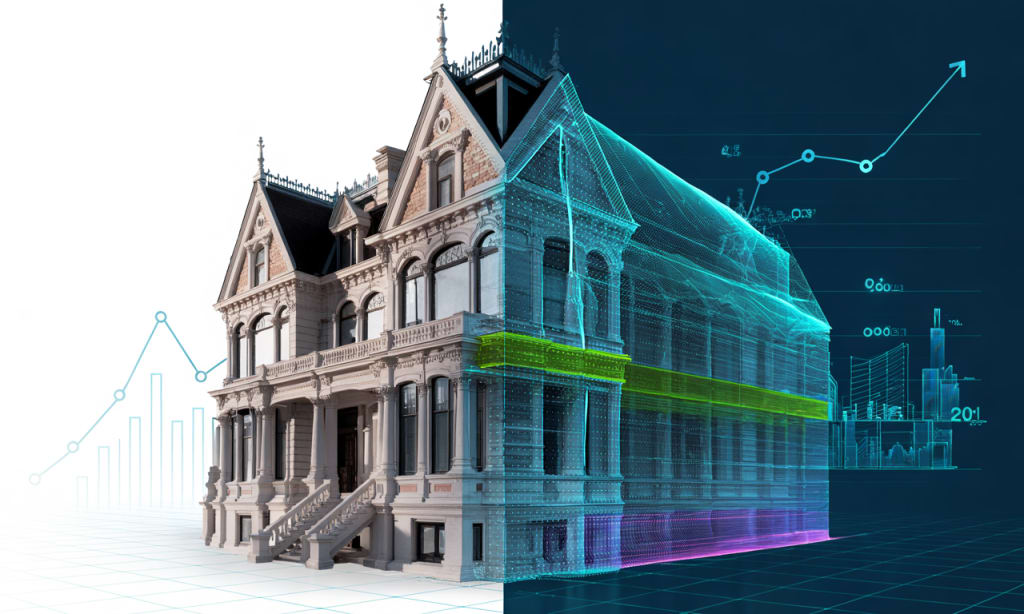
Renovating a historic building is not just a construction activity—it's a responsibility. Architects, engineers, and preservationists must balance modernization needs with meticulous care for original details. This is where 3D laser scanning delivers one of the highest returns on investment (ROI) in the entire restoration workflow.
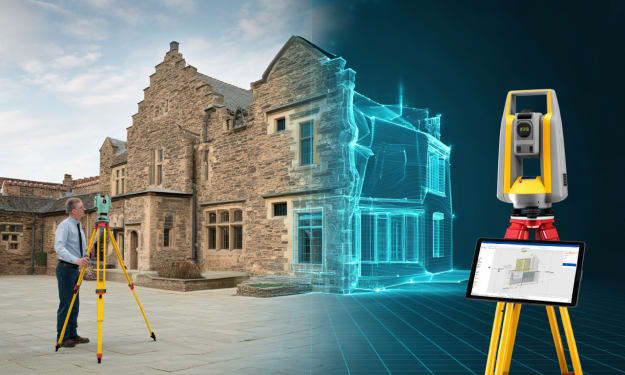
Laser scanning allows project teams to document existing conditions with millimeter-level accuracy, reducing surprises, preventing rework, and protecting fragile structures.
But how exactly does this translate into measurable ROI for historic renovation projects? Let’s break it down.
1. Minimizing Risk: The Biggest ROI Driver in Historic Projects

Historic buildings often have warped floors, uneven walls, ageing materials, and undocumented modifications made over decades—or even centuries. These unknowns introduce massive project risk.
How Laser Scanning Reduces Risk
- Captures every surface, curve, and ornament in accurate 3D.
- Reveals hidden geometries and structural deviations.
- Shows deterioration zones before renovation begins.
- Helps plan safe access around fragile elements.
ROI Impact
- Fewer surprises during construction
- Lower insurance and liability concerns
- Reduced cost of structural reinforcement and protective measures
- Every avoided mistake means direct cost savings.
2. Eliminating Rework: Saving 10%–25% of Project Cost
Rework is common in restoration projects due to inaccurate or missing as-built drawings. Laser scanning eliminates this uncertainty.
How It Helps
- Provides a single source of truth for design teams.
- Ensures perfect alignment between new and existing elements.
- Reduces clashes during installation of MEP systems, structural inserts, and new finishes.
Expected ROI
Industry data shows that rework accounts for up to 25% of renovation costs. Laser scanning directly tackles this by ensuring design decisions are based on real, verified building data.
3. Accelerating Project Timelines with Faster Documentation
Manual measurements of heritage structures can take weeks and still miss critical details. Laser scanners capture millions of points within minutes.
Benefits
- Complete site documentation in a fraction of the time.
- Reduced disruption in public buildings, museums, or tourist sites.
- Faster start for architects and BIM teams.
ROI Result
- Quicker documentation means:
- Earlier design kick-off
- Fewer site revisits
- Faster approvals from heritage conservation authorities
- Time saved equals money saved.
4. Enhancing Design Accuracy with Historic BIM Models
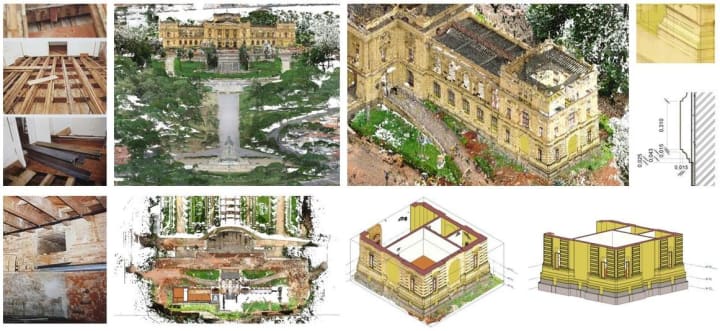
Laser scanning enables the creation of accurate HBIM (Historic Building Information Models)—specialized BIM models tailored for heritage structures.
How HBIM Adds Value
- Combines geometric detail with material and historical data.
- Helps engineers design sensitive interventions.
- Improves coordination accuracy across disciplines.
ROI Outcome
- Better planning of restoration phases
- Optimized material usage
- Reduced guesswork for structural strengthening
With HBIM, teams avoid cost overruns due to incorrect assumptions.
5. Supporting Grant Applications & Approvals
Government agencies, preservation boards, and grant providers increasingly expect precise existing-condition documentation.
Laser Scanning Helps By
- Providing irrefutable, high-quality survey records.
- Supporting compliance documentation.
- Demonstrating preservation sensitivity and technical rigor.
ROI Advantage
Projects using laser scans often receive:
- Faster approvals
- Higher chances of grant acceptance
- Reduced legal disputes
6. Enabling Long-Term Asset Management
Laser scanning isn’t just for renovation—its value extends to the building’s future operations.
Long-Term ROI
- Digital twins support preventive maintenance.
- Scans become a permanent record of the building’s baseline condition.
- Facility teams can monitor changes and deterioration annually.
- This multiplies ROI long after renovation is complete.
7. Reducing Total Cost of Ownership (TCO)
When you add together:
- Reduced rework
- Shorter timelines
- Fewer surprises
- Better coordination
…laser scanning can reduce total project costs by 15%–35% depending on building complexity.
For heritage structures with tight tolerances and high cultural value, this savings is even more significant.
Conclusion: Laser Scanning Delivers Exceptional ROI for Historic Renovation
Historic renovation projects demand precision, care, and documentation accuracy that traditional surveying cannot deliver. Laser scanning offers a proactive approach that reduces risk, controls costs, accelerates timelines, and protects the building’s architectural integrity.
For owners, architects, contractors, and preservation specialists, investing in 3D laser scanning is not an optional upgrade—it’s a high-ROI essential tool for delivering successful heritage restoration projects.
Further Reading
How to Choose the Right Industrial Architectural Modeling Partner in the U.S.
Comparing Traditional Surveying vs. Scan-to-BIM for Historic Structures
Implementing 3D Scanning For Heritage Preservation in HBIM Standards
Role of BIM and 3D Laser Scanning in Meta Data Center Construction Process
About the Creator
Matt Sharon
A professional content writer. Having years of experience in Technology, health, finance, and construction and real estate field. Writing is my passion and I love to play with words Confidently.
Keep reading
More stories from Matt Sharon and writers in Education and other communities.
Comparing Traditional Surveying vs. Scan-to-BIM for Historic Structures
Historic buildings are often full of character, but they’re also full of challenges—irregular walls, uneven floors, hidden deformations, and decades (or centuries) of modifications that aren’t documented anywhere. When architects, preservationists, and engineers begin renovation or restoration work, they need one thing more than anything else:
By Matt Sharon3 months ago in Education
A New Era in Heart Care: Cutting-Edge Diagnostic Tools in Modern Cardiology
Cardiovascular disease continues to be a major health concern across the United States, affecting millions of individuals each year. Early and accurate diagnosis is essential for preventing life-threatening events such as heart attacks, strokes, and heart failure. Over the past few decades, cardiology has experienced tremendous technological growth, shifting from basic clinical assessments to highly advanced imaging and diagnostic systems that provide detailed insights into the heart’s structure and function.
By Nishi Patel4 days ago in Education
Who is your "Person"?
It's important to recognize that you cannot go through life as easily on your own. My name is Elizabeth and I'm a survivor of child abuse and horrific trauma. Healing from trauma is not a quick fix and recognizing that it will take time, is part of the struggle.
By Elizabeth Woods4 days ago in Psyche



Comments
There are no comments for this story
Be the first to respond and start the conversation.