
The Rise of the Machine Muse: How AI is Transforming Creative Arts
Exploring the Fusion of Technology and Imagination in Music, Visual Arts, and Writing
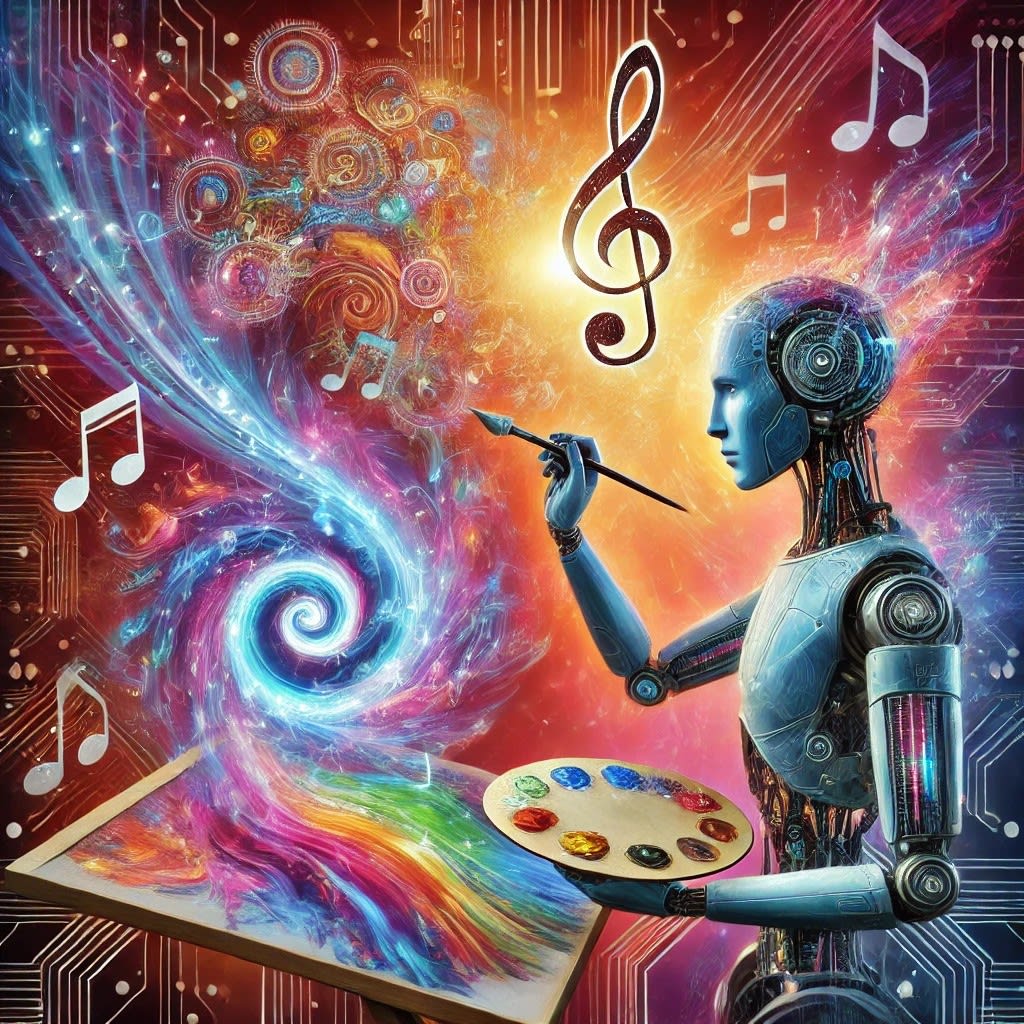
For centuries, creativity was considered the exclusive domain of human beings—a reflection of our emotions, experiences, and innate imagination. Yet, in the last decade, a new player has entered the artistic stage: Artificial Intelligence (AI). No longer confined to data analysis or automation, AI is now composing symphonies, painting masterpieces, and even writing poetry.
But what does it mean when machines start creating art? Is it still "art" if it comes from an algorithm? And what does this say about the future of human creativity?
In this post, we’ll explore how AI is revolutionizing creative fields like music, visual arts, and writing. We'll dive into groundbreaking examples, examine the ethical implications, and ponder the future of this fascinating intersection between technology and art.
AI in Music: When Algorithms Compose
From Beethoven to Beats: How AI is Making Music
AI-driven music composition is no longer science fiction. Tools like AIVA (Artificial Intelligence Virtual Artist) and Amper Music can compose original scores, often indistinguishable from those created by human composers.
AIVA has been trained on classical music and can create symphonic pieces that sound like they were written by Beethoven himself.
Amper Music allows users to generate custom tracks for videos, games, or podcasts—no musical training required.
Case in Point:In 2019, AI composed a new movement for Beethoven’s unfinished 10th Symphony, blending the composer’s original ideas with machine learning algorithms. The result? A hauntingly beautiful piece that bridges two centuries of music.
Collaboration or Competition?
While some musicians see AI as a tool to enhance creativity, others view it as a potential rival.
Collaboration: Artists like Taryn Southern have embraced AI, using it to co-create entire albums.
Competition: Critics argue that AI-generated music lacks the emotional depth and soul that comes from human experience.
Ethical Question:
Who owns the copyright to AI-generated music? The programmer? The user? Or is it public domain?
AI in Visual Arts: The Algorithm as an Artist
Creating Masterpieces with Code
In 2018, an AI-generated painting titled “Portrait of Edmond de Belamy” sold at Christie’s auction house for $432,500. Created by the Paris-based collective Obvious using a Generative Adversarial Network (GAN), this event marked a turning point for AI in the art world.
GANs work by having two neural networks—one that creates images and another that critiques them—constantly refining the output until it reaches a desired level of quality.
The Rise of AI-Generated Art Platforms
DeepDream: Google’s tool that transforms photos into psychedelic dreamscapes.
Artbreeder: Allows users to create unique images by blending existing ones.
DALL·E: OpenAI’s powerful model that can generate images from textual descriptions.
Case in Point: “Memories of Passersby I” by German artist Mario Klingemann uses AI to continuously generate portraits in real-time, creating an ever-evolving piece of art.
The Debate: Can Machines Truly Create?
Proponents argue that AI is simply a new medium—like oil paints or photography.
Critics contend that true art requires intent and consciousness, qualities machines lack.
Ethical Question:
If an AI creates art that evokes emotion, does the source matter? Or is the experience of the viewer paramount?
AI in Writing: Algorithms with a Voice
From Poetry to Prose
AI-generated text has made significant strides, from poetry and short stories to full-length novels.
GPT Models: OpenAI’s GPT-4 can generate essays, stories, and even mimic specific writing styles.
PoetAI: An algorithm trained to write original poetry, sometimes indistinguishable from human-created verse.
Case in Point:
In 2020, a Japanese AI co-authored a short story that passed the first round of screening in a national literary competition.
Journalism and Content Creation
AI is also making waves in journalism and content creation:
The Washington Post uses an AI system called Heliograf to write short news reports.
Sports and Finance outlets use algorithms to generate real-time game summaries and market analyses.
The Ethical Dilemma
Plagiarism Concerns: How do we ensure AI-generated text is original and not a patchwork of existing content?
Bias and Misinformation: AI models can inadvertently perpetuate biases present in their training data.
Ethical Question:
Should readers be informed when they’re consuming AI-generated content?
The Ethical Landscape: Navigating AI in the Arts
The Question of Authenticity
One of the biggest debates around AI in creative arts centers on authenticity. Can art without human intent still be considered "authentic"?
Human Emotion vs. Algorithmic Precision: While AI can mimic styles and patterns, it lacks the emotional experiences that often drive human creativity.
Intellectual Property and Ownership
Who Owns AI Art? If an AI creates a painting or a song, does the copyright belong to the user, the developer, or is it free for public use?
Legal Grey Areas: Many countries are still grappling with how to legislate AI-generated content.
The Impact on Human Artists
Opportunity or Threat? Some fear that AI could devalue human creativity, leading to job loss in creative fields. Others see it as an opportunity for new forms of expression.
Democratizing Creativity: AI tools make art more accessible, allowing people without traditional skills to create music, visuals, and writing.
The Future of AI in Creative Arts
As AI technology continues to evolve, so too will its role in the creative arts.
Collaborative Art Forms: We’re likely to see more human-AI collaborations, where artists use algorithms as tools to expand their creative horizons.
Personalized Art Experiences: AI could tailor music, visuals, and stories to individual tastes, creating unique experiences for each consumer.
Ethical Frameworks: As AI’s role in creativity grows, so will the need for ethical guidelines and transparency.
Personal Reflection:
As someone who loves both art and technology, I find this fusion thrilling yet complex. There’s something magical about a machine creating a symphony or a painting, but I also wonder—where do we draw the line? At what point does the artist become the algorithm?
Ultimately, AI in creative arts challenges us to rethink what it means to be an artist. It forces us to confront our definitions of creativity, originality, and even humanity itself.
Embracing the Machine Muse
AI is not here to replace human creativity—it’s here to expand it. Whether it’s composing a haunting melody, painting a surreal landscape, or writing a thought-provoking poem, AI offers new tools and possibilities.
But as with any powerful tool, it comes with responsibilities. As we continue to integrate AI into the arts, it’s crucial to navigate the ethical, legal, and philosophical questions that arise.
The future of creativity isn’t a choice between humans or machines—it’s a collaboration between the two. And who knows? The next masterpiece might just come from an unexpected partnership between artist and algorithm.
So, are you ready to embrace the machine muse?
About the Creator
Aurora Lark
I write at the crossroads of science fields that constantly challenge our perceptions and expand our horizons. I decode the intricate narratives of our modern world, transforming technical details into clear, thought-provoking stories.
Keep reading
More stories from Aurora Lark and writers in Education and other communities.
Chasing the Aurora: Where to See the Northern Lights Next Week
There’s something almost magical about the Northern Lights—those shimmering curtains of green, pink, and purple that dance across the night sky. It’s a spectacle that has captivated humans for millennia, inspiring myths, legends, and countless bucket lists. If you’ve ever dreamed of witnessing the Aurora Borealis in all its glory, next week might be your perfect opportunity.
By Aurora Larkabout a year ago in Education
Twenty Years of Medical Experience: Knowledge That Will Redefine Future Healthcare
Medicine has changed profoundly over the last two decades. Scientific breakthroughs, digital innovation, and evolving healthcare policies have reshaped how medical professionals diagnose illnesses, treat patients, and manage healthcare systems. Conditions that were once difficult to detect or treat now benefit from advanced imaging, improved medications, and minimally invasive procedures. These developments have significantly improved survival rates and overall patient outcomes.
By Yousuf A. Gaffar, M.D6 days ago in Education


Comments
There are no comments for this story
Be the first to respond and start the conversation.