
Chasing the Aurora: Where to See the Northern Lights Next Week
Your Ultimate Guide to Witnessing Nature’s Greatest Light Show (February 26 – March 3, 2025)

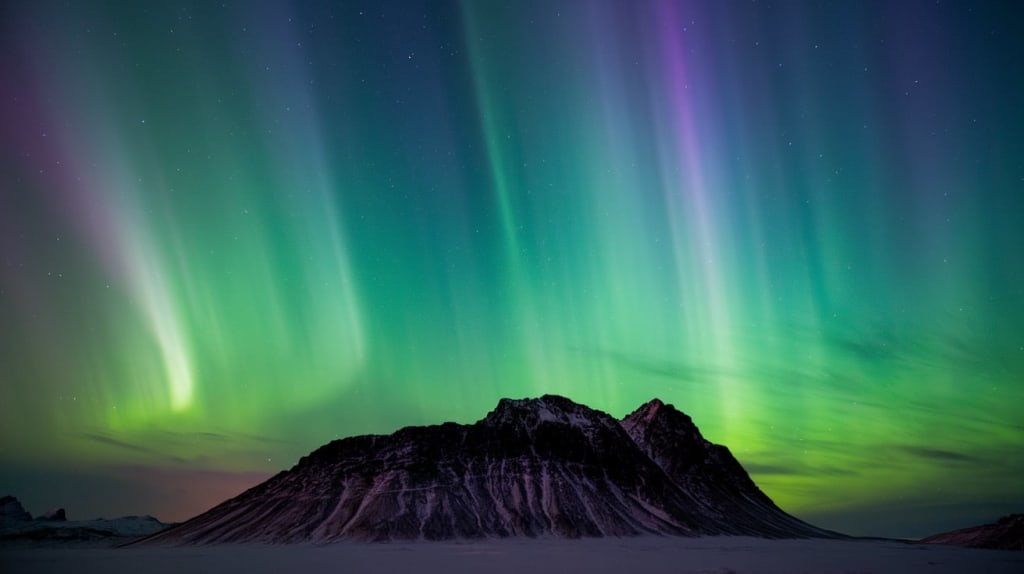
There’s something almost magical about the Northern Lights—those shimmering curtains of green, pink, and purple that dance across the night sky. It’s a spectacle that has captivated humans for millennia, inspiring myths, legends, and countless bucket lists. If you’ve ever dreamed of witnessing the Aurora Borealis in all its glory, next week might be your perfect opportunity.
With increased solar activity confirmed, experts are predicting a stunning display of Northern Lights across various parts of the world between February 26 and March 3, 2025. And the best part? You might not need to travel all the way to the Arctic Circle to see them.
In this guide, I’ll walk you through the best places to catch the aurora next week, tips for maximizing your viewing experience, and a little insight into why this natural wonder occurs in the first place.
Why Next Week Is Special
Every so often, the sun blesses us with heightened solar activity—bursts of energy and particles known as solar storms. When these charged particles collide with Earth’s magnetic field, they ignite the beautiful auroras we see near the poles.
Next week’s forecasted auroras are due to a particularly strong Coronal Mass Ejection (CME) that occurred earlier this month. Experts say that the resulting geomagnetic storm will push the auroral oval farther south than usual, making the lights visible in regions that don’t typically get a front-row seat.
Top Places to See the Northern Lights Next Week
Here’s where you’ll have the best chance of seeing the auroras from February 26 to March 3, 2025.
1. Iceland
Why It’s Great: Iceland is one of the world’s most reliable places to see the Northern Lights, and next week’s heightened solar activity makes it even more promising. Think geothermal hot springs, volcanic landscapes, and the aurora dancing above.
Best Viewing Spots: Þingvellir National Park, Jökulsárlón Glacier Lagoon, and the Snaefellsnes Peninsula.
Bonus Tip: Combine your aurora hunt with a soak in the Blue Lagoon for an unforgettable experience.
2. Northern Norway
Why It’s Great: Cities like Tromsø and Alta lie right under the auroral oval, offering incredible chances to catch the lights.
Best Viewing Spots: Tromsø’s fjords, the Lyngen Alps, and the Lofoten Islands.
Bonus Tip: February and March are peak aurora months in Norway, so you’ll also have options for dog sledding and whale watching.
3. Sweden and Finland (Lapland)
Why It’s Great: The snowy landscapes of Swedish and Finnish Lapland offer pristine skies and magical settings.
Best Viewing Spots: Abisko National Park (Sweden) is known for its “blue hole,” a patch of sky that remains clear even during cloudy weather. In Finland, head to Rovaniemi or Kakslauttanen, where you can watch the lights from a glass igloo.
Bonus Tip: Warm up in a traditional Finnish sauna after your aurora adventure.
4. Scotland
Why It’s Great: Thanks to the strong geomagnetic storm, the aurora might be visible as far south as northern Scotland.
Best Viewing Spots: The Isle of Skye, Cairngorms National Park, and the Shetland Islands.
Bonus Tip: The Scottish aurora is locally called the “Mirrie Dancers.”
5. Canada (Yukon, Northwest Territories, and Alberta)
Why It’s Great: Canada offers vast, dark skies perfect for aurora viewing, and next week’s forecast makes it a top destination.
Best Viewing Spots: Whitehorse (Yukon), Yellowknife (Northwest Territories), and Jasper National Park (Alberta).
Bonus Tip: Jasper’s Dark Sky Preserve offers crystal-clear views and even hosts aurora-themed events.
6. United States (Northern States)
Why It’s Great: Thanks to the powerful solar activity, the Northern Lights may dip into parts of the northern U.S.
Best Viewing Spots: Northern Minnesota, Michigan’s Upper Peninsula, and Glacier National Park in Montana.
Bonus Tip: Use apps like Aurora Forecast to track real-time visibility in your area.
7. Greenland
Why It’s Great: Greenland offers a remote and untouched setting for aurora viewing, with minimal light pollution.
Best Viewing Spots: Kangerlussuaq and Nuuk.
Bonus Tip: Greenland’s icebergs make for a surreal foreground against the glowing sky.
How to Maximize Your Viewing Experience
Even with a strong aurora forecast, seeing the Northern Lights isn’t always guaranteed. Here are some tips to increase your chances:
Check the KP Index: This scale measures geomagnetic activity. A KP index of 5 or above indicates a geomagnetic storm, increasing your chances of seeing the aurora.
Find Dark Skies: Light pollution is the enemy. Get as far away from city lights as possible.
Time It Right: The best viewing hours are typically between 10 PM and 2 AM, though auroras can appear anytime after dark.
Watch the Weather: Clear skies are crucial. Check local weather forecasts to find areas with minimal cloud cover.
Use Tech to Your Advantage: Apps like Aurora Forecast and My Aurora Forecast provide real-time updates and alerts.
Bring the Right Gear: If you plan to photograph the lights, bring a tripod and use long exposure settings to capture the aurora’s full beauty.
What Causes the Northern Lights?
For those curious about the science behind the spectacle, the Northern Lights occur when charged particles from the sun collide with gases in Earth’s atmosphere.
Green and Yellow Lights: Caused by oxygen molecules about 60 miles above Earth.
Red Lights: Also from oxygen, but at higher altitudes (up to 200 miles).
Blue and Purple Lights: Caused by nitrogen molecules.
The result? A cosmic dance of colors that ripple and shift across the sky.
A Personal Reflection: Why the Aurora Is So Special
I still remember the first time I saw the Northern Lights. It was a freezing night in Iceland, and after hours of waiting in the cold, I was just about ready to call it quits. Then, almost out of nowhere, ribbons of green light appeared, twisting and curling across the sky like they had a mind of their own.
It’s hard to describe the feeling—like being connected to something ancient and cosmic. In that moment, it didn’t matter that my fingers were numb or that I hadn’t slept. It was pure magic.
That’s why I get so excited when events like next week’s aurora forecast happen. It’s a chance for more people to experience that same wonder.
Don’t Miss This Opportunity
The Northern Lights are one of nature’s most breathtaking displays, and next week offers a rare chance to see them in places where they don’t often appear.
Whether you’re heading to Iceland, the wilds of Canada, or simply stepping outside in Minnesota, make time to look up. Bundle up, bring a thermos of something warm, and let the universe put on a show.
Who knows? You might just catch the aurora bug, like I did, and find yourself chasing the lights again and again.
Happy aurora hunting!
About the Creator
Aurora Lark
I write at the crossroads of science fields that constantly challenge our perceptions and expand our horizons. I decode the intricate narratives of our modern world, transforming technical details into clear, thought-provoking stories.
Keep reading
More stories from Aurora Lark and writers in Education and other communities.
Power from the Deep: Japan’s First Megawatt-Scale Tidal Turbine Makes Waves
I’ve always been fascinated by the sheer power of the ocean. There’s something humbling about standing at the edge of the sea, watching the waves crash endlessly against the shore. For centuries, we’ve admired the ocean’s strength, but only recently have we begun to seriously tap into it as a source of clean, renewable energy. That’s why Japan’s latest achievement—deploying its first megawatt-scale tidal turbine, the AR1100, in the Naru Strait—feels like such a monumental leap forward.
By Aurora Larkabout a year ago in Education
NCLEX Study Plan: A Step-by-Step Guide for Nursing Students
Preparing for the NCLEX-RN is one of the most important milestones in the nursing students’ career. This is because the NCLEX is the final step before nursing students can become licensed nurses. However, it is not as easy as simply reading nursing textbooks and taking notes from class lectures. This is because the NCLEX is designed to test the nursing students’ clinical judgment and decision-making skills.
By Sulcus Learning3 days ago in Education
A School Morning Assembly
Morning assembly is an important activity in many schools. It is a daily gathering of students and teachers before the start of classes. Usually, the assembly takes place in the school ground or in a large hall. All the students stand in lines according to their classes while teachers supervise them. Morning assembly helps students begin their day in a disciplined and organized way. It also creates a positive environment for learning. The morning assembly usually begins with a prayer. The prayer helps students feel calm and focused. It gives them a peaceful start to the day. In many schools, the national anthem is also sung during the assembly. Singing the national anthem together creates a feeling of respect and love for the country. It also helps students feel united as members of the same school community.
By aadam khan7 days ago in Education
Hottest in the Office
Dear Rafi, You’re very distracting to work around. For the first second I saw you the other day, I thought you were some type of executive. It took a moment to realize no, you were just the new guy, dressed up for the job he wants. Be still, my heart.
By Gabriel Shames2 days ago in Pride




Comments
There are no comments for this story
Be the first to respond and start the conversation.