
The Rise of Bioartificial Organs: The End of Transplants?
A New Era in Medicine

Imagine this, A father of three, diagnosed with end-stage heart failure, is told that he has only months to live unless he gets a transplant. But instead of waiting on an endless donor list, his doctors 3D-print a new heart using his own cells. No rejection, no lifelong medications — just a perfect, functional organ. Sounds like science fiction, right? Not anymore.
For decades, the organ transplant system has struggled with shortages, compatibility issues, and rejection risks. But a revolutionary field — bioartificial organs — is rapidly changing the game. Scientists are now bioprinting hearts, livers, and kidneys, pushing the limits of regenerative medicine and paving the way for a future where organ failure is no longer a death sentence.
The Organ Crisis: Why We Need Change
Right now, millions of people around the world are waiting for life-saving organ transplants. In the U.S. alone, over 100,000 people are on transplant lists, yet 17 patients die every day waiting for an organ that never arrives. The demand for organs far outweighs the supply, leading to illegal markets, black-market trafficking, and heartbreaking losses.
Even for those lucky enough to receive a transplant, the battle isn’t over. The immune system often sees the new organ as an invader, triggering rejection. This means a lifetime of immune-suppressing drugs, which come with serious side effects, including infections and organ damage.
So, what if we could eliminate the need for donor organs altogether? Enter bioartificial organs — a groundbreaking solution that could redefine transplant medicine.
How Bioartificial Organs Work
1. 3D Bioprinting: The Future of Organ Transplants
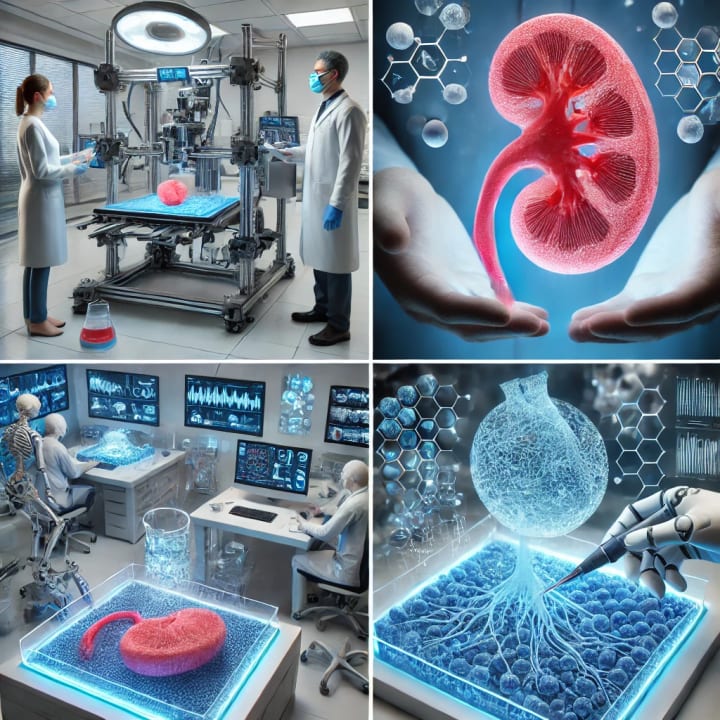
Using a combination of biomaterials, stem cells, and specialized printers, researchers can now print functional organ structures, layer by layer. These bioprinters use “bio ink” made from living cells to create fully personalized organs. Because they are derived from the patient’s own cells, there’s virtually no risk of rejection.
💡 Breakthrough Moment: Scientists at Tel Aviv University successfully 3D-printed a miniature human heart, complete with blood vessels, in 2019. This was a proof of concept—a glimpse into a future where printing a human-sized heart is entirely possible.
2. Lab-Grown Organs: Engineering Life from Scratch
Instead of printing organs, some researchers are using stem cells and scaffolding techniques to grow tissues in a lab. These bioartificial organs function like real ones and can be transplanted without fear of rejection.
For example, scientists have developed bioengineered livers that function like natural ones, offering a potential cure for liver failure patients.
3. Artificial Kidneys: The End of Dialysis?
One of the most exciting developments is the artificial kidney — a device that could replace dialysis and make kidney transplants obsolete. Engineers at the University of California, San Francisco, are designing a device that mimics a real kidney’s filtering function, meaning patients with kidney disease wouldn’t need a transplant at all.
Challenges & Ethical Dilemmas
While bioartificial organs offer hope, they also come with challenges:
- Cost & Accessibility: Can this technology be scaled affordably so that millions can benefit?
- Regulatory Hurdles: Will governments approve lab-grown organs for widespread use?
- Ethical Questions: Should we create enhanced organs with superhuman capabilities? If so, where do we draw the line?
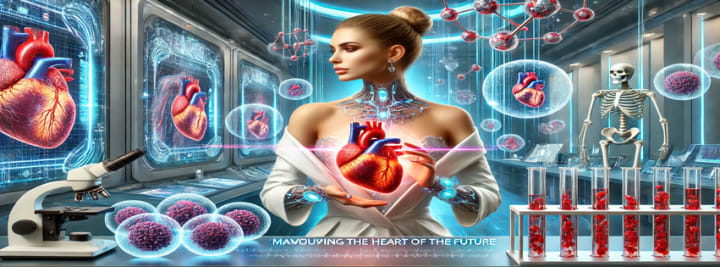
The Big Question: Will This Replace Traditional Transplants?
With bioartificial organs evolving rapidly, the future of transplants is at a crossroads. Will donor organs become obsolete? Will everyone have access to a custom printed heart, liver, or kidney on demand?
What do you think? How close are we to making this a reality? Should bioprinted organs take priority over traditional transplants?
Drop your thoughts in the comments! 🚀
#RegenerativeMedicine #3DBioprinting #Biotechnology #FutureOfMedicine #BioartificialOrgans #HeartRegeneration #kidneyTissueEngineering #LiverTransplant #GeneticEngineering #CardiovascularTissueEngineering
About the Creator
Abdul Momin Muhammad Wisal
BSc (Hons) Biotechnology and Genetic Engineering, Expert with SEO Content Writer 💻. I look forward to connecting, collaborating, and contributing to the ever-evolving tapestry of biotechnology 🌟.
Keep reading
More stories from Abdul Momin Muhammad Wisal and writers in Education and other communities.
How 3D Bioprinting is Turning Science Fiction into Reality
In the early 2000s, the idea of 3D printing of living tissues seemed like something pulled straight out of a science fiction novel. With innvoation and proceeding fast forward two decades, this revolutionary technology is not only real but it is reshaping how we think about medicine, organ transplantation, and regenerative therapies.
By Abdul Momin Muhammad Wisal12 months ago in Education
How Holistic Planning Supports Sustainable Development and Long-Term Growth
In today's business environment, holistic planning is essential for organizations seeking to balance growth and sustainability. This approach integrates various aspects of business planning, including environmental, social, and economic considerations. By taking a comprehensive view, businesses can create strategies that support sustainable development while driving long-term growth. In this article, we will discuss how holistic planning fosters sustainability and lays the foundation for continuous business success.
By James Burleson4 days ago in Education


Comments
There are no comments for this story
Be the first to respond and start the conversation.