
How 3D Bioprinting is Turning Science Fiction into Reality
Rebuilding Tissues, Rebuilding Lives


In the early 2000s, the idea of 3D printing of living tissues seemed like something pulled straight out of a science fiction novel. With innvoation and proceeding fast forward two decades, this revolutionary technology is not only real but it is reshaping how we think about medicine, organ transplantation, and regenerative therapies.
Imagine a patient in dire need of a kidney transplant. Today, they face long waiting lists, with the hope of finding a compatible donor. Many don’t make it in time. Now, picture this: instead of waiting, the patient’s cells are used to bioengineer a new kidney, layer by layer, using a 3D bioprinter. Within weeks, they have a functional, personalized organ ready for transplantation.
This isn’t a distant dream—it’s the promise of tissue engineering, powered by 3D bioprinting.
How Does It Work?
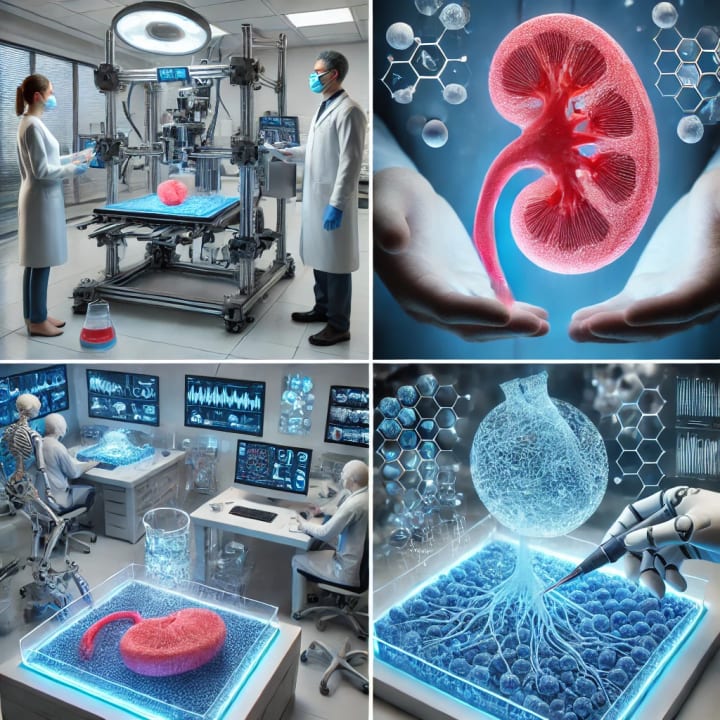
3D bioprinting combines the principles of engineering, biology, and material science. Instead of using plastic or metal, bioprinters use bioinks—materials made from living cells and biomolecules. These bio-inks are layered precisely to create complex structures like blood vessels, cartilage, and even functional organoids.
The magic lies in mimicking nature. Every layer of a bioprinted tissue replicates the intricate architecture of human biology, including the extracellular matrix that supports cells and facilitates communication between them. This precision makes 3D bioprinting a game-changer for both regenerative medicine and drug testing.
Real-World Impact
In labs worldwide, scientists are already using bioprinting to recreate tissues for research and therapeutic purposes:
- Skin Regeneration: Burn victims can benefit from bioprinted skin grafts made from their own cells, eliminating the risk of rejection.
- Drug Testing: Pharmaceutical companies are testing new drugs on bioprinted liver or heart tissues, reducing reliance on animal models and accelerating the development of safer treatments.
- Organoid Research: Miniaturized organs, like kidneys or lungs, are being printed to study diseases and test treatments in a controlled environment.
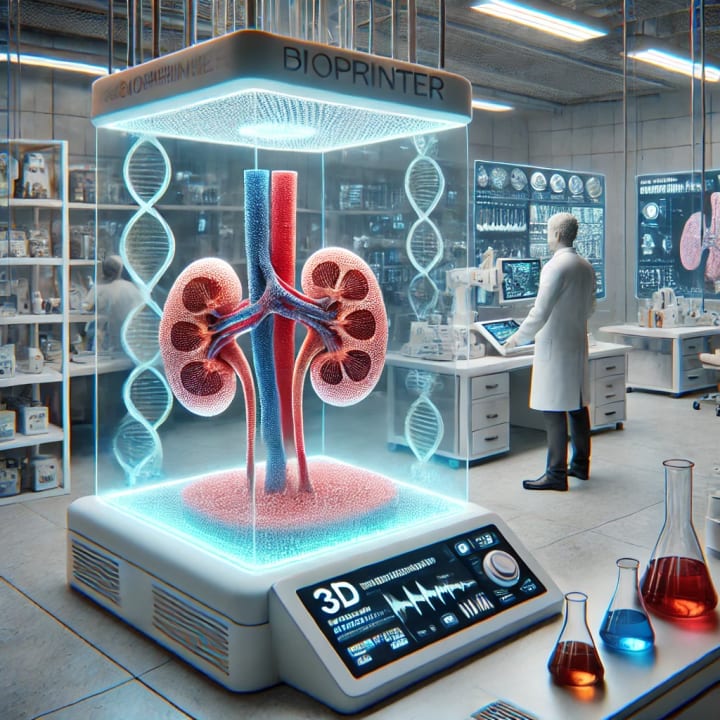
While fully functional, transplantable organs are still in development, the progress is undeniable. Researchers are now tackling challenges like vascularization—ensuring that bioprinted tissues have blood vessels to deliver oxygen and nutrients, allowing them to survive and function like natural tissues.
The Path to Personalized Medicine
One of the most exciting prospects of 3D bioprinting lies in its potential for personalized medicine. By leveraging patients' cells to create bio-inks, scientists can produce tissues and organs that are fully biocompatible, minimizing the risk of immune rejection. This tailored approach not only addresses compatibility issues but also paves the way for customized therapies for rare and complex conditions. Imagine printing tissues that precisely mimic a patient’s unique biological makeup, enabling doctors to test treatments or drugs directly on personalized models before applying them. This innovation promises to make healthcare more efficient, effective, and patient-focused than ever before.
Ethical and Practical Considerations
With great innovation comes ethical complexity. Who will have access to this technology? How will bioprinting reshape healthcare costs? And, perhaps most critically, how do we regulate bioprinted tissues to ensure they’re safe for human use?
Despite these hurdles, the trajectory is clear. As costs decrease and techniques improve, 3D bioprinting will likely shift from a lab-based novelty to a mainstream medical tool.
Rebuilding Lives, One Layer at a Time
The promise of 3D bioprinting isn’t just about replacing damaged tissues or organs—it’s about giving people a second chance. It’s about erasing the despair of a parent waiting for their child’s transplant, providing hope to millions suffering from chronic illnesses, and ultimately redefining what’s possible in medicine.
We’re at the cusp of a new era where the line between science fiction and reality blurs. As someone passionate about regenerative medicine, I see 3D bioprinting as not just a tool, but a symbol of humanity’s ingenuity and resilience.
The future isn’t just about rebuilding tissues—it’s about rebuilding lives, one layer at a time.
About the Creator
Abdul Momin Muhammad Wisal
BSc (Hons) Biotechnology and Genetic Engineering, Expert with SEO Content Writer 💻. I look forward to connecting, collaborating, and contributing to the ever-evolving tapestry of biotechnology 🌟.
Keep reading
More stories from Abdul Momin Muhammad Wisal and writers in Education and other communities.
The Healing Symphony: A Journey into Regenerative Medicine
In the heart of science lies a quiet revolution—a symphony of hope, healing, and innovation. This is the tale of regenerative medicine, where broken strings of life’s melody are returned, and the promise of renewal dances in every discovery.
By Abdul Momin Muhammad Wisalabout a year ago in Education
What Should Be Your Main Focus During an Online Limited Radiology Tech Program
Well, the short answer is that there is not a single module that you should strictly focus on. If you want to become a X-ray technician, you need to develop both technical and soft skills.
By Meaghan Howea day ago in Education
Precision in Motion: The Rise of Sport Shooting and Firearms in Modern Competition
Sport shooting has grown from a simple test of aim into a structured sport that demands discipline, patience, and technical skill. Today, sport shooting and firearms play a major role in global competitions, training programs, and recreational events. Athletes train for years to improve accuracy and control. They study equipment, posture, breathing, and focus. Because of this dedication, sport shooting has become a respected sport that rewards precision and calm thinking.
By Matthew Pothoffabout 9 hours ago in Education
Lycan Lore
As the students of my 10am mythology class take their seats, I decide to steer the day's curriculum away from Greek and dive into a Western European discourse on the misaligned beliefs of the Werewolf. A tale of truth or fiction. No one really knows.
By Lamar Wigginsabout 18 hours ago in Fiction



Comments
There are no comments for this story
Be the first to respond and start the conversation.