
The Quest for the Theory of Everything: Uniting the Universe’s Mysteries
The Fifth Dimension: A Hidden Key to Unification

Understanding how everything in the universe works is one of the most profound challenges humanity faces. From the smallest ants to the largest galaxies, there’s a deep desire to uncover why things function the way they do. If we think of the universe as a massive puzzle, scientists have already discovered several important pieces—electromagnetism, gravity, subatomic particles, and more. However, despite this progress, the full picture remains elusive. What we are trying to uncover is the Theory of Everything, a comprehensive framework that could tie all aspects of our world together.
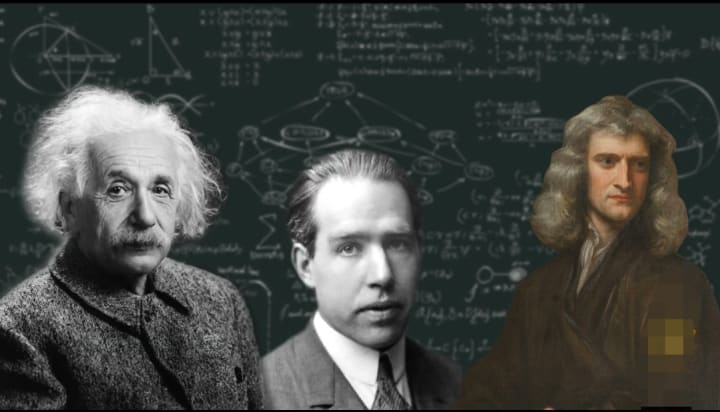
The concept of a Theory of Everything is not a new one. Great minds like Isaac Newton, Albert Einstein, and Niels Bohr dedicated their lives to finding a unified theory, but this quest is no simple task. Einstein, in particular, came close to solving part of the puzzle during his lifetime. His famous equation, E=mc², illustrates the relationship between energy and mass, showing that energy can transform into matter and vice versa. But even with that understanding, the search was far from over.
Einstein’s theories of relativity—special and general—revolutionized how we see the universe. His theory of special relativity proposed that nothing can travel faster than light, and that time can stretch or shrink depending on how fast something is moving. He then expanded this idea with general relativity, introducing gravity as the bending of space-time caused by mass. For Einstein, gravity wasn’t just a force but a curvature in the fabric of space and time itself. The more massive an object, the more it warps space-time, leading to the gravitational effects we observe.
However, Einstein wasn't satisfied with just explaining gravity. He wanted to link gravity with electromagnetism, two of the fundamental forces of nature, into a unified theory. In the 1920s, physicists Theodor Kaluza and Oscar Klein came up with an intriguing idea—what if there were additional dimensions beyond the ones we can observe? While we typically experience three dimensions of space (length, width, and height) and one dimension of time, Kaluza and Klein proposed that the universe might have a fifth dimension, hidden from our senses. This additional dimension could help bring gravity and electromagnetism together into a single framework.
The fifth dimension, though tiny and undetectable in daily life, led to a more complete understanding of the universe. This concept brought scientists closer to the Theory of Everything, and some believed that Einstein had found it. But, as is often the case in science, the story didn’t end there. The true challenge came when quantum mechanics entered the scene.
Quantum mechanics, which deals with the behavior of tiny particles, introduced a whole new level of complexity. At the quantum level, particles can exist in multiple states at once, or disappear and reappear without explanation. Einstein, who preferred a universe governed by clear rules and predictability, struggled with these strange phenomena. He famously referred to the randomness of quantum mechanics as "spooky action at a distance," unable to accept that the universe could behave in such an unpredictable way.
Despite this, Einstein’s work still laid the foundation for future advancements. Today, scientists are continuing his legacy, exploring ideas like String Theory. This theory emerged in the 1980s and proposed an exciting possibility: what if the smallest particles in the universe are not particles at all, but tiny, vibrating strings? These strings would be so small that they would appear as dots to us, but under a powerful microscope, they would reveal themselves as loops vibrating in different ways.
String theory suggests that everything in the universe, from particles like electrons to forces like gravity, is made up of these vibrating strings. Just as different vibrations of a guitar string produce different musical notes, the various vibrations of strings could create the particles we observe in nature. But there’s more. String theory also proposes the existence of additional dimensions—more than the four we’re familiar with. Some theorists suggest there could be 10 or even 11 dimensions, which are hidden from our senses.
At first, String Theory was celebrated as a potential Theory of Everything. However, just as it seemed scientists were close to an answer, new complications arose. String theory failed to reconcile with Einstein’s theory of relativity. This meant it couldn’t fully explain gravity, a fundamental force that Einstein’s general relativity had already described in detail. The puzzle was still incomplete.
String theory also gave rise to the Multiverse Theory, which posits that there might be an infinite number of parallel universes. Each of these universes could have different physical laws, constants, or properties. Imagine, in one universe, you bake chocolate chip cookies, while in another, you make oatmeal raisin cookies. The Multiverse theory suggests that for every choice or action, a new universe might branch off, each with its own set of outcomes.
However, the Multiverse theory is still speculative. It’s a fascinating concept, but there’s currently no way to test it with existing technology. Even if parallel universes do exist, they are far beyond our reach. Another advanced concept related to string theory is M-theory. Proposed by physicist Edward Witten in the 1990s, M-theory attempts to unify all the versions of string theory into one comprehensive framework. It also incorporates higher-dimensional objects called “branes” (short for membranes), which exist in dimensions we cannot perceive but may interact with strings in important ways.
Despite these advances, we are still far from solving the ultimate mystery. The most significant challenge remains uniting quantum mechanics, which governs the smallest scales of nature, with general relativity, which explains the behavior of massive objects. So far, no theory has successfully combined both.
The search for the Theory of Everything continues, and though we have made great strides in understanding the universe, many pieces of the puzzle remain missing. As technology advances and new discoveries are made, scientists are hopeful that one day, we will finally find a way to explain all the mysteries of the universe. But for now, the Theory of Everything remains just out of reach, waiting for the brilliant mind that will unlock the final piece.
About the Creator
Nora Ariana
Empowering through stories and sound igniting purpose, sparking growth, and awakening the power within.
Keep reading
More stories from Nora Ariana and writers in Education and other communities.
A goal is a dream with a deadline
A goal is a dream with a deadline. This powerful quote reminds us that without action, dreams remain just that wishes floating in our imagination. But when we set a timeline and commit to achieving them, they evolve into goals, bringing clarity, direction, and purpose. Many people go through life holding on to dreams, hoping they will come true someday. But someday is not a day on the calendar. Dreams without structure often fade with time or get buried under the weight of daily responsibilities. Turning a dream into a goal is what separates those who achieve from those who continue to wish.
By Nora ArianaExclusive • 11 months ago
THE SPHERICAL SPACETIME - ALEXIS KARPOUZOS
I. The Question of a Spacetime without Centre From Aristotle to Kant, Western philosophy approached space and time primarily as conditions of the possibility of experience or as properties of reality. In the Aristotelian tradition, space is defined topologically — as the place of bodies — and time arithmetically — as 'the number of motions with respect to before and after'. In Kantian critical philosophy, space and time become a priori forms of intuition, transcendental conditions of all phenomenal experience. Yet in both traditions a common assumption is preserved: space and time are structures that organise phenomena from a — however implicit — centre of reference. Alexis Karpouzos radically challenges this assumption. The Spherical Spacetime he introduces is neither place nor intuition; it is a dynamic ontological structure that refuses every privileged point of reference, every external centre, every principle that precedes the very movement of the world. The question posed from the outset is this: what does it mean to think a spacetime that does not 'contain' beings but is the very manner in which beings are? And what ontological consequences does this displacement carry for the understanding of existence, consciousness, and truth?
By alexis karpouzos2 days ago in Education
Peter Ayolov’s Publications
Peter Ayolov is a media theorist and lecturer at Sofia University 'St. Kliment Ohridski', Faculty of Journalism and Mass Communication. His research focuses on the political economy of communication, propaganda models, digital media, narrative structures, and the transformation of language in contemporary technological environments. His work examines how digital communication systems organise dissent, amplify outrage, and reshape the relationship between media, public opinion, and political power.
By Peter Ayolov4 days ago in Education



Comments
There are no comments for this story
Be the first to respond and start the conversation.