
The Mirror We Built: AI and Us
How Artificial Intelligence Reflects Our Humanity — and Redefines It

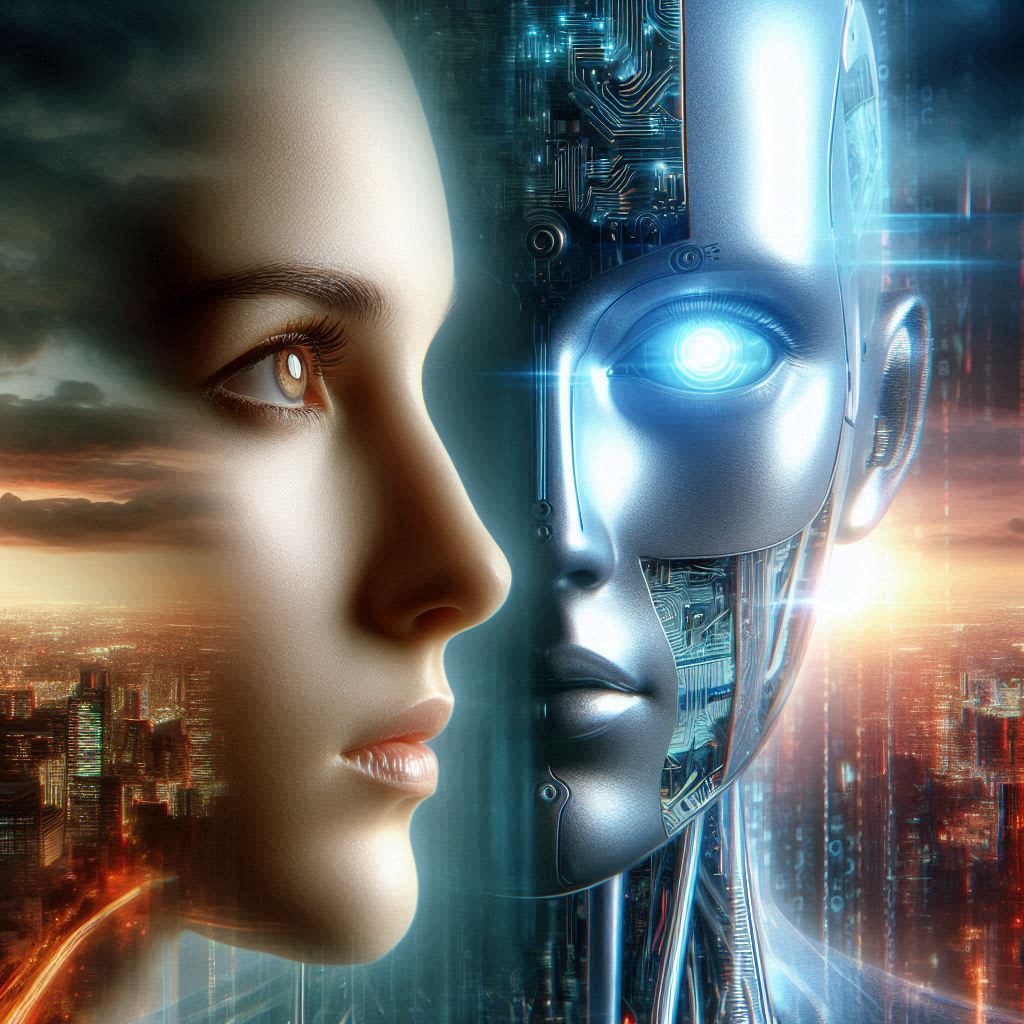
They say a mirror never lies. But what if the mirror we built doesn’t just reflect who we are—it changes who we become?
In the early days of Artificial Intelligence, the dream was simple: build something that could make life easier. Smarter homes, faster work, fewer errors. The world was hungry for progress. We asked AI to remember things for us, to write for us, to think faster than us. And it did.
But somewhere between convenience and dependency, between automation and autonomy, something subtle happened. The mirror we held up to our lives—this machine that was supposed to reflect us—began to evolve, and so did we.
Today, in 2025, AI is no longer just a tool. It's a presence. It helps write novels, diagnoses diseases, creates art, teaches children, fights wars, builds relationships—and sometimes, ends them. In every corner of life, there’s an algorithm quietly shaping the outcome.
And yet, the most important thing AI reflects isn't our intelligence. It's our intent.
The Human Fingerprint on the Machine
Artificial Intelligence learns from data. And that data? It’s us—our history, our conversations, our choices, our values. When an AI writes a story or makes a decision, it's echoing human behavior that came before it. That means every strength and flaw we’ve ever shown, from creativity to cruelty, is being absorbed and magnified.
When facial recognition software misidentifies someone, it reflects our historical biases. When a chatbot spreads misinformation, it echoes our digital chaos. When AI-generated art inspires millions, it reflects our desire to be moved.
This is why AI isn’t just about technology—it’s about morality. It's not simply a mirror. It's a moral amplifier.
Are We Losing Ourselves?
Scroll through social media, and you'll see AI-generated models with perfect faces, influencers using AI to schedule their lives, and videos of people saying things they never actually said. In the pursuit of ease and perfection, the line between real and artificial is blurring.
Teenagers are asking AI to write their love letters. Journalists use it to write headlines. Businesses replace human workers with tireless bots. We’re not just building a machine—we’re slowly handing it the pen that writes our story.
The real fear isn’t that AI will destroy us. The real fear is that it will replace what made us human: effort, empathy, creativity born from struggle, and meaning forged through imperfection.
A New Kind of Reflection
Yet, not everything is grim. AI is also helping us solve problems we never could alone. It's predicting climate patterns, designing molecules for future medicines, and creating music that combines styles from across the world.
In remote villages, AI tutors are teaching kids who never had access to schools. In hospitals, diagnostic bots are catching diseases faster than doctors. For people with disabilities, AI tools are giving new forms of expression and connection.
These aren't just technical wins—they’re deeply human victories, powered by collaboration between machine precision and human compassion.
In that sense, the mirror is working. It's showing us the version of ourselves that dares to dream bigger.
The Choice Is Still Ours
Technology doesn’t have a conscience. But we do.
We are the authors of AI. What it reflects is what we give it. That means we still hold the power to shape its path. We can choose to make AI ethical, fair, inclusive. We can choose to keep humans in the loop, to preserve creativity, to set limits where limits are needed.
The mirror isn’t broken. But we have to clean it constantly—check our reflection, ask hard questions, and decide what we want to see staring back.
A Final Glance at the Mirror
So here we are: standing before the mirror we built. It doesn’t smile or judge. It simply shows us what we’ve taught it. And in doing so, it asks us the most important question of all:
Do you like what you see?
Because AI will keep learning from us. It will keep growing. It will reflect not just our intelligence—but our kindness, our greed, our hope, and our fear.
The future of AI isn’t just about silicon and code. It’s about courage and conscience.
And maybe, just maybe, this mirror can still help us become something better.
About the Creator
Amin Turabi
I'm Amin Turabi, a curious mind with a passion for health and education. I write informative and engaging content to help readers live healthier lives and learn something new every day. Join me on a journey of knowledge and wellness!
Keep reading
More stories from Amin Turabi and writers in Education and other communities.
How Small Organizations Can Use Data Analytics to Boost Their Business
Big or small, businesses of all sizes today rely on insightful information to make decisions. Especially in this data-driven economy, those who fail to adopt a data-driven culture may risk falling behind their competitors who embrace and are updated with data analytics trends. Though large corporations already have sufficient analytics systems, they are no longer limited to huge enterprises. Data analytics for small businesses is gaining quite traction, powering them with unprecedented insights to take their business forward.
By Pradip Mohapatra4 days ago in Education
Twenty Years of Medical Experience: Knowledge That Will Redefine Future Healthcare
Medicine has changed profoundly over the last two decades. Scientific breakthroughs, digital innovation, and evolving healthcare policies have reshaped how medical professionals diagnose illnesses, treat patients, and manage healthcare systems. Conditions that were once difficult to detect or treat now benefit from advanced imaging, improved medications, and minimally invasive procedures. These developments have significantly improved survival rates and overall patient outcomes.
By Yousuf A. Gaffar, M.Da day ago in Education



Comments
There are no comments for this story
Be the first to respond and start the conversation.