
How Small Organizations Can Use Data Analytics to Boost Their Business
Use Data Analytics to Boost Their Business


Big or small, businesses of all sizes today rely on insightful information to make decisions. Especially in this data-driven economy, those who fail to adopt a data-driven culture may risk falling behind their competitors who embrace and are updated with data analytics trends. Though large corporations already have sufficient analytics systems, they are no longer limited to huge enterprises. Data analytics for small businesses is gaining quite traction, powering them with unprecedented insights to take their business forward.
According to Salesforce, 76% of business leaders say they feel increasing pressure to use data to drive business value, highlighting the strategic importance of analytics.
There are several affordable tools and digital platforms that help organizations gather, analyze, and interpret valuable business data without much technical expertise. AI data analytics can also help small organizations understand their customers better, optimize their performance, innovate, and identify new growth opportunities. It eliminates guesswork and helps organizations make decisions backed by data and insights.
Let's briefly understand how small organizations can use data analytics and make their business competitive.
What Is Data Analytics?
Data analytics refers to the process of collecting, analyzing, and interpreting data to identify trends, patterns, and gain insights to help make informed business decisions.
Business data comes from a variety of sources, including sales transactions, social media interactions, surveys, marketing campaigns, website statistics, sensor readings, etc. These are excellent sources to get important information like daily sales, customer demographics, online engagement, etc. If properly analyzed, these data can bring highly valuable insights that could potentially transform small businesses.
What are the Different Types of Data Analytics for Small Businesses?
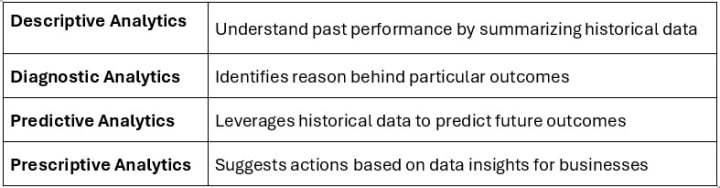
Even basic data analytics tools can help small organizations use these different data analytics techniques and improve their business performance.
What are the Benefits of Data Analytics for Small Businesses?
Here are some benefits small organizations can get by implementing the latest data analytics trends and techniques in 2026:
1. Better decision-making
Using data analytics, organizations can make accurate and impactful decisions backed by data and real information, rather than assumptions.
2. Improved customer understanding
Businesses can use valuable customer data, such as their preferences, purchasing habits, engagements, etc., to offer more personalized products and services, personalize marketing campaigns, and enhance customer experience.
3. Better operational efficiency
AI data analytics can also help businesses identify their unnecessary expenses and inefficiencies, such as products being overstocked or unnecessary manufacturing downtime. So, businesses can address these and save time and money.
4. More effective marketing
One of the biggest advantages of data analytics for small businesses is optimizing marketing campaigns across websites, email, social media, etc. Organizations can measure conversion rates and customer engagement to refine marketing strategies.
Types of Business Data Small Organizations Can Track
Did you know, 19% of company data is estimated to be siloed, inaccessible, or unusable, and 70% of leaders believe valuable insights are hidden in this inaccessible data (Source: Salesforce).
Here are some common types of business data organizations can use:
· Sales and revenue data
This helps businesses understand which products and services are performing best. It can also help understand seasonal trends, pricing strategies, and how customers purchase.
· Customer data
This includes information such as demographics, buying frequency, customer retention rates, etc. These are essential information in identifying valuable customers and developing strategies to increase loyalty and retention.
· Marketing and website analytics
These are very important data, especially for organizations with an online presence. It offers them insights into how customers interact and engage with digital platforms. Data like website traffic, click-through rates, and user engagement can help organizations understand how their marketing effort is performing. It also helps them improve their website design, content strategies, and campaigns.
· Operational data
This includes inventory level, delivery timeliness, production processes, employee productivity, etc., monitoring which can help organizations identify inefficiencies and make adjustments accordingly to improve overall productivity.
Affordable Data Analytics Tools for Small Businesses
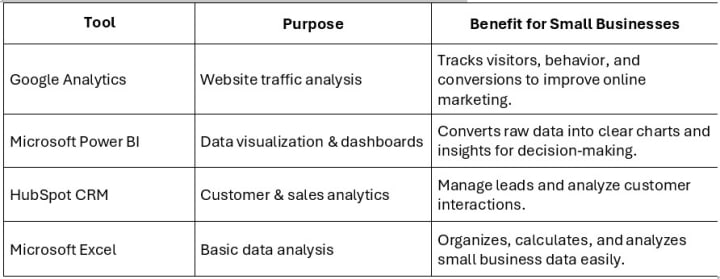
How Small Businesses Can Start Using Data Analytics?
So, for those who want to adopt data analytics and enhance their business decision-making capabilities, here is a simple roadmap:
Step 1: Define clear business goals
Identify a business problem you want to address with data, such as increasing sales, improving customer retention, optimizing marketing campaigns, etc.
Step 2: Collect and organize data
Collect relevant data and store it in an organized manner through spreadsheets, CRM systems, or analytics platforms.
Step 3: Analyze data and gain insights
Skilled data professionals can help organizations identify trends, patterns, and correlations in data to provide them with valuable insights into various business aspects.
Step 4: Turn insights into action
Lastly, use insights to power your business strategies and make data-driven decisions such as adjusting pricing, refining marketing efforts, or optimizing processes.
Final thoughts!
Data analytics is not only a large corporation’s business. Today, even smaller organizations, with a willingness to leverage data analytics, can use affordable data analytics tools and simple analytics techniques to gain valuable insights and transform their businesses.
Tracking important metrics, analyzing trends, and applying data-driven strategies can help small organizations make accurate decisions and improve their overall efficiency and productivity. So, data analytics should be considered an important business element, and organizations must adopt it actively with whatever data or technical capabilities they have, without preparing the most favorable resources to perform data analytics.
About the Creator
Pradip Mohapatra
Pradip Mohapatra is a professional writer, a blogger who writes for a variety of online publications. he is also an acclaimed blogger outreach expert and content marketer.
Keep reading
More stories from Pradip Mohapatra and writers in Education and other communities.
Responsible AI in Data Science: Ethics, Governance, and Compliance
AI is no longer a background technology. It filters job applications, prescribes medical treatments, and determines the recipients of loans. Millions of decisions that formerly took the judgment of a human are now automated in milliseconds.
By Pradip Mohapatra18 days ago in Education
Education Finance Software Market to Reach USD 12.04 Billion by 2035
Education Finance Software Market The Global Education Finance Software Market is projected to reach approximately USD 12.04 billion by 2035, rising from USD 5.63 billion in 2025, and registering a CAGR of 7.9% during the forecast period from 2025 to 2035. This growth reflects increasing digital transformation across educational institutions, particularly in financial administration and compliance management. Schools, universities, and training institutions are modernizing budgeting, accounting, payroll, and procurement systems to improve transparency and operational efficiency.
By Roberto Crum4 days ago in Education
Generational Wealth Blueprint: Proven Investment Strategies for Family Legacies
Generational Wealth is the dream of many families across the country. It means building assets that last beyond one lifetime. It means creating safety, freedom, and choice for children and grandchildren. Many people believe only the very rich can achieve this goal. That belief is not true. With focus and steady effort, almost any family can build Generational Wealth over time. The key is using smart investment strategies for family legacies. These strategies help turn earned income into long-term assets. They protect money from loss and grow it incrementally. Generational Wealth is not built overnight. It grows through discipline, patience, and clear planning. Families who understand this process create a strong path for the future. Each wise decision today shapes the financial life of the next generation.
By Winston Feng4 days ago in Education


Comments
There are no comments for this story
Be the first to respond and start the conversation.