
The Mesozoic Marvel: A Journey Through the Age of Dinosaurs
From Archosaurs to T-Rex: Exploring the Rise and Fall of Earth's Prehistoric Titans

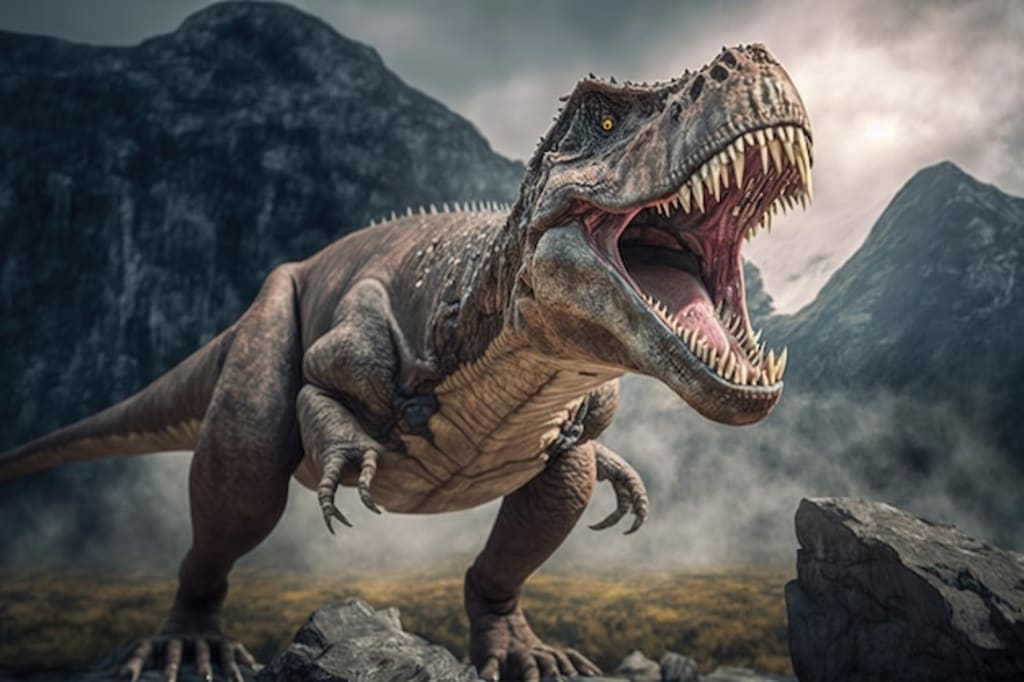
If you were to journey 250 million years into the past, you would witness the emergence of the dinosaurs. One prominent theory suggests that dinosaurs evolved from a group of reptiles known as archosaurs, which were dominant during the late Permian period. Some of these archosaurs might even resemble dinosaurs since they were their ancestors. Over time, archosaurs diverged into two branches: one leading to crocodiles and the other to dinosaurs. The dinosaurs continued to evolve into thousands of distinct species, with one significant development being their ability to walk on two legs, freeing their front limbs for various purposes like feeding and self-defense. This marks just the beginning of their evolutionary journey. Traveling back in time 250 million years, you can witness the history of dinosaurs in the span of 10 minutes.
During the Triassic period, the dinosaurs you encounter will appear quite different from the iconic ones you're familiar with. One of the earliest dinosaurs to emerge from archosaurs was the Eoraptor
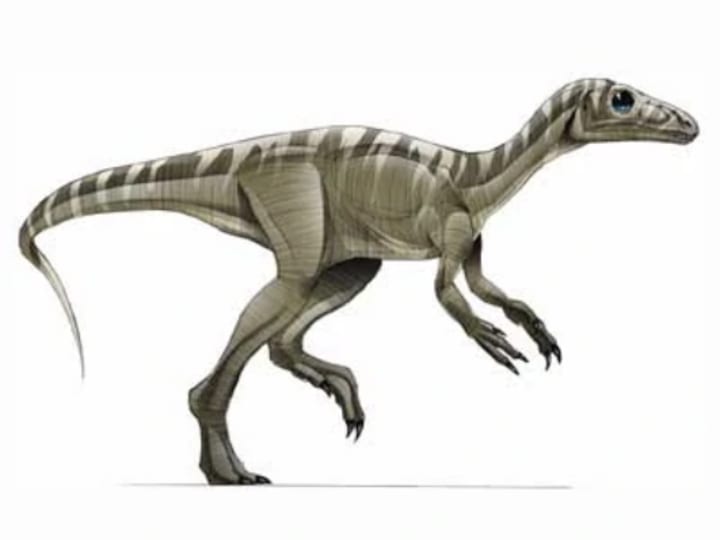
a small creature about the size of a dog. It would be millions of years before the massive dinosaurs you imagine came into existence. Earth during the Triassic period featured the supercontinent Pangaea breaking apart, altering global climates and ecosystems. The climate was generally hot and dry, with no polar ice caps, and the vegetation was vastly different, influencing the dietary and adaptive strategies of different dinosaur species.
In this era, you'll encounter various dinosaurs. The Coelophysis
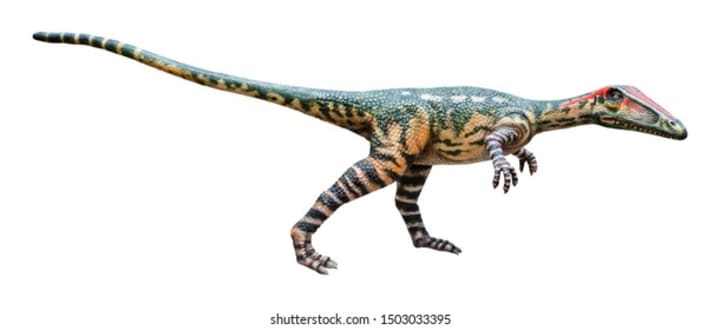
weighing about 23 kg and standing 1 m tall, was a fast and agile predator. The Herrerasaurus, slightly taller at 1.1 m but much heavier at 350 kg, was another inhabitant. Then, there's the Plateosaurus
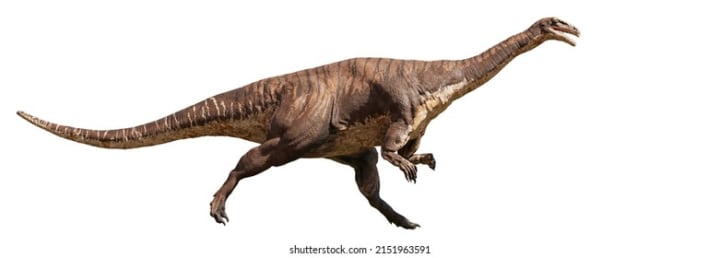
significantly larger, standing at about 3 m tall and weighing up to 4,000 kg. Despite their impressive size, dinosaurs were not the dominant creatures in the Triassic, sharing their environment with various other organisms until a significant extinction event altered the landscape, likely caused by volcanic activity and climate change.
Moving on to the Jurassic period, dinosaurs began to thrive and spread across continents, dominating lush forests and arid deserts. Iconic dinosaurs like the Stegosaurus
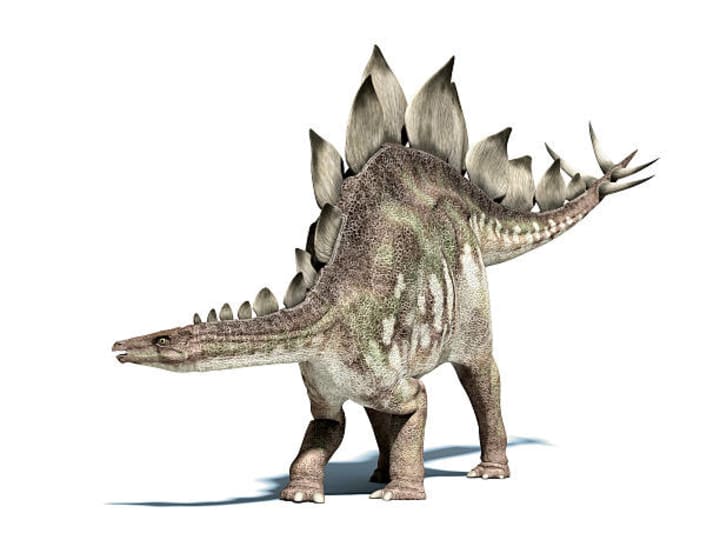
Brachiosaurus
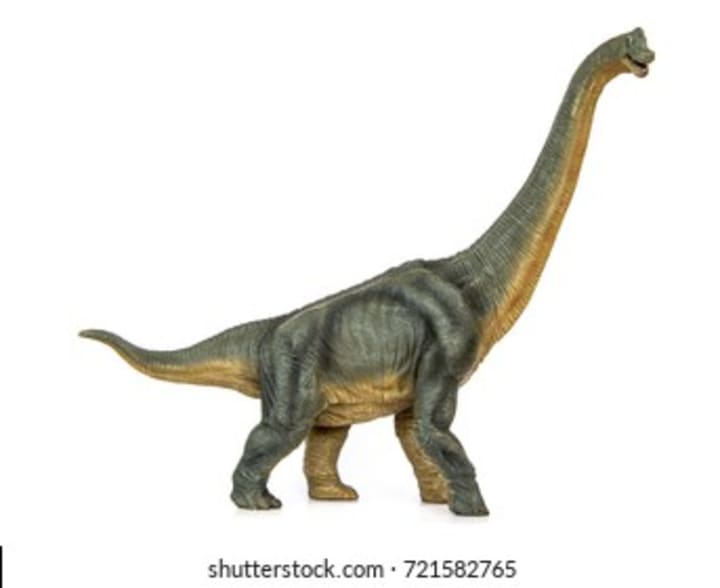
Allosaurus
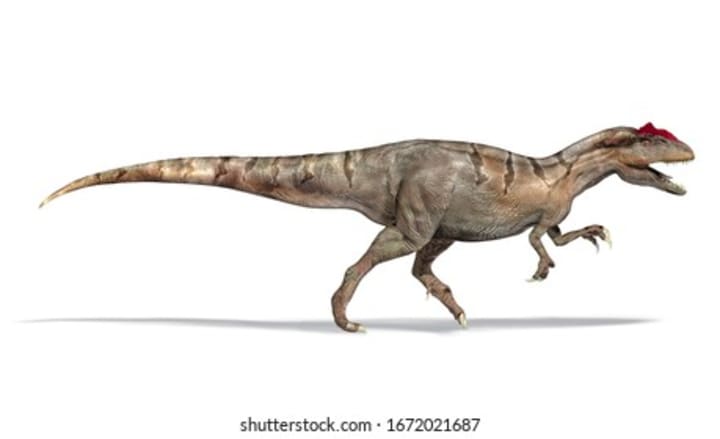
were among the largest creatures ever to walk the Earth. Additionally, theropods
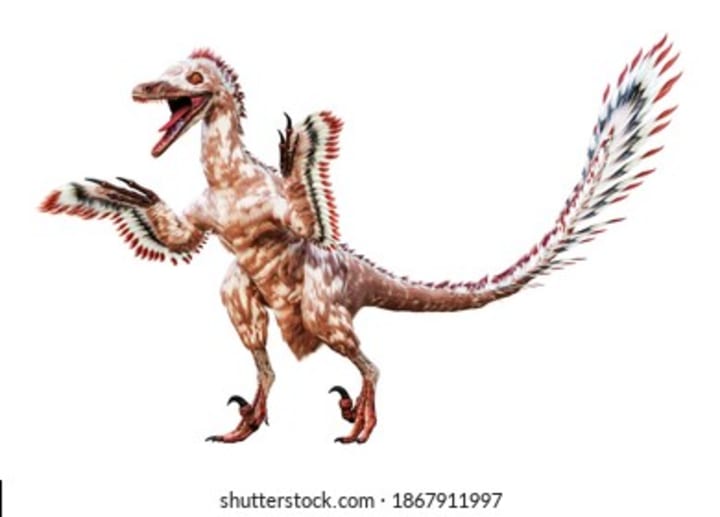
dinosaurs with bird-like features, evolved, including the Archaeopteryx
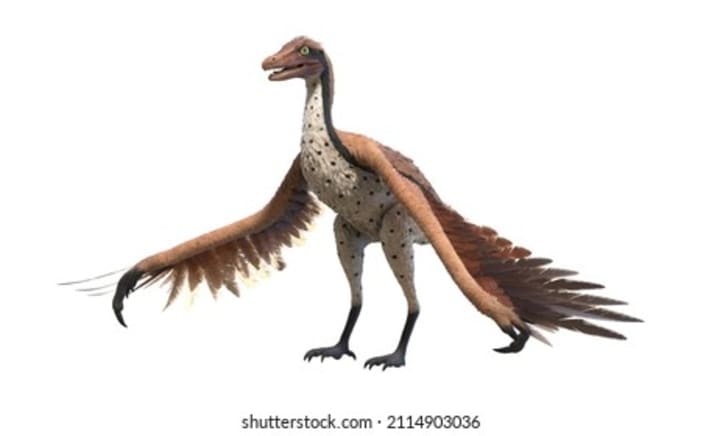
a crucial link between birds and dinosaurs.
The Jurassic period witnessed the evolution of dinosaurs into birds over millions of years. However, after 56 million years, another extinction event occurred due to climate change, volcanic activity, and sea level changes, leading to the shift into the Cretaceous period.
Now, in the Cretaceous period, you'll finally encounter the mighty Tyrannosaurus Rex (T-Rex)
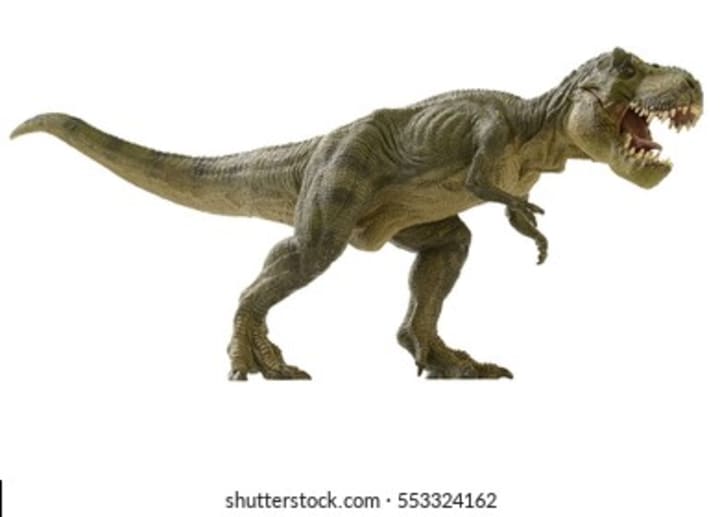
massive predator standing at 3.7 m tall, 12 m long, and weighing nine tons. The T-Rex was a dominant hunter, preying on various creatures, including herbivores like the Edmontosaurus
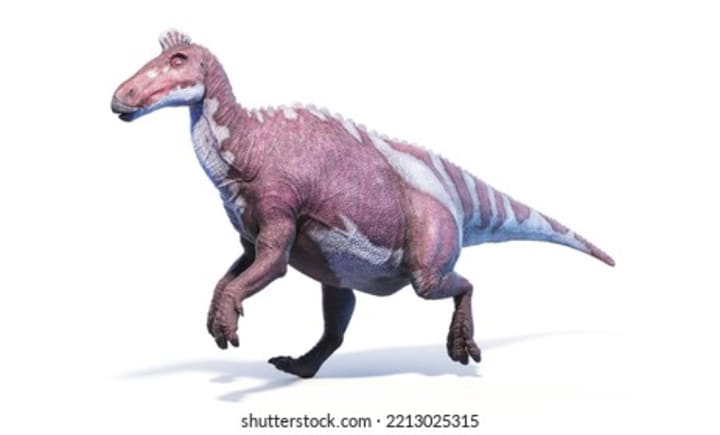
and formidable opponents like the Triceratops. This period also saw the presence of feathered dinosaurs like the Velociraptor and the Microraptor, shedding light on the evolution of birds.
Throughout these periods, Earth's changing continents and climates forced dinosaurs to migrate and adapt to new environments. However, a cataclysmic event occurred, as an asteroid struck the Earth, causing a massive crater and significant environmental changes. This event led to the extinction of 75% of Earth's species, including many of the dinosaurs we observed. Nevertheless, some avian dinosaurs survived and eventually evolved into modern birds.
In the aftermath of this catastrophic event, mammals diversified and expanded their presence on Earth, leading to the eventual evolution of humans and the development of the world we know today. Dinosaurs continued to evolve for another 165 million years, with many intriguing aspects still left to uncover, such as the possibility that not all dinosaurs were cold-blooded; some may have been warm-blooded or exhibited a combination of both traits. But those stories are tales for another time.
About the Creator
Info Wave
Your source for the latest insights, updates, and knowledge. 🌐 Stay informed with us!"
Problem-Solving Skills for Better Decision Making
Making good choices is a skill. Some people think strong decisions come from luck or natural talent. In truth, they come from practice and clear thinking. This is where powerful problem-solving skills for better decision-making play an important role.
By Andrew Lake2 days ago in Education


Comments
There are no comments for this story
Be the first to respond and start the conversation.