

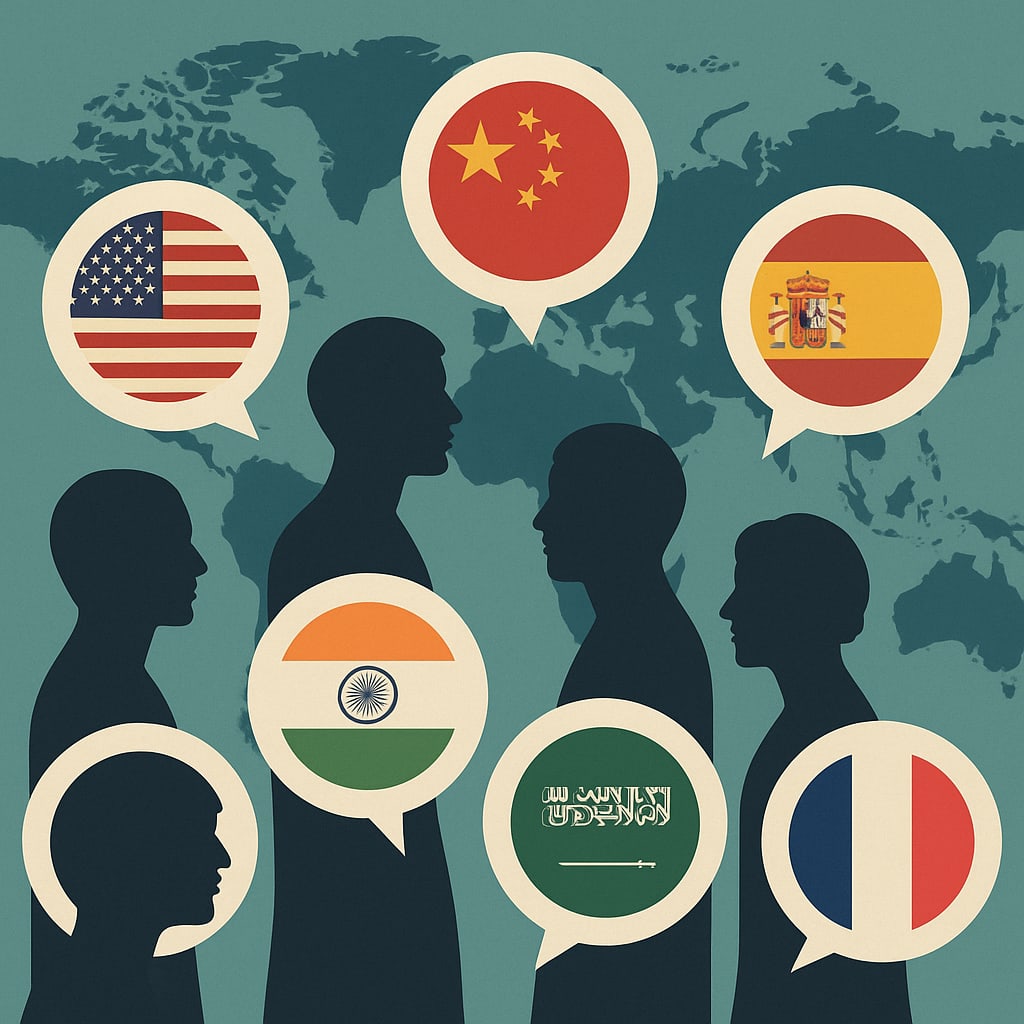
What if learning a certain language today could determine your economic power, cultural influence, or even survival in 2050? As the world becomes more connected, the languages we choose to speak—or ignore—may decide our future. English has long been the global default, but the landscape is shifting. Rising powers, population growth, and digital connectivity are reshaping linguistic influence at an unprecedented pace. So, which languages will dominate the future? And more importantly, why? The answer isn’t just about numbers—it’s about strategy, technology, and geopolitics. The race for linguistic dominance has already begun.
English currently reigns supreme, with over 1.5 billion speakers globally, according to Ethnologue and the British Council. It’s the main language of international business, science, technology, and aviation. But its dominance is not eternal. While English will remain vital due to its deep integration in global systems, emerging economies and demographic shifts suggest a more multilingual future. One of the top contenders? Mandarin Chinese. With over 1.1 billion native speakers, Mandarin is already the most spoken first language. China’s rise as a global superpower, coupled with its investment in global infrastructure through projects like the Belt and Road Initiative, ensures that Mandarin is gaining importance far beyond its borders. In fact, British Council research shows a steady increase in Mandarin language learning in Western countries, particularly in the UK and Australia, due to economic ties with China.
Another strong candidate is Spanish. With more than 500 million native speakers and growing populations across Latin America and the U.S., Spanish is projected to become the most spoken language in the United States by 2060, according to the U.S. Census Bureau. Its presence in two continents and increasing use in global media, entertainment, and commerce make it an influential cultural and economic force. The Cervantes Institute reports a significant growth in demand for Spanish language education worldwide, positioning it as a key global language not just for heritage, but for business and diplomacy as well.
One language many don’t expect—but should—is Hindi. India is projected to overtake China as the most populous country, and its economy is among the fastest growing. Hindi, spoken by over 600 million people, could see a rise in global importance, particularly with India’s expanding tech sector and digital workforce. While English is still widely used in India, the Indian government has increasingly promoted Hindi in education and media, aiming to strengthen its cultural presence. In a 2023 study by the World Economic Forum, India was highlighted as a future linguistic and economic powerhouse, making Hindi a potential language of influence, especially in the Global South.
Meanwhile, Arabic and French continue to expand in influence due to demographic trends in Africa. According to the Organisation internationale de la Francophonie, French could become the most spoken language by 2100 due to the rapid population growth in West and Central Africa. Arabic, with over 400 million speakers, remains a key language in geopolitics, religion, and global energy markets. Both languages benefit from being widely spoken in regions with young, fast-growing populations, making them strategic for future international engagement.
So, what languages will rule the future? English will likely remain dominant in global systems, but it will share the stage with Mandarin, Spanish, Hindi, Arabic, and French—languages backed by population growth, economic strength, and cultural influence. The future will not be monolingual, but dynamically multilingual.
In a rapidly evolving world, language is more than communication—it’s power. Choosing which language to learn today isn’t just about practicality; it’s about aligning yourself with the forces shaping tomorrow’s world. Will you speak the language of the future—or be left out of the conversation?
About the Creator
Bubble Chill Media
Bubble Chill Media for all things digital, reading, board games, gaming, travel, art, and culture. Our articles share all our ideas, reflections, and creative experiences. Stay Chill in a connected world. We wish you all a good read.
Keep reading
More stories from Bubble Chill Media and writers in Education and other communities.
War’s Gentle Blade
Discover the ancient wisdom of The Art of War in modern China Could a 2,500-year-old manuscript still shape the most powerful nation on Earth? Written by the enigmatic Chinese general Sun Tzu, The Art of War remains one of the most studied strategy texts in the world. But beyond boardrooms and battlefields, its influence might run deeper—quietly coursing through the veins of modern geopolitics, diplomacy, and soft power. As the global spotlight turns once more toward China, one has to wonder: are we witnessing the embodiment of Sun Tzu’s legacy in real-time?
By Bubble Chill Media 9 months ago in Education
The Overlooked Power of Safety Culture in Building High-Impact Teams
In many workplaces, safety is often viewed through the lens of compliance—meeting legal standards, following procedures, and minimizing risk. While these are important, this narrow view misses a much more powerful concept: safety culture as a strategic driver of team performance. Authentic safety culture goes beyond physical protection to encompass emotional well-being, open communication, and psychological trust.
By Michael Gastinel7 days ago in Education
Lighting Mastery: A Comprehensive Guide for Event Planners and Producers
Lighting is an essential element in creating the perfect atmosphere for any event. While it often takes a backseat to other aspects like décor, catering, or entertainment, the impact of lighting cannot be overstated. Lighting helps shape the event experience, guides attendees' emotions, and ensures key moments are highlighted. Whether you're planning a corporate conference, a wedding, or a concert, mastering lighting is crucial to ensuring the event's success.
By Brian Casella5 days ago in Education



Comments
There are no comments for this story
Be the first to respond and start the conversation.