
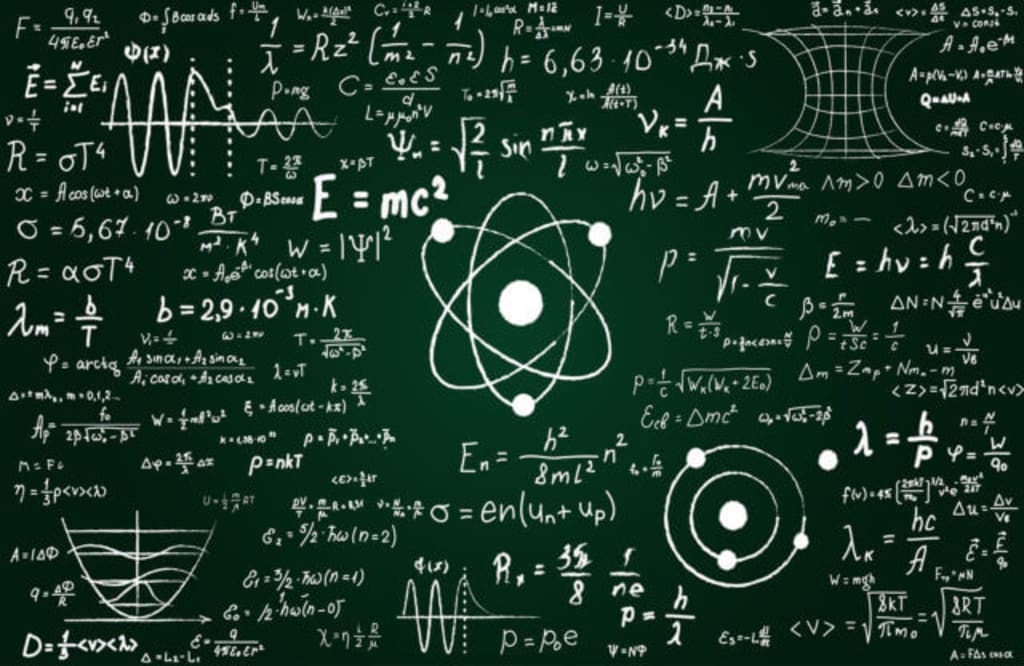
Understanding the World Through Science: Physics's Importance The study of the nature and properties of matter and energy is the focus of physics, one of the most fundamental sciences. Physics provides a framework for comprehending the workings of the universe, from the smallest particles to the largest galaxies. It is crucial because it drives numerous technological advancements that shape our modern world and serves as the foundation for many other scientific fields. What Is Physics?
The study of the universe's laws and principles is known as physics. Motion, force, energy, matter, space, and time are all examined. In addition to being theoretical, these concepts have numerous practical applications in engineering, medicine, astronomy, and other fields. Classical mechanics, thermodynamics, electromagnetism, quantum mechanics, and relativity are among the many subfields of physics. Each of these subfields contributes to the explanation of a distinct aspect of the natural world. Classical mechanics, for example, explains how everyday objects move. The study of how heat and temperature relate to work and energy is known as thermodynamics. Relativity helps us comprehend the relationship between space and time for objects traveling at or close to the speed of light, while quantum mechanics investigates the behavior of particles at the atomic and subatomic levels. Physics in the Real World Physics is present in every aspect of our lives, despite its abstract appearance at times. When we turn on a light, use a phone, drive a car, or even simply walk, physics is at work. When pushing a bicycle, the reason we accelerate is explained by the concept of force and motion. Thermodynamics helps us understand how refrigerators keep our food cold. Our communication systems and household appliances are powered by electromagnetism. Our understanding of physics has made modern technology possible. The principles of electromagnetism, for instance, are the foundation upon which electricity was developed. This has led to the creation of everything from electric light bulbs and household electronics to vast power grids that supply energy to cities. These advancements would not be possible without physics. Science and Engineering One of the most direct benefits of physics is its role in technological development. Innovations in physics have transformed the way we live, work, and communicate. The invention of the transistor—a critical component in nearly all modern electronic devices—was a result of advances in solid-state physics. GPS, weather forecasting, and global communication are all made possible by satellite technology, which relies on an understanding of orbital mechanics and gravitational forces. Medical technology also heavily depends on physics. Physical principles are the foundation for procedures like X-rays, MRI (magnetic resonance imaging), and radiation therapy. Healthcare diagnostics and treatment have been transformed by these technologies, making it possible for doctors to diagnose and treat diseases with greater precision and effectiveness. Physics's Contribution to Other Sciences Physics serves as a foundational science for many other scientific disciplines. Chemistry, for example, is deeply connected to physics through physical chemistry and quantum mechanics. Biophysics, which employs physics principles to comprehend biological processes, is another area where biology and physics intersect. Environmental science relies on physics to study climate systems, energy transfer, and pollution dynamics. In order to comprehend earthquakes and the internal processes of the Earth, geologists employ physics principles. To model behavior and trends, even social sciences like psychology and economics use concepts from complex systems theory and statistical mechanics. A solid understanding of physics can improve comprehension and innovation in other scientific fields due to these connections. It teaches logical, analytical, and quantitative thinking skills that are useful in any field. The Cosmos and Physics Additionally, physics plays a crucial role in providing answers to some of humanity's most profound inquiries. How did the universe begin? What is it made of? What are black holes and how do they change time and space? These questions are being explored through astrophysics and cosmology, which combine physics with astronomy to study the origins, structure, and future of the universe.
Modern physics, particularly quantum mechanics and relativity, has reshaped our understanding of reality. Quantum mechanics has revealed a world of particles that behave unpredictably, defying classical intuition. Meanwhile, Einstein’s theory of relativity has shown that time is not absolute and can change depending on speed and gravity. These theories are not just philosophical—they have practical applications in areas such as GPS technology and semiconductors.
Physics and the Future
The future of physics holds exciting possibilities. As we continue to explore fundamental forces and particles, we may unlock new forms of energy, such as nuclear fusion—a potentially limitless and clean source of power. Based on quantum physics, advancements in quantum computing could revolutionize information processing and lead to breakthroughs in cryptography, artificial intelligence, and other fields. Furthermore, understanding climate change and developing sustainable technologies rely heavily on physics. Renewable energy sources like solar, wind, and hydroelectric power are based on physical principles. Improving their efficiency and integration into existing power systems requires continued research in physics and engineering.
The Educational Value of Physics
Studying physics develops critical thinking and problem-solving skills. It teaches students how to approach complex problems logically and quantitatively. This analytical mindset is useful not only in careers in science but also in finance, data science, the legal system, and engineering. Moreover, physics education fosters curiosity and a deeper appreciation for the world. It encourages individuals to ask “why” and “how,” leading to a mindset that seeks understanding rather than accepting things at face value. This scientific literacy is important in a society increasingly driven by technology and scientific issues.
Conclusion
Physics is a cornerstone of human understanding and advancement. It helps explain everything in the universe, from the smallest particles to the largest structures in the universe. It underpins the technologies that shape our lives, drives innovation in medicine and communication, and supports other scientific disciplines. As we face global challenges such as climate change, energy sustainability, and health crises, physics will continue to play a critical role in finding solutions.
In essence, the importance of physics lies not just in what it teaches us about the world, but in how it enables us to change that world for the better. A deeper engagement with physics—whether through education, research, or application—can empower individuals and societies to build a more informed, innovative, and sustainable future.
About the Creator
Earning Money Online Through Freelancing
Earning Money Online Through Freelancing In today’s digital world, earning money online has become easier than ever before. One of the most popular and trusted ways to make money online is through freelancing. Freelancing allows people to work independently, use their skills, and earn income without being tied to a traditional office job. With just a computer, an internet connection, and useful skills, anyone can start freelancing from anywhere in the world.
By Bilal Mohammadi3 days ago in Education
What your poop can tell you about your health
The average person poops out approximately 11,030 kilograms of cumulative waste. That's the equivalent of more than six SUVs. Now, oftentimes, that poop is brown. But why is that, considering all the colorful comestibles one consumes? And what's going on when poop appears in different colors and textures? Say you’re eating a beautiful, rainbowy salad. Your teeth and saliva first help break down the food and add lubrication. Each bite enters your esophagus and sequential muscle contractions push it towards your stomach.
By Munesh Yadavabout 2 hours ago in Education




Comments
There are no comments for this story
Be the first to respond and start the conversation.