
The Importance of "Now What?": Action Planning with Driscoll's Model
Discover why the "Now What?" stage in Driscoll’s Model is key to turning reflection into real-world action. Learn how to plan effectively and boost personal and professional growth.

Introduction
In the world of reflective practice, thinking deeply about past experiences is important—but it’s what we do next that truly drives growth. That’s why the third and final stage of Driscoll’s Model of Reflection, known as “Now What?”, is perhaps the most crucial of all.
While many learners and professionals are familiar with reflecting on what happened (“What?”) and why it mattered (“So What?”), it's the action planning stage—the “Now What?”—that transforms reflection into real, tangible improvement.
In this article, we’ll explore why the “Now What?” phase is essential, how it supports goal-setting and personal development, and how to make it a consistent part of your reflective routine.
A Quick Refresher: What Is Driscoll’s Model of Reflection?
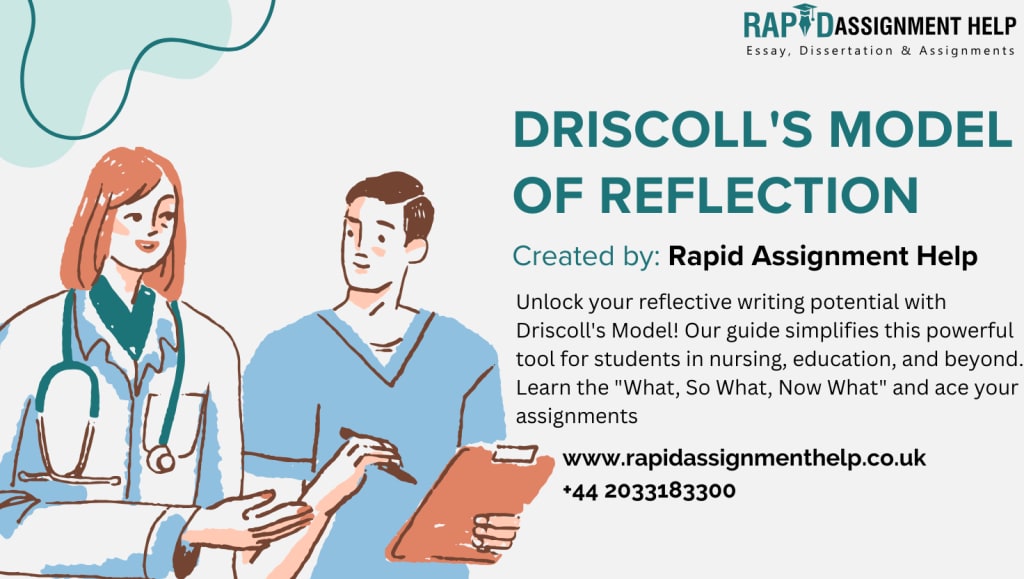
Driscoll’s model is a simple, yet powerful tool built around three core questions:
- What? – What happened?
- So What? – Why is it important?
- Now What? – What will I do differently next time?
This structure makes reflection accessible and applicable in a wide range of fields including healthcare, education, social work, and business.
While the first two questions help to analyze experiences, the third encourages forward-thinking and practical planning—turning insights into action.
Why the “Now What?” Stage Matters Most
🎯 1. Drives Meaningful Change
The “Now What?” prompts you to take insights from your reflection and apply them in real life. Without this step, reflection risks becoming a passive or purely academic exercise.
It forces the question:
“What can I do differently to improve outcomes next time?”
🧠 2. Builds Self-Awareness and Accountability
By developing an action plan, individuals take responsibility for their development. This is especially useful in settings like:
- Nursing and medical placements
- Teacher training
- Management and leadership evaluations
- CPD (Continuing Professional Development)
📈 3. Encourages Lifelong Learning
Reflection with actionable steps is a key component of lifelong learning. It ensures experiences lead to continuous improvement, a crucial trait in modern education and workplaces.
Examples of “Now What?” in Action
🩺 Nursing Student Example
- What? A student struggled with time management during a patient round.
- So What? They realized this impacted the quality of care.
- Now What? They decide to create a daily checklist and shadow a senior nurse to learn time prioritization.
👩🏫 Trainee Teacher Example
- What? A lesson on climate change didn’t engage the class.
- So What? The teacher noticed students were confused and disengaged.
- Now What? They plan to incorporate interactive videos and quizzes in the next session.
👔 Manager Example
- What? Team morale dropped after a poorly handled feedback session.
- So What? The manager saw they had been overly critical without suggesting solutions.
- Now What? They commit to using a strengths-based feedback approach and schedule 1-on-1 follow-ups.
How to Make “Now What?” Effective
Here’s how to turn the “Now What?” into a powerful driver of action:
✅ 1. Set SMART Goals
Use the SMART framework to make your goals:
- Specific
- Measurable
- Achievable
- Relevant
- Time-bound
Instead of saying, “I’ll do better next time,” say:
“I’ll create a prep checklist by Friday to use before next week’s shift.”
✅ 2. Reflect Regularly
Make reflection and action planning a habit. Weekly reflections, end-of-shift notes, or post-project reviews keep you engaged and evolving.
✅ 3. Track Your Progress
Keep a log or journal where you revisit past reflections. Ask yourself:
- Did I follow through on my “Now What?”
- What’s changed since then?
- What still needs improvement?
✅ 4. Seek Feedback
Sometimes, others can see gaps or growth we can’t. Discuss your action plan with mentors, supervisors, or peers to refine your goals.
How the “Now What?” Benefits Different Professions
Field - Application of “Now What?”
- Healthcare - Improving bedside manner, time management, clinical skills
- Education - Adapting teaching strategies, classroom management
- Social Work - Managing boundaries, ethical decision-making
- Business - Enhancing communication, conflict resolution
Creative Fields Adjusting based on feedback, experimenting with new ideas
Final Thoughts
Reflection is only as powerful as the actions it inspires. That’s why “Now What?” is the heart of Driscoll’s Model—it turns insights into outcomes and experiences into evolution.
Whether you’re a student, educator, or professional, embracing the “Now What?” means committing to continuous learning and intentional self-improvement. Make your reflections count—not just in thought, but in action.
About the Creator
Daniel Brown
Hi, I’m an assignment expert based in the UK. I’m passionate about providing quality Assignments Online and working with students. I’m proud to be a part of Rapid Assignment Help, where we specialize in accurate assignments delivery on time
Keep reading
More stories from Daniel Brown and writers in Education and other communities.
Top 10 Finance Assignment Help Websites in the UK for 2025
Introduction The intricate and ever-evolving field of finance presents a unique set of challenges for students. From grasping complex financial models and analyzing market trends to understanding intricate accounting principles and corporate finance strategies, the workload can often feel overwhelming. In the United Kingdom, a robust ecosystem of online platforms has emerged to provide crucial support in the form of finance assignment help. In this comprehensive guide, we delve into the top 10 brands offering these services in 2025, with a particular spotlight on the efficiency and reliability of Rapid Assignment Help
By Daniel Brown9 months ago in Education
Historical Background of Panasonic Avionics Corporation
From my research, Panasonic Avionics Corporation was originally founded in 1979 under the name Matsushita Avionics Systems Corporation. Over the decades, the company evolved alongside commercial aviation, aligning its products with aircraft cabin modernization and passenger comfort.
By Beckett Dowhan7 days ago in Education
Affection and Healing for Yourself
During the night of the last quarter moon, I gathered my ritual supplies. I carefully handled the chunk of black tourmaline that would protect me from your overall negative and narcissistic energy. I carefully walked the house with my stick of selenite in hand, asking the universe to cleanse our working space.
By Alisha Wilkins ✒️🦋🖋️6 days ago in Fiction


Comments
There are no comments for this story
Be the first to respond and start the conversation.