
The Hidden Forces of the Universe: Dark Matter and Dark Energy
Exploring the mysterious components that shape the cosmos and challenge our understanding of reality
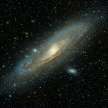

Dark Matter: The Invisible Scaffold of the Universe
For decades, astronomers and physicists have been grappling with an astonishing discovery: the visible universe — the stars, planets, and galaxies we can see — makes up only a tiny fraction of all that exists. The vast majority of matter is invisible, detectable only through its gravitational effects. This mysterious substance is known as dark matter.
Dark matter does not emit, absorb, or reflect light, making it completely invisible to telescopes. Yet its presence is undeniable. Galaxies spin at speeds that cannot be accounted for by the gravity of visible matter alone; they should fly apart without an unseen gravitational glue holding them together. Clusters of galaxies also display gravitational effects far stronger than the sum of their luminous parts.
Scientists have proposed several candidates for dark matter. Among the most studied are Weakly Interacting Massive Particles (WIMPs), hypothetical particles that rarely interact with normal matter, and axions, lightweight particles predicted by certain extensions of the Standard Model of particle physics. Despite decades of experimentation, dark matter has yet to be directly detected, making it one of the most compelling mysteries in modern physics.
Dark Energy: The Force Accelerating the Cosmos
If dark matter is the invisible scaffold holding galaxies together, dark energy is the enigmatic force driving the universe apart. In 1998, observations of distant supernovae revealed that the universe’s expansion is accelerating, contrary to the long-held belief that gravity would slow it down over time. Scientists concluded that an unknown form of energy, permeating all of space, is pushing galaxies away from one another at an ever-increasing speed.
Dark energy constitutes roughly 68–70% of the total energy content of the universe. Its nature remains deeply mysterious. Some theories suggest it is related to the cosmological constant, a concept introduced by Einstein as a “fudge factor” in his equations of general relativity, while others propose it arises from a dynamic field, sometimes called quintessence, that evolves over cosmic time.
The discovery of dark energy transformed cosmology. It implies that the fate of the universe is dominated not by the pull of gravity, but by this repulsive force. Depending on its exact properties, dark energy could lead to an ever-accelerating expansion, a slow fade into a cold, dark cosmos, or even exotic scenarios such as the “Big Rip,” where galaxies, stars, and eventually atoms are torn apart.
The Cosmic Balance: Matter, Energy, and the Fate of the Universe
Together, dark matter and dark energy dominate the cosmos: dark matter provides the gravitational framework for galaxies and clusters, while dark energy drives the accelerating expansion of space itself. Ordinary matter — the atoms that make up stars, planets, and life — represents only about 5% of the total.
Understanding these invisible components is one of the greatest challenges in modern astrophysics. Observatories such as the European Space Agency’s Euclid mission, the Dark Energy Survey, and underground experiments searching for WIMPs aim to uncover the nature of these elusive entities. Success in this quest could revolutionize physics, revealing new fundamental particles, forces, or even dimensions.
The interplay of dark matter and dark energy also raises profound philosophical questions. How much do we truly understand about the universe we inhabit? What if most of reality is hidden from our senses? Each discovery in cosmology seems to deepen the mystery, revealing a universe stranger and more complex than anyone could have imagined.
Conclusion: A Universe Mostly Unknown
Dark matter and dark energy remind us that the cosmos is largely invisible, governed by forces and substances beyond direct perception. They challenge the limits of human understanding, demanding new theories, technologies, and ways of thinking. While we can map galaxies and measure cosmic expansion, the underlying reality of the universe remains tantalizingly out of reach.
Exploring dark matter and dark energy is not merely an academic exercise — it is a journey to the very foundations of existence. The universe, it seems, is far stranger, more mysterious, and more wondrous than our ordinary senses could ever reveal. And as we continue to probe its depths, we may one day uncover the secrets that have eluded humanity since the dawn of observation.
About the Creator
Creating a Calm and Confident Path Toward Retirement
Retirement planning often feels intimidating, especially when people imagine complex calculations and uncertain outcomes. However, when you approach the process with clarity and patience, it becomes far more manageable. Instead of focusing on stress, thoughtful planning helps you feel confident about the future you are building.
By Michael Petruska5 days ago in Education
The Night of Mi‘rāj: A Journey Beyond Time, Space, and Human Imagination
Mi‘rāj — A Night That Reshaped Human Understanding Among all the extraordinary events recorded in Islamic tradition, Mi‘rāj stands as one of the most profound. It is not merely a journey; it is a moment when the boundaries of time, space, and perception were transcended by the Prophet Muhammad ﷺ through the will of God.
By Muhammad Islam khan swati5 days ago in Education



Comments
There are no comments for this story
Be the first to respond and start the conversation.